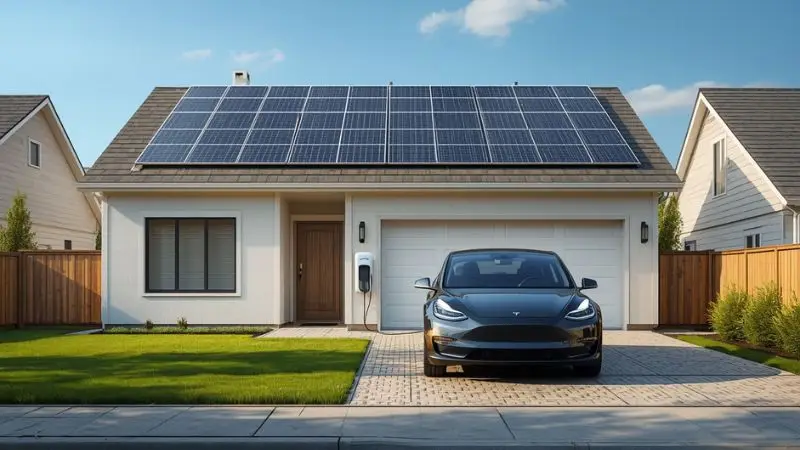
Solar-powered electric vehicle charging is transforming how modern homeowners fuel their cars, turning a recurring expense into a sustainable, long-term asset. The convergence of rooftop solar and electric vehicles is no longer a futuristic concept — it is a financially compelling, carbon-cutting system that thousands of homeowners are deploying right now. At the heart of this strategy is the efficient use of photovoltaic (PV) panels to generate the electricity that fuels your car, effectively making your fuel free after the initial capital investment. Whether you are considering an upgrade or are new to the field, this guide breaks down the real numbers, technical requirements, and strategic decisions involved in solar-powered electric vehicle charging — no fluff, just the facts.
Why Solar-Powered Electric Vehicle Charging Is the Ultimate Energy Stack
When you charge an EV from the grid, you are buying electricity — often generated from coal or natural gas — at retail rates. When you transition to solar-powered electric vehicle charging, your marginal fuel cost is $0.00 per kWh after the system is paid off.
The math is stark. The average American EV driver covers ~15,000 miles/year. A mid-range EV consumes roughly 3–4 miles per kWh. That means:
- Annual EV electricity demand: ~3,750–5,000 kWh
- At $0.16/kWh (US average): ~$600–$800/year in charging costs
- At $0.00/kWh (via solar-powered electric vehicle charging): $0
A 6 kW solar system generating ~8,400 kWh/year in a moderate-sun region can fully cover both household loads and EV charging. This is the core value proposition of solar-powered electric vehicle charging: it transforms your car’s operating cost from a recurring expense into a sunk-cost infrastructure play.
The Technical Architecture: How Solar + EV Charging Actually Works
Understanding the system layers prevents costly mistakes during installation.
Layer 1: The Solar PV Array
Modern residential panels (2024–2025) deliver 400–450W per panel at peak efficiency. A 6 kW system = roughly 14–15 panels. Key specs to evaluate:
| Specification | Budget Tier | Premium Tier |
|---|---|---|
| Panel Efficiency | 19–20% | 22–23% |
| Power Output | 370–400W | 420–450W |
| Degradation Rate | ~0.7%/year | ~0.25%/year |
| Warranty (Power) | 25 years | 30 years |
| Temperature Coefficient | -0.40%/°C | -0.26%/°C |
| Example Brand | Longi, Canadian Solar | SunPower, REC Alpha |
A lower temperature coefficient matters if you live in hot climates — panels lose output as they heat up, and a -0.26% coefficient means significantly less loss on a 40°C roof vs. a -0.40% panel.
Layer 2: The Inverter
The inverter converts DC solar output to AC household current. For EV charging integration, hybrid/smart inverters are essential — they can prioritize EV charging when solar generation is high, shift load to off-peak grid tariffs, and interface with battery storage.
- String inverters: Cheapest, adequate for simple setups, no panel-level data.
- Microinverters (Enphase IQ8): Panel-level MPPT, shade tolerance, best for complex roof geometry.
- Hybrid inverters (SolarEdge, SMA, Fronius): Battery-ready, EV load management, ideal for future-proofing.
Layer 3: EV Charging Equipment (EVSE)
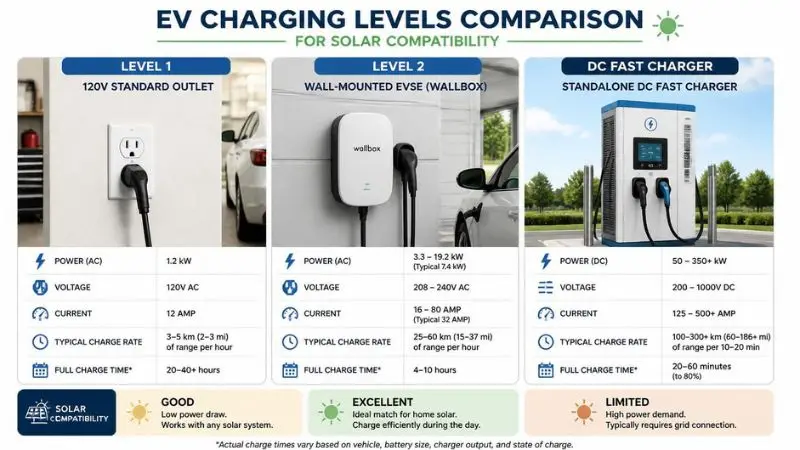
| Level | Power | Speed | Solar Compatibility |
|---|---|---|---|
| Level 1 (120V) | 1.4 kW | ~5 miles/hr | Poor — slow, night charging favored |
| Level 2 (240V) | 7.2–19.2 kW | 20–60 miles/hr | Excellent — can be solar-matched |
| DC Fast Charge | 50–350 kW | 100–800 miles/hr | Impractical for home solar |
The sweet spot for solar-powered electric vehicle charging at home is a smart Level 2 charger (7.2–11.5 kW) with dynamic power control. Units like the Wallbox Pulsar Plus, Emporia EV Charger, or Tesla Wall Connector can throttle charge rate based on real-time solar surplus, so you charge your car only when the sun is generating excess power — not pulling from the grid.
Solar Powered Electric Vehicle Charging: Full Cost-Benefit Analysis
Upfront Costs (2025 US Market)
| Component | Cost Range |
|---|---|
| 6 kW Solar PV System (installed) | $14,000–$20,000 |
| 30% Federal ITC (Inflation Reduction Act) | -$4,200–$6,000 |
| Smart Level 2 EVSE (installed) | $800–$2,000 |
| Optional: 10 kWh Battery (e.g., Powerwall 3) | $9,000–$12,000 |
| Net Cost (solar + charger, no battery) | ~$10,600–$16,000 |
The 30% federal tax credit under the IRA applies to solar, battery storage, and EV charger hardware — a critical incentive that remains active through 2032.
Payback Period Calculation
Assumptions: 6 kW system in Phoenix, AZ (peak sun hours: 5.5/day), generating ~12,000 kWh/year. Combined household + EV savings at $0.16/kWh = ~$1,920/year. Payback: 5.5–8.3 years depending on final net cost.
In higher-electricity-cost states (California: $0.28/kWh, Hawaii: $0.40/kWh), payback compresses to 3.5–6 years for the same system, making the investment significantly more attractive.
After payback, the system generates free electricity for 15–22 additional years.
The Hidden Multiplier: EV + Solar Time-of-Use Optimization
Most utilities offer Time-of-Use (TOU) rates — cheap power at night (e.g., $0.08/kWh), expensive during peak afternoon/evening (e.g., $0.35/kWh). A smart solar + battery system can:
- Generate solar power during peak hours (high grid value)
- Export surplus to the grid at peak rates (net metering or feed-in tariff)
- Charge EV battery from stored solar or cheap off-peak grid power overnight
This arbitrage can add $300–$700/year in additional value on top of basic self-consumption savings.
Key Factors That Determine If This Investment Works for You
Not every home is a good candidate. Evaluate these variables before committing.
Roof Assessment
- South-facing orientation (in the Northern Hemisphere) = optimal. East/West = 10–20% less production.
- Minimal shade is non-negotiable. Even a single shaded panel can reduce string output by 20–30% (unless using microinverters or power optimizers).
- Structural load capacity for panel weight (~2–4 lbs/sq ft).
Your EV Usage Pattern
- High-mileage drivers (15,000+ miles/year) see faster ROI than occasional drivers.
- Daily commuters who return home mid-day or early afternoon can maximize solar-direct charging.
- If you charge primarily at work or public stations, residential solar ROI is partially diminished.
Grid Policy in Your State/Country
- Net Metering: Excess solar is sold back to grid at the retail rate — maximizes ROI. Still available in most US states, though being reduced in some (California’s NEM 3.0 cut export rates significantly).
- Net Billing / Feed-in Tariff: Excess solar sold at wholesale (~$0.04–0.08/kWh) — pushes ROI toward self-consumption and battery storage.
- No export allowed: Requires battery storage to use 100% of solar generation.
Financing Structure
- Cash purchase: Highest lifetime ROI, full tax credit benefit.
- Solar loan (4–7% APR): Positive cash flow from day one in most cases; you own the system.
- Solar lease/PPA: $0 down, no maintenance, but you don’t own the system and miss the tax credit. Generally, a poor strategy for the long term.
Battery Storage: Necessary or Optional?
For pure solar-powered electric vehicle charging economics, a battery is not mandatory — but it fundamentally changes the system’s value.
Without a battery: You charge your EV when the sun shines. Surplus goes to the grid. Grid fills gaps overnight. Simple, lower cost.
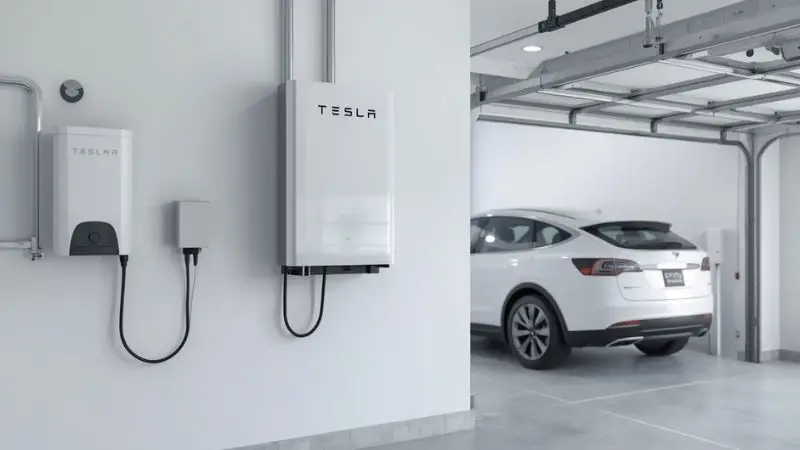
With battery (e.g., Tesla Powerwall 3 at 13.5 kWh): You store excess daytime solar and use it to charge your EV at night. You gain backup power capability. You can fully participate in TOU arbitrage. Cost adds $9,000–$12,000 but also qualifies for the 30% ITC.
Verdict: In net metering states with favorable export rates, skip the battery initially and add it later if policy changes. In states with low export rates (California, Hawaii, Nevada), include battery storage from day one to maximize self-consumption.
Solar-Powered Electric Vehicle Charging: Global Perspective
The economics vary considerably by geography.
| Country/Region | Avg. Electricity Cost | Solar Irradiance | Payback Period |
|---|---|---|---|
| USA (Southwest) | $0.16–0.28/kWh | High (5–6 PSH) | 5–8 years |
| Germany | $0.40/kWh | Moderate (3–4 PSH) | 6–9 years |
| Australia | $0.25–0.35/kWh | Very High (5–7 PSH) | 4–6 years |
| India | $0.08–0.12/kWh | Very High (5–7 PSH) | 8–12 years |
| UK | $0.35/kWh | Low (2–3 PSH) | 9–14 years |
| UAE/Saudi Arabia | $0.05–0.08/kWh | Very High (6–7 PSH) | 12–18 years (subsidized grid undercuts ROI) |
PSH = Peak Sun Hours per day
The paradox of GCC countries: exceptional solar resource, but heavily subsidized grid electricity makes solar ROI difficult without specific EV-oriented incentives.
Common Mistakes to Avoid
- Undersizing the system: Plan for both current household load AND EV charging from day one. Future EVs may have larger batteries. Size for 110–120% of projected need.
- Ignoring panel degradation: A system producing 12,000 kWh today produces ~10,000 kWh in 20 years. Model this in your ROI.
- Using a non-smart charger: A dumb Level 2 charger can’t respond to solar surplus. You’ll end up grid charging instead of solar charging most of the time.
- Skipping a home energy audit: Air conditioning and water heating often represent 50–60% of home electricity load. Efficiency upgrades before solar sizing can reduce system cost by 20–30%.
- Choosing lease over ownership: Over 20 years, a system lease costs 2–3x more than a cash purchase and zero tax credit capture.
Expert Verdict: Is This a Smart Investment?
The answer is yes — with conditions. The solar + EV combination delivers the highest ROI when:
- You own (or plan to own) an EV with significant annual mileage
- You own your home with a suitable, unshaded roof
- Your local electricity rate is above $0.15/kWh
- Net metering or reasonable export tariffs are available
- You purchase the system outright or with a low-interest loan
- You claim the 30% federal ITC (US) or equivalent national incentive
Under these conditions, the combined investment is not just environmentally sound — it is one of the strongest risk-adjusted, inflation-protected financial moves available to a homeowner. Your “fuel” becomes free. Your energy independence is real. And the system you install today will still be generating power in 2045.
Conclusion: Commit to the Full System, Not Half Measures
Solar-powered electric vehicle charging is not two separate investments bolted together — it is a single integrated energy system that only achieves its full potential when both components are optimized together. A rooftop solar array without a smart EV charger leaves money on the table. An EV without solar still depends on a fossil-fuel grid. The complete stack — high-efficiency panels, a smart hybrid inverter, a dynamic Level 2 charger, and ideally a battery for TOU optimization — is where the financial and environmental case becomes overwhelming.
Run your numbers with your local sun hours, electricity rate, and EV mileage. The data, in most cases, will tell you the same thing: the best time to build this system was yesterday. The second-best time is now.