“Summers in 2026 are no longer gentle — they’re record-breaking. With global average temperatures climbing and heatwaves lasting weeks, the instinct is to crank the air conditioner. The result? A monthly electricity bill that makes your jaw drop. But here’s the truth: you can save electricity in summer and keep your house cool without skyrocketing bills by combining building science, smart technology, and behavioral shifts. This guide gives you every actionable, evidence-backed strategy to stay comfortable while you save electricity in summer — zero fluff.”
The Science of Summer Heat Gain: Why Your House Heats Up So Fast
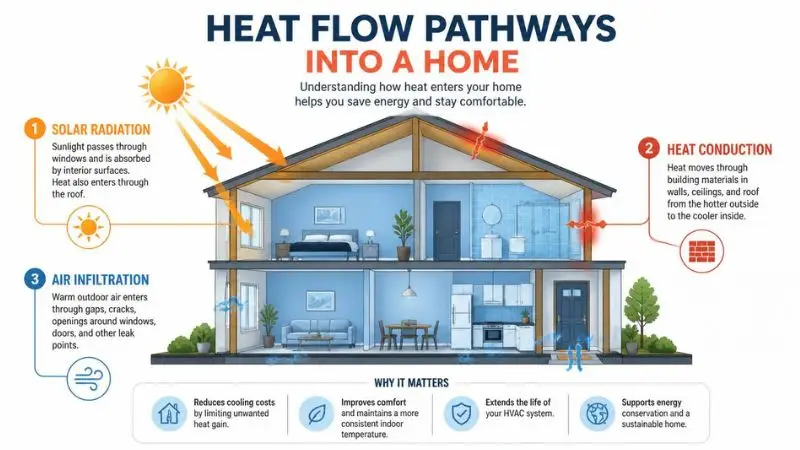
Before you fix a problem, you must understand it. Heat enters your home through three primary pathways:
- Solar radiation — Sunlight penetrating through windows and heating roofs accounts for up to 40% of total heat gain in an average home.
- Conduction — Heat traveling through walls, roofs, and floors from hotter exterior surfaces to cooler interior ones.
- Infiltration — Hot outdoor air sneaking in through gaps, cracks, and poorly sealed doors/windows.
Understanding this trifecta is the foundation of every strategy below. If you only buy a bigger AC without addressing these sources, you’re fighting a flood with a mop.
Key stat: The U.S. Department of Energy estimates that proper insulation and air sealing alone can reduce cooling costs by 10–50%, depending on climate zone.
How to Keep Your House Cool Without Skyrocketing Electricity Bills: Passive Cooling First
Passive cooling costs nothing to operate — it uses physics, not electricity. Master this layer before touching your thermostat.
1. Window Management: Your Biggest Lever
Windows are responsible for 25–30% of residential cooling and heating loads.
Daytime:
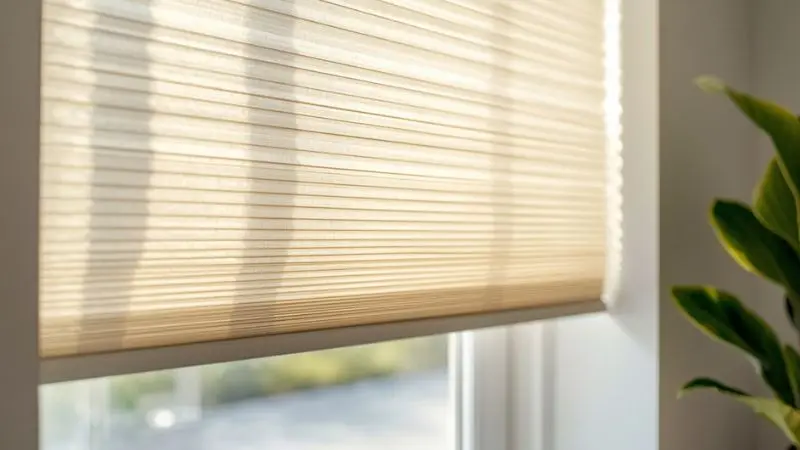
- Close all blinds, curtains, or shutters on south- and west-facing windows before 10 AM.
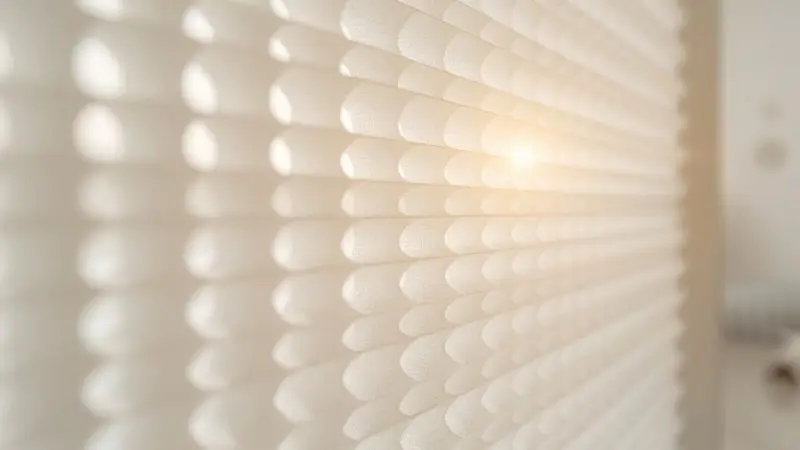
- Cellular (honeycomb) shades reduce solar heat gain by up to 62% compared to bare windows.
- Reflective window film (e.g., 3M Prestige series) blocks up to 99% of UV rays and 79% of solar energy while maintaining visible light.
Nighttime:
- Open windows on opposite sides of your home after 9 PM to create cross-ventilation — cool night air flushes out accumulated daytime heat.
- Even a 3°C (5.4°F) drop in overnight temperature can significantly reduce the next day’s cooling load.
2. Roof and Attic: The Silent Heat Bomb
An uninsulated or poorly ventilated attic can reach 65–82°C (150–180°F) on a hot summer day. This heat radiates down into your living space.
Immediate fixes:
- Radiant barrier foil — Installed on attic rafters, it reflects 95%+ of radiant heat. Cost: ~$0.10–0.25 per sq ft. ROI: typically under 3 years.
- Attic ventilation — Ensure a ratio of 1 sq ft of vent per 150 sq ft of attic floor. Ridge vents + soffit vents create a natural thermal chimney effect.
- Cool roofing — Reflective roof coatings (white or light grey) can lower roof surface temperature by 28–33°C (50–60°F).
3. Landscaping as Thermal Armor
Strategic planting is a long-term investment with compound returns.
- A single mature shade tree on the south or west side of your home can reduce cooling costs by 10–15%.
- Climbing plants (like Virginia creeper or jasmine) on exterior walls act as a living insulation layer.
- Grass and ground cover reduce radiant heat from the ground — paved surfaces near windows act as heat reflectors that push heat back into the structure.
Smart Technology Strategies to Keep Your House Cool Without Skyrocketing Electricity Bills
Technology in 2026 has made precision cooling more accessible than ever. The goal is to cool smarter, not harder.
4. Smart Thermostats: The 10–23% Savings Weapon
A programmable or AI-driven thermostat is the single highest-ROI device purchase for summer cooling.
| Device | Best Feature | Annual Savings Estimate | Payback Period |
|---|---|---|---|
| Google Nest Learning Thermostat (4th Gen) | Self-learning schedules | 10–12% on cooling | 1–2 years |
| Ecobee SmartThermostat Premium | Room sensors, occupancy detection | 13–23% on cooling | 1.5–2 years |
| Amazon Smart Thermostat | Alexa integration, budget option | 8–10% on cooling | <1 year |
| Honeywell Home T9 | Multi-room smart sensors | 12–18% on cooling | 1–2 years |
| Sensibo Sky (mini-split compatible) | Retrofit for any AC unit | 10–15% on cooling | <1 year |
Pro tip: Set your thermostat to 78°F (25.5°C) when home and 85°F (29.4°C) when away. Each degree above 72°F saves approximately 3% on cooling costs.
5. Ceiling Fans: Amplify Cooling Without the Bills
Ceiling fans cost roughly $0.01–0.02 per hour to run, versus $0.25–0.45 per hour for central AC.
- Set blades to spin counter-clockwise in summer (creates a downdraft wind-chill effect).
- The wind-chill from a ceiling fan allows you to raise your thermostat setting by 4°F (2.2°C) without any reduction in comfort — saving approximately 12% on cooling costs.
- Whole-house fans (attic fans) pull hot air out and replace it with cool night air. A whole-house fan uses 10–15× less energy than a central AC unit for the same cooling effect when outdoor temperatures are below indoor temps.
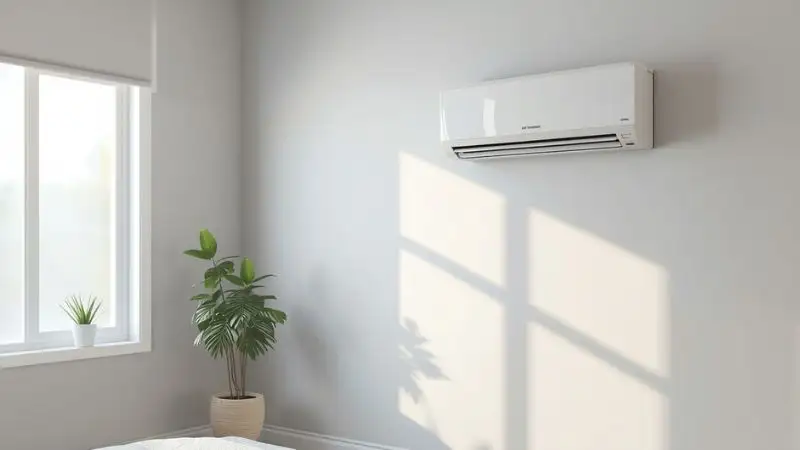
6. Mini-Split Systems: Zone Cooling Done Right
Central AC cools your entire house even when 80% of rooms are unoccupied — that’s economic waste.
Ductless mini-splits advantages:
- SEER2 ratings of 20–33+ (vs. 13–18 for typical central AC)
- Zone-specific cooling: only cool the rooms you’re using
- Inverter-driven compressors modulate output rather than cycling on/off, saving 30–50% over fixed-speed units
- No duct losses — central AC systems lose 20–30% of cooling energy through leaky ducts
Top 2026 mini-split picks by efficiency:
| Model | SEER2 Rating | Capacity Range | Best Use Case |
|---|---|---|---|
| Mitsubishi MZ-GL Series | 33.1 | 6,000–18,000 BTU | Single rooms, extreme efficiency |
| Daikin Aurora | 30+ | 9,000–24,000 BTU | Cold-climate heat pump + cooling |
| LG Art Cool Premier | 26 | 9,000–24,000 BTU | Living areas, aesthetic priority |
| Fujitsu Halcyon XLTH | 29 | 9,000–18,000 BTU | Dual-zone zoning flexibility |
| Midea U-Shaped Window AC | 15 (window unit) | 8,000–12,000 BTU | Budget single-room cooling |
Behavioral and Operational Changes That Cut Cooling Costs Instantly
No hardware purchase required — just discipline and timing.
7. Eliminate Internal Heat Sources
Your appliances generate significant heat that your AC must then counteract:
- Cooking: A conventional oven raises the kitchen temperature by 3–5°C. Switch to an air fryer, microwave, or outdoor grilling during peak heat (11 AM – 6 PM).
- Lighting: Incandescent bulbs convert 90% of energy to heat. If you haven’t switched to LED, do it now — LEDs emit 75–80% less heat for the same light output.
- Electronics and chargers: Unplug devices on standby. A TV, gaming console, and laptop charger together can add meaningful baseline heat load throughout the day.
- Washer/dryer: Run laundry after 8 PM. A dryer venting heat indoors (or through a leaky duct) can add thousands of BTUs per hour.
8. Pre-Cool Your Home Strategically
Use time-of-use electricity pricing to your advantage:
- Pre-cool at 6–7 AM when electricity is cheapest and outdoor temps are lowest.
- Set your thermostat 2–3°F lower than your comfort target before peak hours.
- Your home’s thermal mass (concrete, tile, drywall) acts as a “cold battery,” slowly releasing that stored coolness through the day.
- This technique can reduce peak-hour cooling demand by 30–40% and slash time-of-use electricity charges.
9. Improve Air Sealing and Insulation: The Unglamorous Game-Changer
No matter how efficient your AC is, if your home leaks air like a sieve, you’re conditioning the outdoors.
Priority air-sealing targets:
- Attic hatch and pull-down stairs
- Recessed lighting fixtures (huge air leakers)
- Electrical outlets and switch plates on exterior walls
- HVAC duct joints in unconditioned attics/crawlspaces
- Rim joists in basements
Insulation benchmarks by climate zone (DOE recommended):
| Zone | Attic R-Value | Wall R-Value | Floor R-Value |
|---|---|---|---|
| Hot-humid (Zones 1–2) | R-30 to R-60 | R-13 to R-15 | R-13 |
| Mixed (Zones 3–4) | R-38 to R-60 | R-13+5 | R-19 to R-25 |
| Cold (Zones 5–7) | R-49 to R-60 | R-20+5 | R-25 to R-30 |
Advanced Strategies: Next-Level Cooling for 2026
10. Evaporative Cooling (Where Climate Permits)
In dry climates (relative humidity below 50%), evaporative (swamp) coolers are extraordinarily efficient:
- Use 75% less electricity than refrigerant-based AC
- Operating cost as low as $0.02–0.05/hour
- Add humidity to dry air — an additional comfort benefit in arid zones
- Not suitable for humid climates (above 50–60% RH) — they lose effectiveness rapidly
11. Ground-Source Cooling and Earth Tubes
For new construction or deep renovation:
- Earth tubes (ground cooling tubes): Air is drawn through underground pipes (where soil temperature stays 10–15°C year-round) before entering the home. Can pre-cool incoming air by 10–20°C with minimal energy input.
- Geothermal heat pumps: COP (coefficient of performance) of 3.0–5.0 for cooling, meaning you get 3–5 units of cooling per unit of electricity. Upfront cost is high ($15,000–$30,000+), but operating costs drop 40–60% vs. conventional systems.
12. Phase-Change Materials (PCMs) in Building Envelopes
An emerging but increasingly practical technology: PCMs embedded in wallboard (like BioPCM or Micronal-enhanced drywall) absorb heat during the day as they melt and release it at night as they solidify.
- Can reduce peak indoor temperature by 2–4°C
- Works silently, passively, with zero operating cost
- Most effective in climates with significant day/night temperature swings
Maintenance That Keeps Your AC Running at Peak Efficiency
Even the best AC system loses 5–30% of its efficiency without proper upkeep.
Annual checklist:
- Replace air filters every 30–90 days (clogged filters increase energy use by up to 15%)
- Clean evaporator and condenser coils — dirty coils reduce heat transfer and can increase energy consumption by 30%
- Check refrigerant charge — incorrect charge is one of the top causes of AC inefficiency
- Clear debris from the outdoor condenser unit — maintain at least 2 feet of clearance on all sides
- Inspect and seal ductwork — have a professional duct blaster test conducted every 5 years
- Check condensate drain — a blocked drain causes the system to shut off on high-humidity days
DIY vs. professional maintenance:
| Task | DIY Viable? | Frequency | Cost (Professional) |
|---|---|---|---|
| Filter replacement | Yes | Monthly–quarterly | N/A |
| Coil cleaning (outdoor) | Yes (with caution) | Annually | $75–$150 |
| Refrigerant check | No (EPA certified required) | Every 2–3 years | $100–$300 |
| Duct sealing | Partial (accessible joints) | Every 5 years | $300–$1,000 |
| Full tune-up | No | Annually | $75–$200 |
Cost Comparison: Cooling Methods at a Glance
| Cooling Method | Avg. Operating Cost/Hour | Upfront Cost | Ideal For |
|---|---|---|---|
| Central AC (SEER2 14) | $0.28–0.45 | $3,500–$7,500 installed | Whole home, humid climates |
| Central AC (SEER2 20+) | $0.18–0.28 | $5,000–$10,000 installed | Whole home, high-use climates |
| Mini-split (SEER2 25+) | $0.08–0.18 | $1,500–$4,000/zone | 1–4 zones, targeted cooling |
| Window AC (mid-range) | $0.07–0.15 | $200–$800 | Single room, renters |
| Evaporative cooler | $0.02–0.05 | $150–$2,000 | Dry climates only |
| Ceiling fan | $0.01–0.02 | $50–$350 | Supplement, not replacement |
| Whole-house fan | $0.03–0.06 | $500–$1,500 | Night purging, mild climates |
| Geothermal HP | $0.04–0.09 | $15,000–$30,000 | New builds, long-term ROI |
Federal and State Incentives in 2026: Reduce Your Upfront Costs
The U.S. Inflation Reduction Act (IRA) incentives remain active in 2026:
- Energy Efficient Home Improvement Credit (25C): Up to $600 for high-efficiency central AC, up to $2,000 for heat pumps (mini-split or geothermal).
- High-Efficiency Electric Home Rebate Act (HEEHRA): Up to $8,000 for heat pumps for qualifying low-to-moderate income households.
- Many state and utility programs stack on top — total incentives can cover 30–60% of heat pump or insulation upgrade costs.
Check EnergyStar.gov and DSIRE.org for current, location-specific incentive details.
Conclusion: Keep Your House Cool Without Skyrocketing Electricity Bills — A Layered Approach Wins
There is no single silver bullet. The homes that successfully keep cool without skyrocketing electricity bills in 2026 apply a layered strategy: seal the envelope first, deploy passive cooling second, optimize mechanical systems third, and use smart controls fourth.
Priority action sequence:
- Air seal and insulate (highest ROI, lowest glamour)
- Install window treatments and radiant barriers
- Add ceiling fans and optimize existing AC settings
- Upgrade to a smart thermostat
- Consider mini-splits or geothermal if doing major HVAC work
- Use behavioral changes to eliminate internal heat sources and shift loads
Every dollar saved on electricity is permanent. Investments in your building envelope and efficient equipment compound year after year. The heat is not going away — but your electricity bills absolutely can be brought under control with the right system-level thinking.
Start with what you can do today. Seal those attic gaps. Close those west-facing blinds. Raise that thermostat by 2°F and turn on the ceiling fan. You’ll feel the difference in comfort — and see it on your next bill.