- Disclaimer: As an Amazon Associate, I earn from qualifying purchases at no extra cost to you.
If you are wondering why LiFePO4 batteries fail after investing in a premium solar power system, you are not alone. While Lithium Iron Phosphate ($LiFePO_4$) batteries are celebrated for their incredible lifespan and durability, thousands of homeowners are accidentally destroying their setups due to critical, overlooked user errors.
Battery storage degradation rarely happens because of bad manufacturing. In this article, we will break down the real science behind solar battery issues, the three critical mistakes killing your backup power, and how you can fix them to ensure your system lasts for decades.
In This Article
- The Brain of Your Storage: The Battery Management System (BMS)
- Mistake 1: The Danger of Over-Discharging and Self-Discharge in Storage
- Mistake 2: The 80/20 Charging Myth and Destructive Cell Imbalance
- Mistake 3: Exposing Solar Storage to High Ambient Temperatures
- The Ultimate $LiFePO_4$ Longevity Checklist
What is a LiFePO4 Battery?
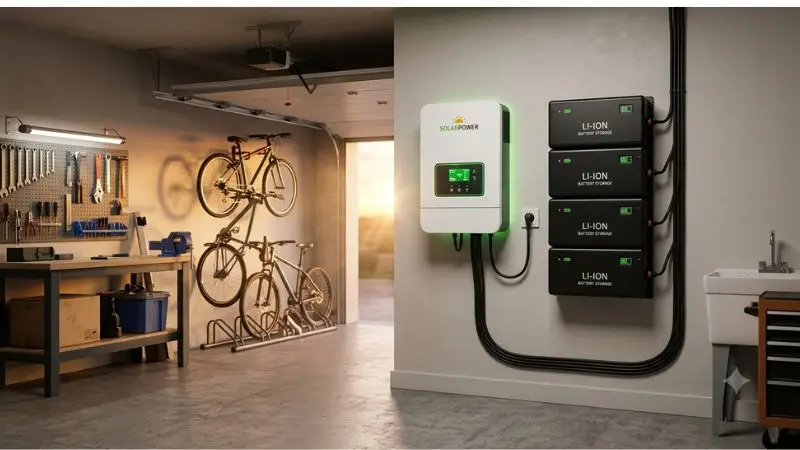
$LiFePO_4$ (Lithium Iron Phosphate) is an advanced lithium-ion battery chemistry that utilizes iron phosphate as the cathode material. Unlike older lead-acid batteries or alternative lithium chemistries (like NMC or NCA used in smartphones and Electric Vehicles), $LiFePO_4$ is highly resistant to thermal runaway (catching fire) and can easily handle thousands of deep charge-discharge cycles. Learn more about LiFePO4 Battery Technology on Wikipedia
The Brain of Your Storage: Why LiFePO4 Batteries Fail at the BMS Level
A $LiFePO_4$ battery pack is not just a simple black box; it consists of multiple individual chemical cells connected in series to achieve your system’s required voltage (such as 12V, 24V, or 48V). On top of these cells sits a small but crucial circuit board called the Battery Management System (BMS).
The BMS acts as the primary defense system for your solar storage. It automatically disconnects the battery if:
- The temperature is too hot or too cold.
- The voltage goes too high during charging.
- The battery capacity hits 0% (protecting it from over-discharging).
- Too much current is drawn at once.
While the BMS does an excellent job of protecting the cells from instant death, specific human errors can still quietly bypass its defenses and kill the battery over time.
Looking for a Reliable LiFePO4 Battery with a Smart BMS? If your current battery has suffered irreversible capacity loss and you need a high-quality replacement, we recommend choosing a battery with an advanced built-in BMS and premium A-grade cells.
👉 [Check Top-Rated LiFePO4 Solar Batteries on Amazon]
2. Mistake 1: Leaving Empty Batteries in Long-Term Storage
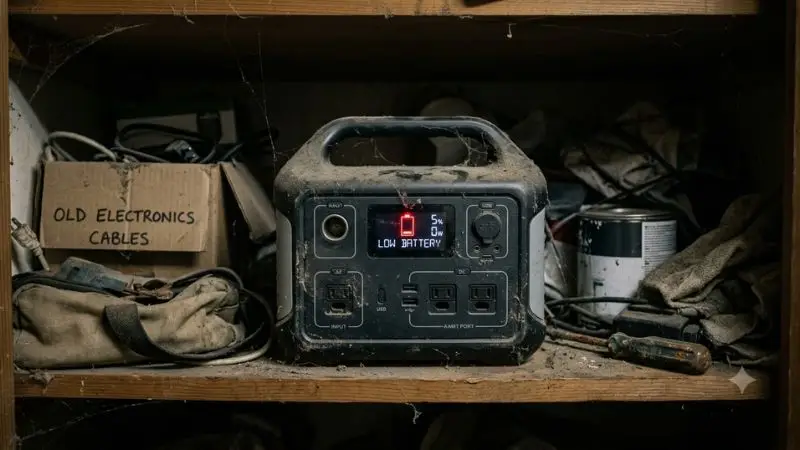
The quickest way people accidentally kill their expensive lithium solar storage is by leaving them empty in a closet, basement, or garage.
The Problem:
When your solar battery drains to 0% at night, the BMS steps in and disconnects the load to protect the cells. However, many users leave the battery in a completely discharged state or pack it away for months without recharging it.
The Science Behind the Failure:
Even when fully disconnected from your inverter, lithium cells have a natural self-discharge rate of about 3% per month. If you store a battery that is already sitting at 0% or 10% capacity, this natural self-discharge will push the cells below their absolute safe voltage limit. Once a $LiFePO_4$ cell drops below this critical threshold, it suffers permanent chemical damage. It will either refuse to turn back on entirely or experience a massive, irreversible drop in capacity.
The Fix:
- The 50% Rule: If you are storing your solar batteries for weeks or months, never store them empty. Always charge them up to 50% State of Charge (SoC) before putting them away.
- Check Regularly: Inspect your backup batteries every few months and top them back up to 50%.
- Watch the Temperature: If your storage area is hot (like a summer garage), the self-discharge rate can double to 5% or 6% per month. Always store them in a cool environment.
Did You Know?
Unlike older Lead-Acid batteries that suffer damage if you discharge them fully, high-quality $LiFePO_4$ batteries are designed to be cycled from 100% down to 0% every single day without any issue, provided they are charged back up shortly afterward.
3. Mistake 2: Falling for the 80/20 Charging Myth (Cell Imbalance)
Many solar battery owners complain that their storage is losing capacity rapidly, without realizing they are causing the problem themselves by trying to be “too safe.”
The Problem:
There is a massive misconception online that you should only charge lithium batteries up to 80% or 90% to extend their life. People read studies about Electric Vehicles and apply the same rules to $LiFePO_4$ solar batteries. This is a critical mistake for solar storage.
The Science Behind the Failure:
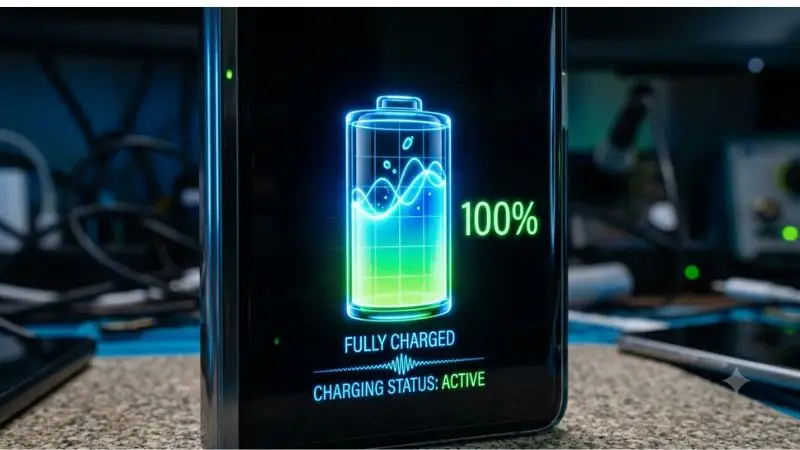
If you never allow your $LiFePO_4$ battery to charge to 100%, the individual cells inside will begin to drift apart in voltage over time. One cell might be full while another is half-empty. Because the cells are severely imbalanced, your entire battery pack will appear to drain incredibly fast at night.
To fix this, the BMS must activate its balancing circuit, which only triggers when the battery reaches 100% voltage. The iron phosphate chemical lattice is incredibly tough and does not suffer from the same high-voltage degradation as smartphone or car batteries.
The Fix:
- Charge to 100% Regularly: Do not be afraid to let your solar system fully charge the batteries to 100% as often as possible. This allows the BMS to balance the cells automatically and ensures you get the full usable capacity at night.
- Avoid Expensive Active Balancers: You do not need to modify your battery with external active balancers. Just let your battery hit 100% and let the internal BMS do its job.
- Recommended Tool:
- To accurately test your $LiFePO_4$ battery’s real voltage and monitor its cell balance without guessing, keeping a reliable digital multimeter or battery monitor on hand is extremely helpful.
- 👉 [View Recommended Digital Battery Monitors & Multimeters on Amazon]
4. Mistake 3: Exposing Your Battery Bank to High Ambient Heat
While solar charging generates very little internal heat because it happens at a slow, steady rate, the external environment plays a massive role in the health of your solar storage.
The Problem:
Leaving your solar battery bank in an unventilated, boiling shed, attic, or direct outdoor sunlight accelerates calendar aging—the natural degradation of lithium cells over time.
The Fix:
The ideal ambient temperature for maximum $LiFePO_4$ battery longevity and performance is around 70°F (21°C). Try to install your solar storage bank in a temperature-controlled room, a cool basement, or a well-shaded, well-ventilated enclosure to protect it from extreme summer heatwaves.
5. The Real Point of Failure: The BMS, Not the Cells!
Statistically, the actual lithium cells inside a battery rarely fail. When a solar battery suddenly stops working or refuses to hold a charge, it is almost always due to a BMS component failure.
Electronic hardware on the circuit board can wear out over time due to heat or electrical stress. To future-proof your solar investment, look for battery brands that feature serviceable cases, allowing you to easily open the unit and swap out a failed BMS while keeping the perfectly healthy chemical cells inside.
Conclusion: The Ultimate LiFePO4 Longevity Checklist
To make sure your Eco Power Guide solar battery bank lasts for 10 to 15+ years without sudden failures or capacity drops, follow these simple rules:
- Keep it charged: Never leave your battery sitting at 0% for multiple days.
- Hit 100% frequently: Let your solar panels fully charge the battery to maintain proper cell balance.
- Store at 50%: Always top up backup or seasonal batteries to 50% before long-term storage.
- Keep it cool: Avoid extreme ambient heat to slow down natural capacity fade.
Stop stressing over minor voltage numbers, use the full capacity of your battery today, and let your solar storage do the heavy lifting!
👉 For more details, you can also watch Will Prowse’s Guide on YouTube.