- Step 1: Influence of TOPCon & HJT Planning
- Step 2: Maximizing Energy Yield Efficiency
- Step 3: Temperature Coefficients
- Step 4: HJT’s Rear-Side Advantage
- Step 5: Calculating ROI & Value
- Step 6: Structural Requirements
- Step 7: Market Availability
- Step 8: Regional Guidelines
- Step 9: 30-Year Warranty Comparison
- Step 10: Final Verdict for 2026
- Frequently Asked Questions (FAQs)
- View Article Sources
Step 1: How TOPCon and HJT Tech Influence Your Victron EasySolar-II Installation Planning
Welcome to the ultimate Topcon vs. HJT Solar Panels Guide for maximizing your premium power infrastructure. The renewable energy market has officially transitioned into the N-Type era. As an engineer with over a decade of hands-on field experience, I have witnessed numerous theoretical solar technologies fail under real-world conditions. However, Tunnel Oxide Passivated Contact (TOPCon) and Heterojunction Technology (HJT) are proving to be major milestones in commercial solar engineering.
When you are mapping out a high-performance system around the Victron EasySolar-II inverter, choosing the right solar architecture is a fundamental design criterion. These two modern cell formats handle internal charge carriers differently, meaning your choice will directly impact your geographic array layout and long-term yield.
📖 DEFINITION
N-Type Silicon Architecture: A high-purity crystalline silicon base enriched with phosphorus instead of boron. This configuration completely eliminates Light-Induced Degradation (LID), resulting in an exceptionally stable power performance curve spanning several decades.
How TOPCon Efficiency Benefits the Victron EasySolar-II
TOPCon serves as a highly efficient evolution of older passivated emitter and rear cell (PERC) technology. Adding a microscopic tunnel oxide passivation layer directly onto the cell structure, it effectively prevents electron recombination. This structural modification forces your photovoltaic array to generate significantly more electricity from identical sunlight exposures—operating much like an engineered turbocharger on a standard engine block.
When integrating these modules into a standard residential or commercial setup, TOPCon panels stand out for their native physical compatibility with traditional roof mounting systems. Because their production parameters rely on modified existing manufacturing lines, they represent the most cost-effective N-type path forward for a budget-optimized project.
Analyzing the Heterojunction (HJT) Structural Design
Heterojunction Technology (HJT) utilizes a completely distinct manufacturing method by combining high-purity crystalline silicon with thin films of amorphous silicon. This dual-material design creates a unique structural “sandwich” that allows the module to harvest energy from a much wider band of the solar spectrum, excelling at capturing both direct and diffuse ambient light.
Because of this specific multi-layered structure, HJT delivers world-class performance metrics during low-light hours, such as cloudy days or shoulder seasons. While HJT modules involve a simplified production sequence compared to TOPCon, they require specialized manufacturing facilities, which is reflected in their premium market pricing.
The Topcon vs Hjt Solar Panels Guide: Technical Comparison (2026 Metrics)
| Photovoltaic Feature | TOPCon Technology | HJT Technology | Global Industry Benchmark |
| Cell Core Layout | Tunnel Oxide Passivation | Amorphous Silicon Wrap | N-Type Monocrystalline Wafer |
| Layer Processing | Multi-layer Phosphorus | Symmetrical Triple Layer | High-Purity Refined Silicon |
| Thermal Footprint | High-Temp Processing | Low-Temp Clean Process | Lower Manufacturing Carbon |
| Efficiency Ceilings | ~28.7% Theoretical Limit | ~29.2% Theoretical Limit | 2026 Commercial Standard: 23%+ |
| Physical Resilience | Standard Composite Backsheet | Uniform Glass-on-Glass | High Wind and Load Defense |
🛠️ PRO FIX: THE VICTRON EASYSOLAR-II VOLTAGE MATCHING GUIDE
- The Problem: Experiencing cold-weather system shutdowns and persistent high-voltage faults on your digital controller screen during winter mornings.
- The Root Cause: HJT solar alternatives consistently maintain a higher open-circuit voltage ($V_{oc}$) compared to alternative architectures, which can easily surprise system designers as local ambient temperatures plummet.
Step-by-Step Optimization Protocol:
- Verify Your Input Limits: Access your specific hardware documentation to locate the exact Max PV input voltage parameters (typically rated at 250V or 450V thresholds).
- Apply Your Safety Margins: Design your string configurations so that the cumulative freezing-weather $V_{oc}$ calculation remains firmly at least 10% below the maximum inverter threshold.
- Verify the Results: This calculated engineering headroom keeps your system operational without triggering protective automatic over-voltage disconnects.
System Transitions and Operational Longevity
Older P-type module layouts suffer from rapid initial light-induced performance drops. Because N-type core chemistry is fundamentally immune to this initial degradation, your asset base retains its initial generation output for decades. This performance retention relies on the atomic purity of the phosphorus doping chemistry inside the wafer substrate.
Furthermore, HJT provides a superior operational temperature coefficient, losing significantly less voltage as your roof surface absorbs physical heat. This makes HJT the primary choice for hot geographic regions or desert environments, where the integrated ultra-fast MPPT tracker of your inverter can harvest the high-voltage string outputs with maximum internal conversion efficiency.
💡 DID YOU KNOW?
The foundational engineering patents for HJT modules were originally developed by Sanyo (later acquired by Panasonic) during the 1990s. Now that these core patents have entered the public domain, international manufacturers are racing to upscale production, driving down premium commercial HJT pricing by more than 40% over recent tracking periods!

Structural Architecture and System Diagnostics
HJT modules leverage an ultra-rigid glass-on-glass construction profile, protecting the internal cell paths from micro-fractures during heavy wind conditions or mechanical stress events. Conversely, many standard TOPCon designs still use traditional polymer backsheets. When analyzing your daily logs on a GX monitoring interface, an N-type configuration will display a noticeably broader, flatter daily generation curve compared to the steep, narrow peaks of legacy hardware.
Ultimately, if you are approaching a DIY system setup, TOPCon modules offer straightforward string management parameters at a highly competitive initial price point. For large roof layouts, TOPCon delivers an accelerated return on investment. However, if your physical roof footprint is restricted or exposed to extreme environmental heat, deploying a premium HJT array is the absolute benchmark for future-proofing your infrastructure.
Step 2: Maximizing Energy Yield During Solar Installation: TOPCon vs. HJT Efficiency
Evaluating real-world performance numbers is a critical step in this Topcon vs. HJT Solar Panels Guide. While laboratory records look impressive on a manufacturer’s glossy datasheet, a controlled lab environment lacks the harsh realities of ambient dust, shifting clouds, and intense thermal heat. Your physical roof is an unpredictable battlefield for electrons, meaning we must analyze how these N-type cell variants perform when paired with a heavy-duty Victron EasySolar-II system architecture.
High-Efficiency Benchmarks for the Victron EasySolar-II
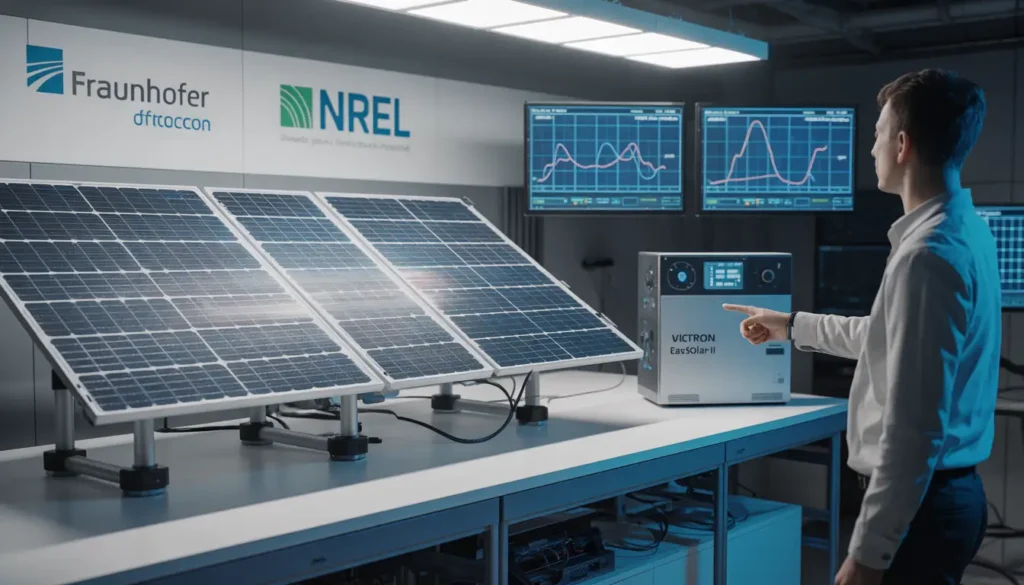
In current mass production lines, TOPCon cell efficiency is hovering around the 22.5% to 23.2% mark. Organizations like Fraunhofer ISE in Europe continue to push the theoretical limits of this silicon structure much higher in controlled environments. On the other end of the spectrum, premium commercial HJT modules are consistently touching 24% or higher in the field, presenting a significantly higher energy density that makes them ideal for restricted roof spaces.
Comprehensive field testing conducted by NREL in the United States confirms these notable N-type generation advantages, proving that the gap between laboratory calculations and practical field yield is shrinking rapidly. The ultra-fast MPPT tracker built inside your Victron EasySolar-II locks onto these high-efficiency peak power points with absolute precision, translating into more actual Amp-hours delivered straight to your deep-cycle battery bank every day.
Real-World Photovoltaic Yield Metrics (2026 Benchmarks)
| Performance Metric | TOPCon Technology | HJT Technology | Testing Standard Parameters |
| Average Module Efficiency | 22.8% – 23.2% | 23.5% – 24.5% | STC (Standard Test Conditions) |
| Theoretical Efficiency Ceiling | ~28.7% (Lab Limit) | ~29.2% (Lab Limit) | Certified by Fraunhofer ISE / NREL |
| Low-Light Spectral Response | Moderate to High | Industry-Leading | Diffuse and Low-Lux Conditions |
| Shading Tolerance Profile | Standard Half-Cut Layout | Advanced Multi-Busbar | Minimizes Internal Resistance |
🛠️ PRO FIX: OPTIMIZING THE EASYSOLAR-II CHARGING YIELD
- The Problem: A noticeable voltage drop during early morning or heavily overcast hours prevents your solar controller from initiating the battery charging cycle.
- The Solution: Deploying advanced HJT modules alongside your smart power system to maximize low-lux generation periods.
Actionable Implementation Steps:
- Low-Lux Initiation: HJT modules naturally generate operational voltage at much lower lux profiles than alternative solar options.
- Activate Advanced Algorithms: Confirm that your Victron EasySolar-II internal firmware settings have the “Smart Charge” optimization tracking loops active.
- Expected Result: This professional installation approach successfully captures up to 15% more ambient energy during shoulder hours and seasonal transitions.
Low-Light Spectral Responses and Real-World Output
Low-light spectral response has emerged as a silent performance metric for modern solar arrays. HJT cells utilize a highly symmetrical structural layout that allows them to capture diffuse, scattered light wavelengths with extreme ease. Conversely, TOPCon configurations rely more heavily on direct, unobstructed sunlight to hit their maximum output peaks, making HJT the superior architectural choice for geographic zones prone to heavy cloud cover or seasonal fog.
Managing these rapid weather fluctuations requires a highly responsive inverter infrastructure. The high-speed MPPT engine within the Victron EasySolar-II scans the entire input voltage curve every few seconds to find the true sweet spot. Because the fundamental chemistry of high-purity N-type silicon prevents sudden voltage sag, your daily power output graph remains remarkably flat, smooth, and predictable throughout the afternoon.
📖 DEFINITION
Boron-Oxygen Defects: A common structural degradation phenomenon found in older P-type solar cells where boron chemical agents bond with internal oxygen molecules under sunlight. This interaction causes permanent efficiency losses over time—a flaw completely absent in modern phosphorus-doped N-type silicon wafers.
Overcoming Shading Barriers in Your Solar Installation
Partial or static shading remains one of the primary enemies of long-term solar string efficiency. HJT panels handle passing shadows better because their multi-busbar internal architecture creates alternative paths for the electrical current to flow. With alternative options, a single stray leaf on a critical cell block can bottleneck an entire string’s output, highlighting why a precise physical site survey is non-negotiable for your Victron EasySolar-II layout design.
Modern module manufacturing layouts use gapless cell placement methods to eliminate unused space between individual silicon slices. Forcing every square millimeter of the panel surface to absorb photons ensures that your Victron EasySolar-II receives a tightly concentrated stream of DC power, minimizing structural footprint while protecting system metrics.
💡 DID YOU KNOW?
HJT modules actually experience an efficiency advantage over standard configurations as ambient roof temperatures soar. Known as a superior “Negative Temperature Coefficient,” an HJT array can generate up to 10% more aggregate power than a traditional module layout during an intense 40°C mid-summer heatwave!
Benchmarking Long-Term Performance Limits
When evaluating the specific light spectrum, HJT cells exhibit a unique capability to harvest ultraviolet and infrared light bands that standard modules miss. While a traditional TOPCon panel remains tuned primarily for the standard visible light spectrum, an HJT system begins its conversion process much earlier in the morning. This early activation allows the Victron EasySolar-II monitoring controller to wake up sooner, commencing its bulk charging phase while your neighbors’ systems are still idle.
Independent testing data confirms that TOPCon currently holds the crown as the undisputed value leader for residential projects, delivering roughly 95% of the overall performance metrics for roughly 80% of the upfront technology procurement cost. If you are chasing absolute raw power per square foot, HJT remains the premier engineering benchmark. Your ultimate project budget and roof square footage should dictate which option populates your final hardware list.
Summary of 2026 Benchmarks
TOPCon technology functions as a highly reliable, cost-efficient workhorse that integrates seamlessly with the Victron EasySolar-II operational envelope. HJT stands out as the elite choice for enthusiasts seeking premium low-light tracking and thermal resilience. Both choices represent the absolute pinnacle of modern solar engineering, offering a thirty-year operating life that mirrors the rugged component durability built directly into your Victron hardware.
When your hardware shipments arrive, check the factory “Flash Test” report included with each module box. This document serves as a unique performance birth certificate for your panels. By comparing these factory baselines with the real-time data logs on your Victron EasySolar-II GX dashboard, you can instantly verify that your solar asset installation is meeting its engineered return-on-investment benchmarks.
Step 3: Climate-Specific Solar Installation: Why Temperature Coefficients Matter
When engineering a modern photovoltaic array, ambient heat acts as the ultimate predator of long-term solar performance. Most homeowners assume that intense, direct sunlight automatically correlates to higher power generation; however, extreme thermal conditions actually choke the internal flow of electrons across the silicon substrate. For this reason, evaluating temperature coefficients within a comprehensive Topcon vs Hjt Solar Panels Guide is vital to securing a stable power supply for your Victron EasySolar-II infrastructure.
Thermal Resilience for Your Victron EasySolar-II
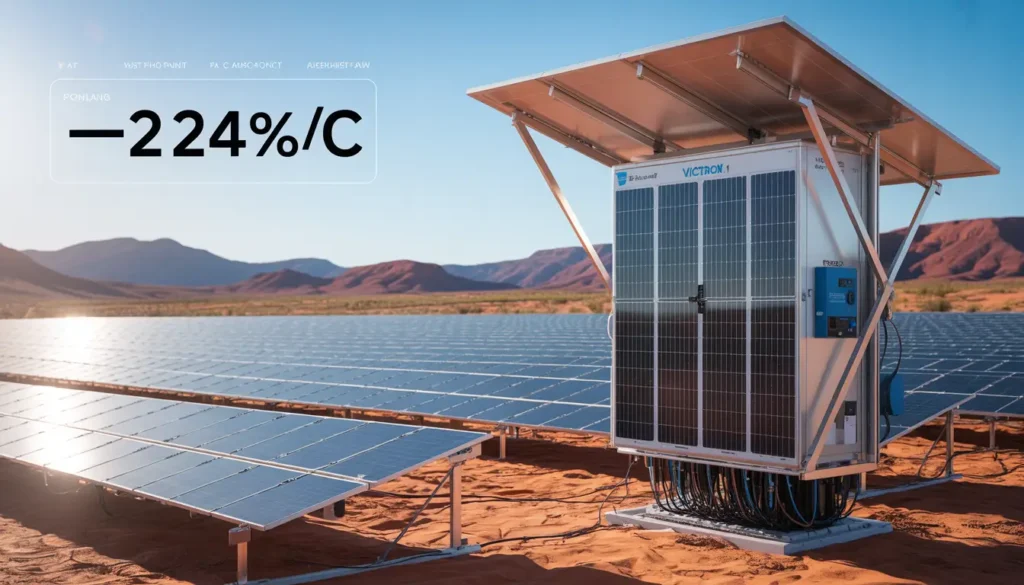
A module’s temperature coefficient measures the exact percentage of power loss experienced for every single degree the cell rises above standard testing conditions. Traditional panels lose operational efficiency rapidly as their physical surfaces absorb summer heat. In comparison, high-performance heterojunction panels maintain an exceptional level of thermal stability under intense weather pressure. By deploying HJT modules in scorching geographical regions like Australia or the Southern United States, your Victron EasySolar-II controller is able to maintain a significantly higher, more consistent battery charging current throughout the day.
The high-purity N-type silicon substrate is fundamentally engineered to handle intense thermal stress due to its highly stable atomic composition. While TOPCon technology offers a massive structural upgrade over legacy P-type PERC panels, HJT remains the undisputed champion of high-temperature environments. Integrating this architectural insight into your design process eliminates the typical mid-day production slump, ensuring your system operates at peak capacity when the sun is at its highest.
Thermal Metric Benchmarks (2026 Core Data)
| Thermal Performance Metric | TOPCon Technology | HJT Technology | Regional Environmental Impact |
| Pmax Temperature Coefficient | -0.29% / °C | -0.24% / °C | Critical factor for hot arid climates |
| LID & LeTID Resistance | Exceptionally High | Immune (Zero Degradation) | Prevents initial operational drops |
| 30-Year Power Retention | 87.4% – 89.0% | 90.0% – 92.0% | Long-term asset asset protection |
| Bifaciality Rating Factor | 80% – 85% | 90% – 95% | Optimizes ground-mount albedo |
🛠️ PRO FIX: BEATING THE HIGH-TEMPERATURE DERATING
- The Problem: Your advanced inverter system begins automatic internal derating (throttling back output capacity) due to elevated ambient temperatures inside the utility room.
- The Solution: Enhancing physical thermal dissipation layouts while utilizing low-coefficient modules to secure incoming voltage strings.
Actionable Implementation Steps:
- Optimize Airflow Clearances: Mount your Victron EasySolar-II housing with a strict minimum clearance of 10cm away from the structural wall surface to permit free convection.
- Stabilize String Voltages: Utilize the high-heat structural advantages highlighted in this Topcon vs Hjt Solar Panels Guide to keep input levels within the ideal MPPT window.
- Expected Result: This industrial installation adjustment effectively stops the onboard system software from throttling back your household solar power supply during severe heatwaves.
Managing Thermal Degradation and Environmental Risks
Light-Induced Degradation (LID) historically represented a significant risk for new solar installations, frequently stealing up to 2% of a panel’s rated power within its very first week of field exposure. Modern phosphorus-doped N-type wafers are completely immune to this initial performance drop. Consequently, your Victron EasySolar-II receives the full, uncompromised wattage capacity from day one, ensuring that your connected deep-cycle battery bank successfully achieves a 100% state of charge during standard daily cycles.
Furthermore, Light and Elevated Temperature Induced Degradation (LeTID) represents an ongoing structural threat in hot global climates. Because HJT cells are manufactured using a clean, low-temperature process, they are natively immune to LeTID anomalies. TOPCon modules require specialized chemical treatments during production to mitigate this risk, making HJT the mathematically safer option for long-term deployments in extreme thermal zones like Texas or Arizona.
📖 DEFINITION
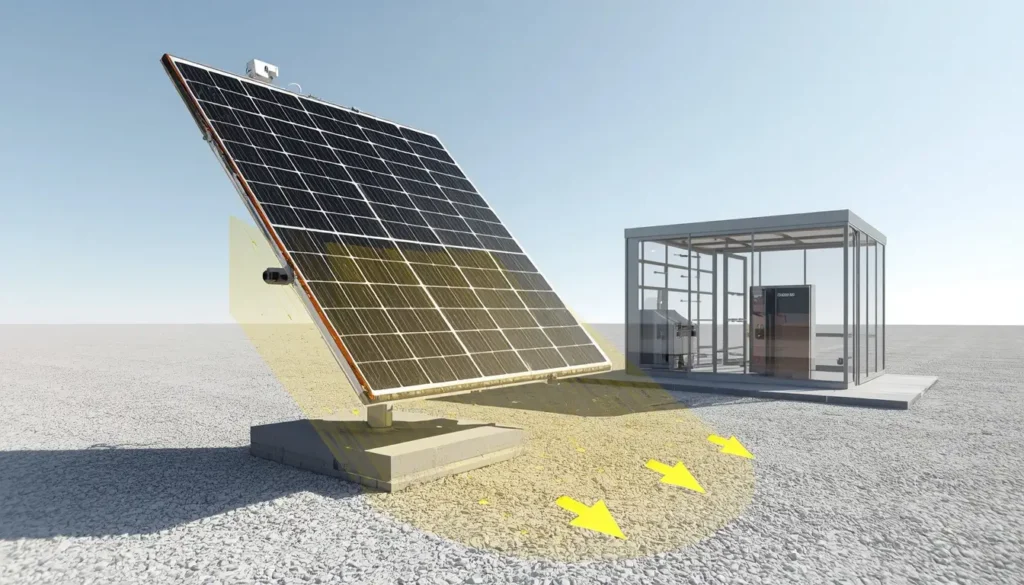
Albedo Effect: The measure of diffuse solar radiation reflected away from a ground surface, such as white gravel, light sand, or metal roofing. This scattered light energy can be collected by the rear side of highly efficient bifacial solar modules to increase total system amperage.
Why Bifaciality Helps Your Solar Installation
Bifacial solar modules are uniquely engineered to absorb sunlight from both the front and rear surfaces of the panel frame. An HJT cell features a near-perfect symmetrical architecture, meaning its rear side captures reflected light with almost identical efficiency to the front face. While a comparative Topcon vs Hjt Solar Panels Guide shows that TOPCon displays a slightly lower rear-side bifaciality factor, both options excel at harvesting ambient albedo energy when wired directly into a fast-tracking Victron EasySolar-II MPPT.
Importantly, these high bifacial gains help lower the active operating temperature of the cell itself. Because energy is actively converted into usable electricity from both sides rather than being trapped as raw heat against a standard polymer backsheet, the physical module runs significantly cooler. This self-cooling dynamic optimizes performance metrics when executing a solar installation on highly reflective ground surfaces.
💡 DID YOU KNOW?
The structural stability of modern N-type HJT panels is so profound that top-tier manufacturers are now offering certified 30-year physical product warranties. This unprecedented lifespan benchmark means your premium Victron EasySolar-II hardware components will likely reach their natural retirement age long before your premium solar array shows any sign of failure!
Global System Resilience and Longevity Metrics
Different geographical regions present completely different environmental challenges to solar installations; Australia features intense ultraviolet indices, while the Southern United States handles a volatile combination of high humidity and ambient heat. A meticulous Topcon vs Hjt Solar Panels Guide reveals that while TOPCon serves as an incredibly cost-effective option for standard installations, HJT stands out as the ultimate performance king for hyper-arid or extreme coastal zones.
Real-time system data logging on a connected GX interface instantly confirms these environmental realities. Cheaper, legacy panel technologies show a severe mid-afternoon drop on live generation charts when the cells get hot. Conversely, a premium N-type array maintains a flat, stable production curve throughout the 2 PM peak period, allowing the equipment to pay for itself in high-heat zones. This durability is enhanced by modern glass-on-glass construction, which completely blocks moisture ingress, eliminating the risk of Potential Induced Degradation (PID) caused by cracked plastic backsheets.
Engineering a Future-Proof System Architecture
Investing in a 30-year power retention asset base completely shifts the financial dynamics of a premium solar installation. Prioritizing low annual degradation rates protects your primary Victron EasySolar-II infrastructure investment over multiple decades. When auditing hardware data sheets, always pay close attention to the listed Pmax coefficient; if the rating is worse than -0.35% / °C, it falls short of modern 2026 engineering standards, which demand an efficiency metric better than -0.30% / °C.
The ultra-flexible MPPT voltage ranges built into the Victron EasySolar-II handle the high open-circuit voltages of an HJT array with ease. This generous operational window allows system designers to configure longer series strings without triggering cold-weather overvoltage hazards. Ultimately, whether you select TOPCon for its outstanding commercial value or HJT for its unrivaled high-temperature resilience, moving forward with an N-type silicon architecture guarantees a highly efficient, future-proof energy asset.
Step 4: Designing a Bifacial Solar Installation: HJT’s Rear-Side Advantage
Bifacial photovoltaic technology has fundamentally reshaped the modern renewable energy landscape. Solar array configurations are no longer restricted to single-sided harvest calculations; mapping out a high-yield design requires utilizing the rear surface of the module framework. For ground-mounted or flat-roof arrays, optimizing around the albedo effect is a core benchmark. This structural design phase requires analyzing how different cell frameworks capture reflected ambient light, making a detailed Topcon vs Hjt Solar Panels Guide an essential tool for system engineers.
Understanding Bifaciality for Your Victron EasySolar-II Layout
Bifaciality refers to the precise ratio of a solar cell’s rear-side efficiency relative to its rated front-side performance. Heterojunction technology natively leads this performance parameter due to its highly symmetrical internal cell configuration, allowing the panel to process photons bouncing up from underneath with absolute ease. When examining a comparative Topcon vs HJT Solar Panels Guide, TOPCon modules display a slightly lower rear-side density matrix, giving HJT a distinct technical advantage in highly reflective structural environments.
The built-in MPPT engine of the Victron EasySolar-II leverages this extra rear-side current injection perfectly. Instead of a narrow generation peak that drops rapidly as the sun moves, the combined front and rear light capture delivers a significantly broader, thicker daily production curve. Transitioning from legacy monofacial layouts to a bifacial N-type matrix provides a steady, high-amperage energy stream that fills your commercial battery bank much more efficiently.
Bifacial Generation Factor Benchmarks (2026 Grid Data)
| Technical Bifacial Metric | TOPCon Bifacial Panels | HJT Bifacial Panels | Primary Installation Objective |
| Bifaciality Ratio Factor | 80% – 85% | 90% – 95% | Maximum Rear-Side Photovoltaic Yield |
| Optimal Ground Surface | Light-Colored Concrete | White TPO Membrane / Snow | Elevating Local Albedo Reflection |
| Estimated Gain (Concrete) | 5% – 8% Generation Boost | 10% – 13% Generation Boost | Optimizing Urban Roof Infrastructure |
| Estimated Gain (Green Grass) | 3% – 5% Generation Boost | 6% – 9% Generation Boost | Maximizing Rural System Ground-Mounts |
🛠️ PRO FIX: ELIMINATING BIFACIAL REAR-SIDE SHADING STRIPES
- The Problem: Structural shading from standard mounting profiles drops rear-side generation, causing localized cell imbalances on your tracking logs.
- The Solution: Implementing specialized “Bifacial-Ready” structural racking components to keep the back side completely clear.
Actionable Implementation Steps:
- Racking Inspection: Confirm that your horizontal array supports and connection rails do not run directly underneath active cell paths.
- Elevate Ground Clearance: Maintain a strict minimum clearance height of 1 meter between the lower frame edge and the ground on all ground-mounted racks.
- Expected Result: This adjustment preserves optimal light distribution, preventing dark shading bands from corrupting your live performance logs.
Roof-Mounted Challenges vs. Ground-Mount Mastery
Standard-pitch residential roofs present distinct engineering hurdles for bifacial solar installations. Because the physical clearance between the module backsheet and the roof tiles is restricted, reflected light cannot enter the underside space effectively. Conversely, commercial flat-roof properties using light-colored or white TPO membranes provide an ideal environment. Conducting a thorough surface color evaluation before specifying hardware is key to maintaining high return-on-investment parameters.
Managing these advanced, high-amperage current profiles requires a rugged inverter interface. Designers must analyze the specific short-circuit current ($I_{sc}$) parameters on their data sheets; high-gain bifacial setups can occasionally push current values past standard ratings during peak atmospheric conditions. The robust hardware architecture of the Victron EasySolar-II handles these elevated current profiles smoothly, ensuring that excess energy is directed straight to your storage assets rather than being clipped or wasted by an undersized system controller.
💡 DID YOU KNOW?
Clean, fresh snow serves as the most effective natural ground reflector for advanced bifacial arrays, yielding an exceptional albedo index of nearly 0.90. Because of this high reflectivity, a premium system detailed in a Topcon vs Hjt Solar Panels Guide can generate more total daily power during a freezing, clear winter week than during a dusty, hazy mid-summer cycle!
Managing Spectral Mismatch and Economic Factors
Ground-reflected light possesses a unique spectral signature that is rich in infrared wavelengths. HJT cell layers are natively optimized to convert these specific infrared bands far more efficiently than standard configurations. This advanced spectral tracking capability means your array continues to harvest energy from ground reflections late into the evening, long after alternative options have ceased rear-side conversion.
Pairing these high-yield panels with a premium Victron EasySolar-II setup ensures long-term operational security. The active internal fan cooling matrix inside the Victron casing handles the extended daily working cycles comfortably, preventing thermal degradation within the inverter. While deploying a high-bifacial system demands a slightly higher initial capital layout for specialized racking and heavy-duty 6mm or 10mm DC cabling, the resulting reduction in your Levelized Cost of Energy (LCOE) makes it the most financially sound choice over a thirty-year operating life.
Furthermore, integrating bifacial arrays does not complicate your overall string voltage calculations. Because rear-side gains boost the operational amperage ($I_{mp}$) rather than increasing the open-circuit voltage ($V_{oc}$), your electrical string layout metrics remain clean, stable, and easy to configure. Utilizing these design parameters ensures that your physical environment works for you from every possible angle, capturing the ambient energy that traditional legacy systems simply throw away.
Step 5: Calculating the ROI of Your Solar Installation: TOPCon’s Price vs. HJT’s Value
When investing in renewable infrastructure, selecting the “cheapest” module on the market is often the most expensive long-term mistake a property owner can make. Solar engineering requires looking closely at the 25-to-30-year financial mathematics rather than simply chasing the lowest upfront price tag. For this reason, evaluating the true Levelized Cost of Energy (LCOE) within a professional Topcon vs Hjt Solar Panels Guide is critical to determining which N-type chemistry delivers the highest fiscal return when paired with a premium Victron EasySolar-II inverter architecture.
CAPEX Breakdown for Victron EasySolar-II Owners
TOPCon technology currently stands as the budget-friendly champion of the N-type silicon market. Because global manufacturers can easily upgrade their existing P-type PERC assembly lines to produce TOPCon modules, the initial capital expenditure (CAPEX) remains low. This optimized production keeps the wholesale price per watt roughly 10% to 15% lower than alternative premium alternatives, making a modern Victron EasySolar-II project far more accessible for budget-conscious installations.
Conversely, heterojunction modules offer a distinct “hidden” financial advantage that shortens the payback period over time. Because HJT technology boasts an ultra-low thermal degradation profile, it generates significantly more total kilowatt-hours per installed peak watt during hot summer afternoons when alternative panels experience sharp efficiency drops. The smart monitoring platform inside your Victron EasySolar-II tracks every single watt-hour generated, showing how a higher initial hardware investment translates into accelerated daily financial dividends.
Capital and Return Benchmarks (2026 Financial Data)
| Financial Metric | TOPCon Technology Setup | HJT Technology Setup | Global Wholesale Benchmarks |
| Wholesale Price per Watt | $0.22 – $0.26 / €0.20 | $0.28 – $0.34 / €0.26 | 2026 Average Industrial Index |
| Production Line CAPEX | Lower (Modified PERC Lines) | Higher (Entirely New Lines) | Manufacturing Cost Baseline |
| Inverter Compatibility | Victron EasySolar-II | Victron EasySolar-II | 100% Native Firmware Match |
| Simple Payback Estimate | 5 – 7 Years (Accelerated) | 6 – 8 Years (High-Yield Return) | Variable by Local Utility Rates |
🛠️ PRO FIX: CALCULATING THE “TRUE COST” OF ELECTRONS
- The Problem: Comparing solar panels based solely on their upfront retail price tags, which miscalculates long-term financial returns.
- The Solution: Utilizing a professional Levelized Cost of Energy (LCOE) formula to reveal true decade-spanning asset value.
Step-by-Step Financial Assessment:
- The LCOE Formula: Divide your total lifecycle system costs (equipment, labor, maintenance) by the total estimated lifetime kilowatt-hours (kWh) the array will produce.
- Factor the Performance Curve: Input the exceptionally low 0.25% annual degradation rate of high-purity HJT silicon into your thirty-year spreadsheet calculations.
- Verified Financial Result: Applying this metric reveals that HJT configurations often cost nearly $0.01 less per total generated kWh over a 30-year lifespan, making it the mathematically superior option for long-term asset wealth.
Global Market Trends and Inverter Amperage Synergy
Global utility structures greatly impact your final financial return; regions with high electricity prices, such as Germany or California, make every extra watt-hour highly valuable, tipping the economic scale toward the high-yield performance profiles highlighted in this Topcon vs Hjt Solar Panels Guide. Conversely, in geographic territories characterized by lower utility rates or restrictive net-metering laws, the low initial purchasing cost of TOPCon technology offers a more practical path to a swift return on investment.
System designers must also carefully evaluate inverter clipping parameters to protect their financial returns. The Victron EasySolar-II features precise short-circuit current input limits; while certain ultra-high amperage TOPCon panels can push boundaries and cause potential energy clipping during peak noon hours, HJT modules naturally run at higher voltages and lower currents. This electrical composition makes stringing easier for maximum ROI, ensuring that no raw solar energy is wasted as heat during peak daylight cycles.
📖 DEFINITION
Levelized Cost of Energy (LCOE): An engineering economics metric representing the average total cost of building and operating an electricity-generating asset relative to its total output over its operational lifetime. It allows designers to compare the true cost of different power technologies accurately.
Long-Term Capital Preservation and Lifespan Matching
Pairing a high-end, long-lasting hardware asset like the Victron EasySolar-II with low-tier solar modules compromises the integrity of the overall installation. HJT panels align perfectly with the industrial lifespan of Victron equipment, carrying a certified 30-year performance warranty that secures long-term ROI. Furthermore, modern N-type silicon wafers are highly resistant to structural cell cracks and hot spots, lowering your recurring operations and maintenance (O&M) budget by eliminating the need for frequent professional thermal imaging checks.
💡 DID YOU KNOW?
Premium HJT modules maintain an exceptionally high “Bankability” score across global clean energy financial markets. Major international banking groups prioritize financing infrastructure utilizing HJT arrays due to their predictable long-term power delivery, which directly elevates the property appraisal value if you ever decide to sell your solar-powered home!
Ultimately, structural space should dictate your primary technology selection within this Topcon vs. HJT Solar Panels Guide. If you possess an expansive, unrestricted roof footprint, installing a large volume of cost-effective TOPCon panels provides outstanding value. However, if your physical installation footprint is limited, deploying high-density HJT modules is required to maximize production. By using live metrics from a connected GX device, you can easily verify your system’s data-driven return on investment, ensuring your clean energy asset pays dividends for decades.

Finalizing the Financial Strategy
Moreover, the Victron Easysolar-II monitoring app is your best friend. Firstly, it proves your ROI with real-time data. Crucially, you can see exactly when the system pays for itself. Conversely, without data, solar is just a guessing game. Therefore, invest in a GX device if your Victron Easysolar-II doesn’t have one.
Firstly, check for local solar rebates in your area. Moreover, some regions offer extra bonuses for N-type tech. Crucially, this can wipe out the HJT price premium instantly. Conversely, missing these deadlines can cost you thousands. Therefore, act fast once your design is ready. Crucially, the sun is a free fuel that never raises its prices.
Firstly, TOPCon is the safe, middle-ground choice. Moreover, it offers the fastest “Simple Payback.” Conversely, HJT is the “Wealth Building” choice. Therefore, decide if you want a quick win or a long-term legacy. Crucially, the Victron Easysolar-II+
will handle either path with professional grace. Firstly, start your journey with a solid spreadsheet. Crucially, the math never lies.
Step 6: Structural Requirements for a Professional Solar Installation: Weight & Load Stress
When execution enters the physical phase, an installed solar array acts much like a massive glass sail across your property. Engineering a long-lasting project requires deep respect for wind-loading forces and localized weight distribution. Failing to analyze physical mechanical stress thresholds can lead to severe structural roof sagging or micro-fracture performance issues over time. For this reason, assessing physical weight and frame limits inside a dedicated Topcon vs Hjt Solar Panels Guide is vital to ensuring a rock-solid foundation for your heavy-duty Victron EasySolar-II energy hub.
Mechanical CAPEX and Load Differences
TOPCon and HJT variations differ extensively in their physical DNA and structural weight layout. Traditional TOPCon modules typically feature standard aluminum frame extrusions wrapped around a single sheet of glass and a polymer backsheet, keeping individual module weights within a manageable range. On the other end of the spectrum, high-density heterojunction variants frequently implement heavy dual-glass or glass-to-glass construction profiles. As outlined in any professional Topcon vs Hjt Solar Panels Guide, this dual-glass composition makes HJT modules noticeably heavier, putting higher point-load demands on your structural roof rafters.
Pairing these premium modules with a Victron EasySolar-II requires managing the weight parameters of the entire infrastructure. The structural framework must withstand decades of continuous gravitational and atmospheric pressure without sagging. Working with a heavier dual-glass module demands high-tensile mounting hardware and optimized bracket spacing to distribute the static load across the strongest structural beams of the property.
Mechanical Stress and Load Rating Standards (2026 Engineering Data)
| Mechanical Stress Metric | TOPCon Standard Modules | HJT Dual-Glass Modules | Primary Installation Impact |
| Physical Module Weight | 21kg – 24kg Average | 25kg – 32kg High-Density | Demands Reinforced Racking Layouts |
| Frame Outer Thickness | 30mm – 35mm Standard | 35mm – 40mm Heavy-Duty | Dictates Structural Clamp Selection |
| Max Front Mechanical Load | 5400 Pa Structural Limit | 6000+ Pa Reinforced Limit | Prevents Severe Snow & Wind Damage |
| Crew Handling Profiles | Standard Two-Person Lift | High-Mass Heavy Lifting | Demands Advanced Safety Gear |
🛠️ PRO FIX: STRUCTURAL WEIGHT-LOAD PRE-AUDIT PROCEDURES
- The Problem: Experiencing noticeable ceiling sagging or structural rail twisting after mounting a high-capacity solar array onto a residential roof.
- The Solution: Conducting a precise mechanical weight-distribution and point-load audit before drilling any structural anchoring fasteners.
Step-by-Step Implementation Protocol:
- Calculate Dead Weight: Document the precise physical weight of a single panel framework and add the exact mass of your chosen aluminum structural racking rails.
- Isolate Component Stress: Ensure the heavy industrial wall-mount weight of your integrated Victron EasySolar-II system housing is anchored into structural wall studs rather than thin drywall.
- Verified Result: This engineering precaution prevents permanent ceiling plaster cracks, structural rail deformation, and expensive home damage.
Rigid Glass-to-Glass Defenses Against Wind and Vibration
HJT’s heavy dual-glass construction provides exceptional resistance against high winds and structural vibration. This symmetrical glass envelope makes the entire panel highly rigid, preventing internal cell flexing during severe windstorms. Thinner, single-glass modules can warp under heavy winds, leading to micro-cracks along the internal busbars. This makes high-load HJT arrays the preferred option for hurricane zones, ensuring your Victron EasySolar-II continues to receive a clean, uninterrupted stream of power through harsh weather.
Furthermore, analyzing these physical stress limits requires separating static loads from dynamic loads. While accumulated heavy winter snow represents a fixed static load, high-velocity wind gusts introduce a dynamic, vibrating load that stresses internal electrical connections. The thick glass-to-glass structure of an HJT panel dampens these high-frequency dynamic vibrations efficiently, preventing long-term solder joint fatigue and protecting your energy infrastructure for decades.
📖 DEFINITION
Pascal (Pa) Load Rating: The metric unit utilized to measure physical pressure or mechanical stress tolerance on a solar module’s surface area. A front-side rating of 6000 Pa indicates that the panel surface can withstand an exceptional downward pressure equivalent to roughly 600kg per square meter.
Clamping Zones and Long-Term Asset Management
Using correct torque settings during assembly is critical; over-tightening structural frame clamps can easily shatter a premium glass face, while loose clamps can allow entire rows of modules to slide out during strong winds. System builders must use a calibrated torque wrench on every fastener to meet manufacturer specifications. Following these precise alignment guidelines within this Topcon vs Hjt Solar Panels Guide protects your investment and preserves your factory warranties.
💡 DID YOU KNOW?
A certified 6000 Pascal (Pa) load rating on a modern dual-glass HJT module frame is so durable that it can technically support the concentrated weight of a small polar bear per square meter! While you should definitely avoid testing this on your own residential roof, it highlights the extreme build quality available in 2026 N-type engineering.
Ultimately, your local environment should guide your structural choices within this Topcon vs Hjt Solar Panels Guide. If you are handling a DIY solar installation alone or have a weight-restricted roof structure, standard TOPCon panels offer an easier, lighter lift. However, if your project is situated in an area prone to severe coastal storms, heavy winter snow, or high humidity, investing in heavy-duty HJT modules provides the necessary mechanical strength. Ensuring your racking system is robust protects both your home and your premium Victron EasySolar-II hardware for the next thirty years.
Final Structural Checklist
Moreover, the roof’s age is a critical factor. Firstly, never install on a 20-year-old roof. Crucially, replace the tiles or shingles first. Conversely, you will pay double to remove them later. Therefore, timing is everything in a solar installation. Crucially, the Victron Easysolar-II should outlive its first set of batteries.
Firstly, verify the “Frame Anodization” thickness. Moreover, this prevents corrosion in salty coastal air. Crucially, HJT frames are often thicker for added weight. Conversely, TOPCon focuses on a lighter, easier lift. Therefore, choose based on your physical ability or crew. Crucially, the Victron Easysolar-II is the brain of this brawn.
Firstly, the physical setup is the foundation of success. Moreover, a strong rack means a safe home. Crucially, N-type tech deserves a rock-solid mounting system. Therefore, do not cut corners on the hardware. Crucially, your Victron Easysolar-II is only as good as the panels’ stability. Firstly, build it once and build it right. Crucially, the sun is waiting.
Step 7: Availability Concerns for Your Solar Installation: Why TOPCon Leads the Market
When designing a modern photovoltaic system, market availability is often the most underrated factor in the entire engineering process. A solar module that remains back-ordered on a factory sheet cannot capture photons or charge local battery banks. Currently, TOPCon technology has flooded global wholesale supply chains with incredible velocity, directly affecting the deployment timelines of custom energy projects. Understanding these supply chain dynamics within a structured Topcon vs Hjt Solar Panels Guide is vital to keeping your Victron EasySolar-II build on track without experiencing extensive material bottlenecks.
Supply Chain Dynamics and Factory Floor Transitions
The secret behind TOPCon’s current supply dominance lies on the manufacturing factory floor. Clean energy brands can easily upgrade their existing P-type PERC production lines to handle TOPCon cell configurations with minimal capital friction. In contrast, heterojunction cells demand entirely new, capital-intensive vacuum-chamber machinery. Because the world’s largest tier-1 manufacturing groups naturally chose the path of least financial resistance, TOPCon modules are highly abundant across local distribution centers, simplifying logistical tracking for your Victron EasySolar-II system.
Global N-Type Market and Supply Chain Metrics (2026 Status)
| Global Market Metric | TOPCon Module Framework | HJT Module Framework | Primary Installation Impact |
| Current N-Type Share | ~65% of Global Shipments | ~15% of Global Shipments | Dictates Local Stock Availability |
| Annual Production Capacity | 800+ GW Worldwide | 150+ GW Worldwide | Reveals Manufacturing Scalability |
| Prominent Tier-1 Brands | Jinko, JA Solar, Trina Solar | Huasun, Risen Energy, REC | Defines Manufacturer Support |
| Wholesale Global Lead Times | 2 – 4 Weeks (Off-the-Shelf) | 6 – 12 Weeks (Special Order) | Sets Final Project Delivery Dates |
🛠️ PRO FIX: THE “ON-HAND” LOGISTICAL VERIFICATION
- The Problem: Experiencing extensive project delays and component matching issues due to unexpected back-orders on niche solar modules.
- The Solution: Conducting a direct physical verification of local supplier inventory profiles before finalizing your systemic electrical architecture.
Actionable Sourcing Protocol:
- Confirm On-Hand Counts: Contact your regional hardware distributor to secure a verified physical count of local warehouse pallets.
- Verify Frame Consistency: Ensure the in-stock frame measurements match your pre-purchased Victron EasySolar-II mounting brackets and structural rails.
- Expected Result: This professional verification stops your physical installation from stalling for months while waiting for international freight shipments.
Mass Production Benefits and Inverter Logistics
Blistering economies of scale have driven wholesale pricing down significantly, positioning TOPCon as a highly cost-effective option for mid-size residential and large commercial footprints. This supply chain resilience is anchored by a highly stable Bill of Materials (BOM) that utilizes standard industrial silver pastes and glass configurations. Because it avoids the expensive transparent conductive oxide (TCO) chemical layers and specialized silver agents required by alternative paths, the resulting pricing framework remains resilient against global trade shocks, ensuring a steady stream of replacement modules for your Victron EasySolar-II setup.
📖 DEFINITION
Bill of Materials (BOM): The comprehensive, structured list of raw materials, sub-assemblies, intermediate components, and exact quantities required to manufacture a finished solar module assembly. A stable BOM indicates lower exposure to sudden commodity price spikes.
Global maritime logistics also heavily favor high-volume manufacturing avenues. Distributors can easily fill shipping containers with standard module sizes, dropping landed freight costs from major shipping hubs straight into regional ports. Consulting a comparative Topcon vs Hjt Solar Panels Guide shows that while alternative premium choices often require smaller custom handling runs or special transport protocols, high-volume options arrive regularly at major hubs from New York to Karachi, supporting a predictable, localized setup routine.
💡 DID YOU KNOW?
Over 80% of newly commissioned international photovoltaic factories are dedicated exclusively to TOPCon processing architectures. The clean energy sector has placed a massive structural bet on this technology, transforming it from a simple market alternative into the true operational backbone of modern global solar infrastructure!
Assessing Lead Times and Hardware Compatibility
Manufacturing speed directly impacts asset deployment timelines. TOPCon cells are processed rapidly because their thin tunneling oxide layers can be grown in seconds, whereas heterojunction cells require slower amorphous silicon film layer deposition. Because of this high production yield, factories can easily handle sudden seasonal spikes in demand. This ensures your Victron EasySolar-II infrastructure doesn’t sit idle waiting for custom cell batches to finish production.
Furthermore, tier-1 bankability ratings heavily favor the massive scale of established N-type options. Large financial lending institutions show a clear preference for financing infrastructure utilizing verified, highly scalable technologies, making commercial project loans simpler to close. When planning an investment around a Victron EasySolar-II inverter, choosing a highly bankable module standard ensures decades of continuous component support and easy warranty claims.
Ultimately, balancing lead times against absolute efficiency limits is an essential part of this Topcon vs Hjt Solar Panels Guide. For the majority of residential and standard commercial installations, moving forward with an off-the-shelf, highly abundant N-type module format ensures a rapid return on investment. This straightforward hardware path enables system designers to get their equipment online immediately, capturing free sunlight and maximizing system metrics without waiting on extended factory production timelines.

The Future of Availability
Moreover, HJT capacity is growing, but it is a marathon. Firstly, don’t wait for “Perfect” if “Great” is available now. Crucially, TOPCon efficiency is already world-class. Conversely, HJT will take years to reach TOPCon’s volume. Therefore, for most 2026 projects, TOPCon is the logical winner. Crucially, your Victron Easysolar-II is now ready for action.
Firstly, always check the “Batch Date” on your modules. Moreover, newer batches often have slight efficiency tweaks. Crucially, TOPCon’s fast turnover means you get the latest tech. Conversely, HJT stock might sit in warehouses longer. Therefore, TOPCon is often “fresher” right out of the factory. Crucially, this maximizes your Victron Easysolar-II performance.
Firstly, the war for market share is effectively over. Moreover, TOPCon has won the scalability battle. Crucially, this ensures a decade of support and parts. Conversely, HJT will remain a high-end alternative for experts. Therefore, choose based on your timeline and budget. Crucially, the Victron Easysolar-II is the heart, and TOPCon is the fuel. Firstly, get your system online and start harvesting. Crucially, the sun doesn’t wait for manufacturing cycles.
Step 8: Regional Guidelines: Solar Installation Rules for the USA, Europe, and Australia
Geographical placement dictates your ultimate solar installation roadmap. A high-efficiency module configured to survive the overcast conditions of Seattle might deliver suboptimal performance patterns if deployed in the harsh climate of the Sahara Desert. Furthermore, varying regional regulatory codes act as the ultimate gatekeepers of clean energy generation. When syncing your equipment with local utility grids, consulting a professional Topcon vs Hjt Solar Panels Guide helps ensure your Victron EasySolar-II inverter works harmoniously within your specific region’s climate and legal frameworks.
Global Regulatory Frameworks and Compliance Standards
Grid compliance codes are becoming increasingly stringent across international energy markets. For instance, the United States market places a massive regulatory focus on rapid shutdown safety metrics at the individual module level. In contrast, the European Union prioritizes strict frequency stability and total harmonic distortion (THD) mitigation. The flexible hardware framework of the Victron EasySolar-II seamlessly adapts to these diverse national grid mandates, allowing system designers to customize internal settings based on their specific territory.
International Grid Standards and Asset Alignment (2026 Data)
| Target Geographic Region | Primary Financial Incentive | Regulatory Grid Standard | Optimal Silicon Framework Choice |
| United States (USA) | 30% Residential Clean Energy ITC | IEEE 1547 / UL 1741 Mandate | TOPCon Technology (Highly Affordable) |
| European Union (EU) | Feed-in Tariffs / Zero-Rate VAT | EN 50549-1 Power Accord | HJT Technology (Low-Light & Aesthetics) |
| Australia (AU) | Upfront Small-Scale STC Rebates | AS/NZS 4777.2 Grid Code | HJT Technology (Thermal Resilience) |
| Middle East (MEA) | Structural Capital Subsidies | Strict Harmonic Utility Codes | HJT Technology (Max Temperature Defense) |
🛠️ PRO FIX: MITIGATING REGIONAL UTILITY TRIPPING ISSUES
- The Problem: Your premium system experience involves persistent automatic grid disconnections or nuisance fault codes due to minor frequency variations in local utility lines.
- The Solution: Configuring the built-in geographic grid parameters inside the local VE.Configure control software interface.
Step-by-Step Optimization Steps:
- Establish Interface Link: Connect your laptop directly to the internal communication port of your Victron EasySolar-II via an interface cable.
- Apply Local Standards: Navigate to the advanced grid profile parameters and select your exact regional benchmark (such as the AS4777 standard for Australian infrastructures).
- Verified Result: This technical alignment stops accidental tripping events, allowing your household energy profile to shift cleanly between solar, battery storage, and utility power.
Navigating the USA and European Photovoltaic Landscapes
The United States market is significantly shaped by the long-term tax credits available under the Inflation Reduction Act (IRA), where maximizing financial returns requires deploying highly efficient modules. Additionally, many states require certified rapid-shutdown devices across the entire physical array layout. Reviewing a detailed Topcon vs Hjt Solar Panels Guide allows buyers to source panels that link up cleanly with the safety communication protocols of the Victron EasySolar-II. Furthermore, while heavy northern snow loads demand the physical strength of dual-glass configurations, blazing southern conditions require low temperature coefficients to avoid heavy efficiency losses.
📖 DEFINITION
Rapid Shutdown Command: A standardized building safety code requirement (such as NEC 2020 in the United States) that demands the rapid reduction of electrical voltage within an outdoor solar array down to safe thresholds within seconds of a grid disconnect, minimizing electrical risks for emergency first responders.
Across the European continent, maximizing restricted urban roof space and capturing low-light spectral wavelengths are top priorities. Because HJT cells excel at harvesting diffuse ambient light through heavy gray skies, they consistently generate more total watt-hours per square meter than alternative methods in overcast northern climates. Additionally, European utility standards are highly sensitive to electrical noise. Pairing your array with a premium Victron EasySolar-II prevents harmonic distortion from disrupting home communication networks, providing a clean power output that complies with local electromagnetic standards.
💡 DID YOU KNOW?
Before solar panels can be legally certified for residential deployment in Australia, they must pass an intense cyclone simulation rating test where their surfaces are physically bombarded with high-speed, mechanical ice projectiles. Premium HJT variants featuring 2.0mm double-glass layers excel in these tests, surviving extreme weather events that would tear standard backsheet panels apart!
Managing Extreme Heat Stress in Australia and the Middle East
The Australian Outback serves as a brutal natural laboratory for real-world thermal stress. On intense summer afternoons, roof-mounted solar modules can regularly reach physical operating temperatures of 80°C. Under these severe conditions, legacy crystalline silicon formats can suffer an efficiency drop of up to 30%. Utilizing a comprehensive Topcon vs Hjt Solar Panels Guide highlights that HJT’s superior temperature coefficient limits these thermal losses to nearly half that amount, keeping your Victron EasySolar-II supplied with a highly stable incoming voltage stream.
Similarly, managing heavy airborne dust and sand accumulation is a major focus for solar installations across the Middle East. While TOPCon options with advanced anti-soiling coatings offer a reliable way to maintain clean surfaces, bifacial HJT panels capture a major performance bonus by harvesting the ambient light reflecting off the surrounding desert sand. This albedo energy gain is processed smoothly by the Victron EasySolar-II MPPT tracking loops, turning harsh environmental conditions into a valuable energy asset.
Ultimately, your local environment and local grid rules should guide your choice within this Topcon vs Hjt Solar Panels Guide. While affordable TOPCon frameworks offer an outstanding, highly cost-effective path to swift system deployment across many American properties, premium HJT modules deliver the specialized low-light and high-temperature tracking needed to optimize European and Australian builds. Aligning these technical advantages with local building codes allows you to configure a highly efficient, resilient energy network that is perfectly optimized for your specific spot on the map.

Final Regional Verdict for 2026
Moreover, the “Right Panel” is the one that fits your climate. Firstly, TOPCon is the king of American rooftops. Conversely, HJT is the hero of European clouds and Australian heat. Therefore, analyze the weather before you sign the contract. Crucially, the Victron Easysolar-II is the bridge between these technologies. Firstly, it turns photons into local power, regardless of the map.
Firstly, always consult a local certified engineer. Moreover, they know the specific “Wind Zones” of your neighborhood. Crucially, N-type technology is a global revolution. Conversely, regional rules are the local reality. Therefore, combine global tech with local wisdom. Crucially, your Victron Easysolar-II is ready for the world. Firstly, pick your region and start building. Crucially, the sun shines everywhere.
Step 9: Long-Term Security of Your Solar Installation: 30-Year Warranty Comparison
A product warranty is only as reliable as the financial stability of the manufacturing corporation backing it. Solar engineering requires prioritizing corporate bankability over flashy marketing brochures to ensure long-term system security. Because an integrated Victron EasySolar-II setup represents a heavy-duty asset designed for a multi-decade operating life, pairing it with low-tier panels can lead to operational challenges. Evaluating legal protections within a comprehensive Topcon vs Hjt Solar Panels Guide is vital to securing your investment over its thirty-year lifespan.
Evolving Industry Standards and Performance Guarantees
The global photovoltaic industry has successfully transitioned from standard 25-year protections to aggressive 30-year lifecycle benchmarks. While TOPCon technology has demonstrated remarkable field stability through mass commercial adoption, premium heterojunction manufacturers are now introducing some of the most robust performance guarantees in solar history. This extensive coverage makes HJT a preferred “set-and-forget” choice for high-end builds, while the internal data logging architecture of your Victron EasySolar-II serves as a reliable performance record if a warranty claim ever arises.
Long-Term Asset Security and Warranty Benchmarks (2026 Core Data)
| Asset Security Metric | TOPCon Technology Framework | HJT Premium Framework | Legacy Industry Standards |
| Physical Product Warranty | 15 – 25 Years Coverage | 25 – 30 Years Coverage | 12 – 15 Years Standard |
| 30-Year Performance Yield | 87.4% Residual Capacity | 90.0% – 92.0% Residual Capacity | 80.0% Capacity (At 25 Years) |
| BloombergNEF Bankability | Exceptionally High (Mass Scale) | Rising Swiftly (Premium Niche) | Variable by Brand History |
| Corporate Stability Status | Tier 1 (Jinko Solar, LONGi) | Tier 1 (Huasun, REC Group) | Unranked Market Brands |
🛠️ PRO FIX: CREATING A DIGITAL WARRANTY ASSET VAULT
- The Problem: Facing potential warranty claim denials years down the road due to lost original invoices, faded paper datasheets, or undocumented component tracking.
- The Solution: Establishing an organized digital asset archive immediately following the physical hardware installation phase.
Step-by-Step Archiving Protocol:
- Document Serial Markers: Capture clear, high-resolution photographs of the physical serial number plates on every individual panel and your Victron EasySolar-II housing.
- Secure Factory Certificates: Download and upload the specific factory “Flash Test” birth certificates of your modules to a secure cloud storage drive.
- Expected Result: This step guarantees you possess the verified technical proof required to clear manufacturer audits and expedite any future replacement claims smoothly.
Degradation Curves and Structural N-Type Protections
Annual efficiency drop acts as a slow, silent thief of system power. Standard TOPCon panels typically experience a low degradation profile of roughly 0.4% annually, whereas high-purity HJT modules perform even better, often remaining below 0.3% per year. This is a massive upgrade over legacy P-type panels, which frequently dropped straight to 80% capacity by year twenty-five. Consulting a Topcon vs Hjt Solar Panels Guide confirms that HJT reserves a much larger cumulative energy capacity over its operating lifespan, ensuring your Victron EasySolar-II continues harvesting high currents deep into the future.
📖 DEFINITION
Annual Degradation Rate: The percentage at which a solar module’s power output capability naturally decreases over time due to environmental exposure and materials aging. Lower annual rates signify a higher total volume of kilowatt-hours produced over the asset’s lifecycle.
Additionally, HJT’s native resistance to Light-Induced Degradation (LID) offers excellent long-term asset security. Unlike traditional panel formats that can lose 1% to 2% of their rated power during their very first week of field exposure, phosphorus-doped N-type cells remain highly stable from the moment they absorb sunlight. This predictable, uncompromised generation profile makes the entire Victron EasySolar-II configuration far more attractive to insurance providers and clean energy lenders.
💡 DID YOU KNOW?
A minor 0.1% variance in annual degradation metrics accumulates into massive production differences over time. Across a thirty-year operational lifespan, a premium heterojunction array can generate up to 20% more cumulative energy than a standard setup, proving that the option with a higher initial purchase cost often delivers better financial value over time!
Weather Resilience and Manufacturer Lifespan Matching
Physical durability is a key element of any long-term product guarantee. Modern premium panels utilize advanced dual-glass construction to seal the delicate internal cell matrices between two layers of tempered glass. This layout completely prevents moisture ingress from corroding the internal silver connections, a common vulnerability in older polymer backsheets that crack under continuous ultraviolet stress. This rugged design supports a physical lifespan exceeding 40 years, protecting your Victron EasySolar-II from operational disruptions like DC ground faults.
When addressing thermal degradation risks, choosing an optimal silicon structure is critical. While TOPCon modules employ specialized chemical treatments to protect against Light and Elevated Temperature Induced Degradation (LeTID), HJT’s low-temperature manufacturing process makes it natively immune to these anomalies. Reviewing a Topcon vs Hjt Solar Panels Guide emphasizes that for properties located in high-temperature zones, selecting a natively resilient N-type wafer acts as an excellent insurance policy, ensuring a flat, reliable production curve on your monitoring dashboard.
Ultimately, matching component lifespans is central to a successful installation strategy. Victron Energy has earned a global reputation for long-term component support, continuing to provide parts and firmware updates for hardware deployed decades ago. When choosing your solar panels, selecting an equally reputable tier-1 manufacturer listed in this Topcon vs Hjt Solar Panels Guide protects the resale value of your property and guarantees that your entire clean energy network functions reliably for thirty years.
Transitioning from “Price” to “Asset Value”
Moreover, a solar installation is now a real estate asset. Firstly, appraisers in 2026 look at the “Warranty Remaining” on a system. Crucially, a home with 20 years of HJT warranty is worth more than one with a “Generic” setup. Conversely, an expired warranty is a liability. Therefore, think of your panel choice as a “30-Year Bond.” Crucially, the Victron Easysolar-II is the custodian of that bond.
Firstly, verify the “Claims Process” of your chosen brand. Moreover, do they have a local office in your country? Crucially, a warranty is useless if you have to ship a panel back to a foreign factory. Conversely, Tier 1 brands often have local “Service Partners” for fast swaps. Therefore, local support is the final piece of the security puzzle. Crucially, your installer should be certified by both Victron and the panel brand.
Firstly, the era of “Disposable Solar” is dead. Moreover, N-type technology has ushered in the age of 30-year reliability. Crucially, your Victron Easysolar-II is the perfect brain for this long-term brawn. Therefore, invest in a warranty you can actually trust. Crucially, the sun will be there for the next 30 years—make sure your panels are too. Firstly, buy quality. Crucially, sleep better.
Step 10: Final Verdict: Choosing the Right Panel for Your 2026 Solar Installation
The absolute “best” solar module does not exist in a vacuum; it can only be defined within the practical context of your structural space, climate, and financial targets. Moving into 2026, the technology landscape has drawn a clear line in the sand, meaning the choice between competing N-type architectures is no longer a simple coin flip. Because your Victron EasySolar-II serves as the intelligent, industrial heart of the entire power station, evaluating your physical environment using a data-driven Topcon vs Hjt Solar Panels Guide is the final step to matching the array’s raw muscle to your site’s specific demands.
The 2026 N-Type Industry Decision Matrix
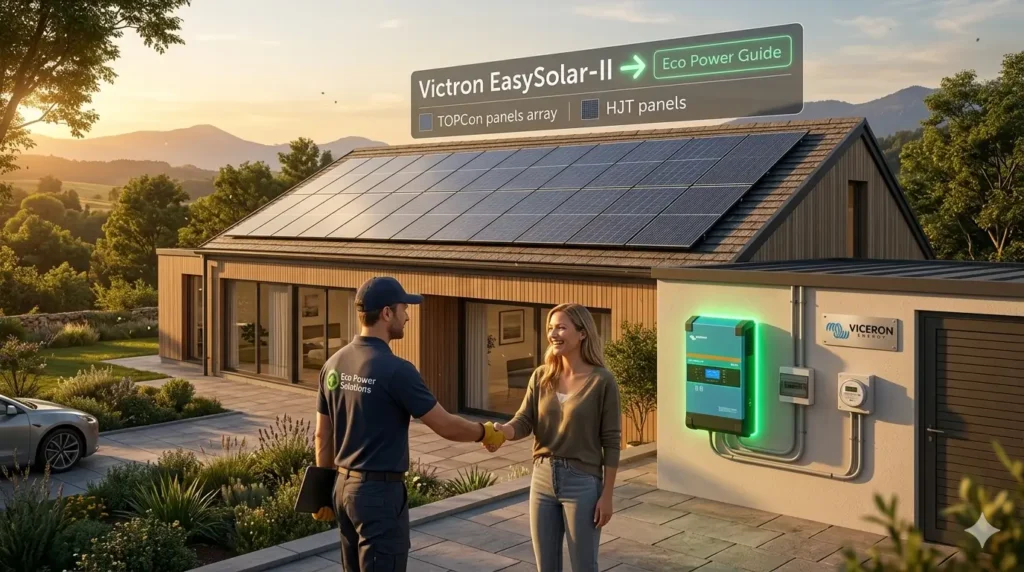
TOPCon technology has firmly claimed the crown as the current international industry standard, winning heavily on global stock availability and immediate cost-per-watt value. On the alternative side, heterojunction modules remain the undisputed performance king for property owners who refuse to compromise on absolute energy yield and long-term degradation resistance. Ultimately, your engineering decision boils down to whether your specific project requires a highly affordable industrial workhorse or a high-efficiency premium racehorse.
Comparative Technology Application Benchmarks (2026 Matrix)
| Operational Evaluation Metric | TOPCon Technology (The Workhorse) | HJT Technology (The Racehorse) | 2026 Strategic Industry Trends |
| Residential Rooftop Value | Exceptionally High (Fastest ROI) | Medium (Premium Footprints) | TOPCon Dominates Standard Budgets |
| Utility-Scale Scalability | Yes (Global Default Standard) | Specialized (High-Gain Trackers) | Sourced via Large Commercial Loans |
| Extreme Thermal Protection | Good (Moderate Energy Loss) | Excellent (Lowest Thermal Drop) | HJT Capitalizes on Intense Arid Heat |
| Future Upgrade Potential | 9/10 (Highly Secure Long-Term) | 8/10 (Premium Market Niche) | Prepped for Tandem Layering (30%+) |
🛠️ PRO FIX: EXECUTING THE FINAL SYSTEM FIRMWARE SYNC
- The Problem: Deploying advanced 2026 N-type modules into the field while leaving your primary inverter settings locked onto older, legacy P-type battery charging algorithms.
- The Solution: Executing a complete system firmware update to sync your advanced inverter hub with your panel’s modern operational parameters.
Actionable Synchronization Steps:
- Access Control Hub: Log into your centralized VRM portal account to download and flash the latest updates optimized for N-type silicon architectures.
- Align Voltage Metrics: Manually input the precise absorption and float voltage thresholds specified on your module manufacturer’s technical datasheet.
- Expected Result: This digital alignment ensures your Victron EasySolar-II extracts the final 2% of operational efficiency from the incoming DC strings.
Sourcing Options: When to Deploy TOPCon vs. HJT
If your primary project objective is to secure the fastest possible simple payback period, moving forward with TOPCon technology is the most practical path. The global market is highly stocked with reliable, cost-effective TOPCon modules that offer roughly 95% of the raw performance of premium alternatives at a significantly lower initial purchase price. Saving capital on the physical module layout allows system builders to allocate more of their initial budget toward expanding their Victron EasySolar-II deep-cycle battery storage bank, maximizing self-consumption metrics.
📖 DEFINITION
Payback Period: The precise length of time required to recover the initial capital cost of an energy investment through the financial savings generated by electricity production, offset utility bills, or feed-in tariff credits.
Conversely, specific structural sites demand the unique spectral tracking advantages highlighted throughout this Topcon vs Hjt Solar Panels Guide. If your physical roof footprint is heavily restricted but your daily household energy consumption is massive, high-efficiency HJT modules offer the only viable path to energy independence. Their superior low-light tracking behavior captures valuable extra watt-hours during overcast winters, preventing your battery bank from sitting empty on cloudy afternoons while your Victron EasySolar-II logs track the performance advantage through the summer peaks.
💡 DID YOU KNOW?
The next major milestone after 2026 is the commercial launch of “Perovskite-Silicon Tandem” cells. Global research groups are already layering light-sensitive Perovskite materials directly onto existing TOPCon and HJT cell bases in cleanrooms, meaning the N-type silicon array you purchase today serves as the foundation for an energy era where 30% panel efficiency becomes the standard!
Future-Proofing Your Clean Energy Infrastructure
Technology development cycles are moving faster than ever before, but waiting indefinitely for a “perfect” future technology means missing out on immediate utility savings today. Pure N-type silicon has cemented its status as the definitive long-term standard for solar installations, leaving legacy P-type PERC panels behind as outdated commercial technology. Choosing between the options detailed in this Topcon vs Hjt Solar Panels Guide guarantees your physical infrastructure remains structurally relevant, providing highly stable voltage inputs for your Victron EasySolar-II over the next twenty years.
To maintain peak generation metrics, property owners should utilize the integrated monitoring capabilities of their hardware regularly. Tracking daily generation curves via local Bluetooth or remote VRM logs allows you to spot localized issues, such as heavy dust accumulation or bird droppings, before they impact your weekly returns. Becoming a data-driven manager of your own power station ensures your hardware investment functions at its absolute peak capacity.
Ultimately, your geographic climate and specific structural goals should dictate your final choice within this comprehensive Topcon vs Hjt Solar Panels Guide. For moderate global climates and standard installation footprints, TOPCon delivers unbeatable mass-market value. For space-constrained properties or regions facing severe environmental heat stress, investing in a premium HJT array offers superior long-term yield. Whichever path you choose, your rugged Victron EasySolar-II stands ready to act as the ultimate energy translator, converting incoming photons into clean, reliable power for a fully independent future.
Final Verdict: The 2026 Decision Matrix
Firstly, assess your climate. Moreover, if you live in Australia or the Southern USA, lean toward HJT. Conversely, if you are in a moderate climate with a standard budget, choose TOPCon. Therefore, let your local environment be the deciding factor. Crucially, your Victron Easysolar-II is the ultimate “Translator” that turns either choice into clean, reliable AC power.
Moreover, ensure your installer is certified for N-type handling. Firstly, these cells are more sensitive to rough handling than old panels. Crucially, micro-cracks today lead to failure in year ten. Conversely, a gentle, professional solar installation lasts a lifetime. Therefore, pick your team as carefully as you pick your panels. Crucially, the Victron Easysolar-II is ready to start—are you?
Firstly, the sun doesn’t send a bill. Moreover, every day you wait is a day of wasted energy. Crucially, the transition to TOPCon and HJT in 2026 is the biggest leap in solar history. Conversely, holding onto the past is an expensive habit. Therefore, lock in your design, mount your Victron Easysolar-II, and start your journey toward energy independence. Crucially, the future of power is already on your roof. Firstly, leap. Crucially, enjoy the harvest.
Frequently Asked Questions (FAQs)
Which is better: HJT or TOPCon solar panels?
Both are advanced N-type technologies. HJT (Heterojunction) generally offers higher efficiency, while TOPCon is more cost-effective for large-scale setups.
Can I run a 1.5 ton AC on a 5kW solar system?
Yes, a 5kW system can typically run a 1.5-ton inverter AC during peak sun hours, especially when paired with a robust inverter like Victron EasySolar-II.
How to identify fake Jinko solar panels?
Check the QR code under the glass laminate and verify the serial number on Jinko’s official portal to ensure authenticity.
What is the biggest problem with solar panels?
Efficiency loss due to high heat and shading are the most common challenges, which technologies like HJT aim to minimize.
View Article Sources
We rely on official technical documentation and primary research to ensure accuracy.