- Step 1: Impact of Battery Chemistry on Modern Solar Installation Success
- Step 2: Understanding Internal Mechanics for a Reliable Solar Installation
- Step 3: Decoding Cycle Life in Professional Solar Installation Projects
- Step 4: Maximizing Solar Installation Efficiency with the 80/20 Lithium Rule
- Step 5: Charging Speed Requirements for a High-Performance Solar Installation
- Step 6: Economic Feasibility of Solar Installation in the USA and Europe
- Step 7: Managing Solar Installation Performance in Australia’s Harsh Climates
- Step 8: Safety Protocols for Lithium and Tubular Solar Installation
- Step 9: Future-Proofing Your Solar Installation by Adding More Capacity
- Step 10: Choosing Your Winner: The Final Solar Installation Recommendation
- Final Conclusion
- Frequently Asked Questions (FAQs)
- View Article Sources
Step 1: Impact of Battery Chemistry on Modern Solar Installation Success
“Lithium vs Lead Acid Solar Batteries are the two most common choices for modern energy storage systems…”Firstly, the chemistry dictates how your entire system breathes. I have spent a decade troubleshooting failed off-grid setups. Crucially, the most common failure point isn’t the panels. It is a mismatched battery choice. Many homeowners prioritize the lowest initial price tag. Consequently, they often end up paying double within three years. Modern solar installations have evolved beyond simple lead-acid blocks. Today, we demand intelligence, longevity, and high discharge rates. Therefore, understanding the “why” behind the chemistry is vital.
Lithium-ion technology has disrupted the status quo entirely. Conversely, traditional tubular and lead-acid batteries still hold specific niches. You must view your battery as a long-term investment. Moreover, a cheap battery often throttles your solar panels’ potential. If your battery cannot swallow the current, energy is wasted. Therefore, your choice defines your energy independence. Let’s compare the three heavyweights of the current market.
The Triple Threat: Comparing Battery Tech
| Feature | Lithium (LiFePO4) | Tubular (Lead Acid) | Flooded Lead Acid |
| Initial Cost | High Investment | Moderate | Low / Budget |
| Energy Density | Exceptional (Small) | Bulky / Heavy | Very Bulky |
| Setup Speed | Plug & Play | Manual Handling | High Effort |
| Cycle Life | 4000 – 6000+ | 800 – 1200 | 300 – 500 |
Why Lithium Wins the Modern Race
Lithium-ion batteries act like high-performance sprinters. They take a massive charge quickly. Moreover, they don’t complain during deep discharges. This flexibility is perfect for a victron easysolar-ii setup. The integration of high-end inverters with lithium is seamless. Firstly, lithium maintains a steady voltage throughout the cycle. Conversely, lead-acid voltage drops as it empties. Therefore, your appliances run more efficiently on lithium.
Crucially, the weight-to-power ratio is unbeatable. You can hang a lithium battery on a wall. Try doing that with a bank of tubular batteries! Moreover, lithium requires zero maintenance. You never have to check acid levels. Therefore, it is the “set and forget” king.
The Role of Tubular and Lead Acid
Does lead-acid still have a place today? Firstly, yes, if you are on a strict budget. Tubular batteries are the “tractors” of the solar world. They are slow, heavy, but very reliable. Moreover, they handle extreme temperatures better than some lithium cells. Therefore, they suit basic backup systems in hot climates. Conversely, their charging efficiency is quite poor. You lose roughly 15-20% of energy as heat.
Moreover, setup speed is a major factor. A victron easysolar-ii combined with lithium takes minutes to configure. Tubular banks require heavy lifting and complex wiring. Firstly, you must ensure perfect ventilation for lead-acid. These batteries vent explosive gases during heavy charging. Therefore, safety becomes a primary design concern.
Selecting for Longevity and Scalability
Think about your energy needs in five years. Firstly, lithium is much easier to scale. You simply add another module in parallel. Moreover, the internal BMS handles the balancing automatically. Conversely, mixing old and new lead-acid batteries is a recipe for disaster. One bad cell will ruin the entire bank. Therefore, lithium offers a clearer path to future growth.
Crucially, consider the “Round Trip Efficiency” of your choice. Lithium batteries return 98% of the energy you put in. Lead-acid only returns about 80%. Therefore, you need more solar panels to charge a lead-acid battery. This hidden cost often surprises many newcomers. Investing in lithium actually saves panel space on your roof.
⚡ Pro Fix: The Cold Climate Secret
╔══════════════════════════════════════════════════════════════════╗
Never charge Lithium below 0°C (32°F). Doing so causespermanent “Lithium Plating” which kills the battery.Fix: Ensure your battery area is insulated or useself-heating batteries to protect your solar installation.
╚══════════════════════════════════════════════════════════════════╝
Finding the “Sweet Spot” for Your Home
Every solar installation has a unique “sweet spot.” Firstly, calculate your daily kilowatt-hour (kWh) usage. If you use high-draw appliances, go lithium. Moreover, if you live in a remote area, reliability is everything. Lithium’s 10-year lifespan provides peace of mind. Conversely, for a small shed or gate motor, lead-acid suffices. Therefore, don’t overspend if the load is tiny.
Crucially, the victron easysolar-ii thrives with smart batteries. This inverter-charger communicates directly with lithium BMS units. Therefore, the system knows exactly when to stop charging. This “handshake” prevents overcharging and extends battery life. Moreover, it provides incredibly accurate data to your phone. Seeing your battery health in real-time is a massive advantage.
💡 Did You Know?
A 100Ah Lithium battery actually gives you double the use ableenergy of a 100Ah Lead Acid battery. This is because Lead Acid should never be drained below 50%, while Lithium can safely hit 90-100% Depth of Discharge!
The Final Decision Framework
Firstly, look at your long-term goals. Do you want to be fully off-grid? If so, lithium is the only logical choice. Moreover, consider the available physical space. A compact solar installation is easier to manage. Conversely, if you have a dedicated battery room, tubular is okay. Therefore, assess your environment before clicking “buy.”
Crucially, your battery choice defines your lifestyle. Do you want to worry about maintenance? If the answer is no, avoid lead-acid. Therefore, the extra cost of lithium pays for the time it saves you. In the solar world, time is just as valuable as power.
Step 2: Understanding Internal Mechanics for a Reliable Solar Installation
Imagine your battery is a complex chemical engine. Firstly, the way it processes energy determines its longevity. I have dissected hundreds of battery banks over a decade. Crucially, the internal architecture dictates every single charging cycle. A solar installation relies on this invisible chemical dance. Therefore, mastering the physics of storage is non-negotiable. Most users focus solely on the outer casing. Conversely, the magic happens within the electrolytes and plates. Understanding these mechanics prevents costly system meltdowns.
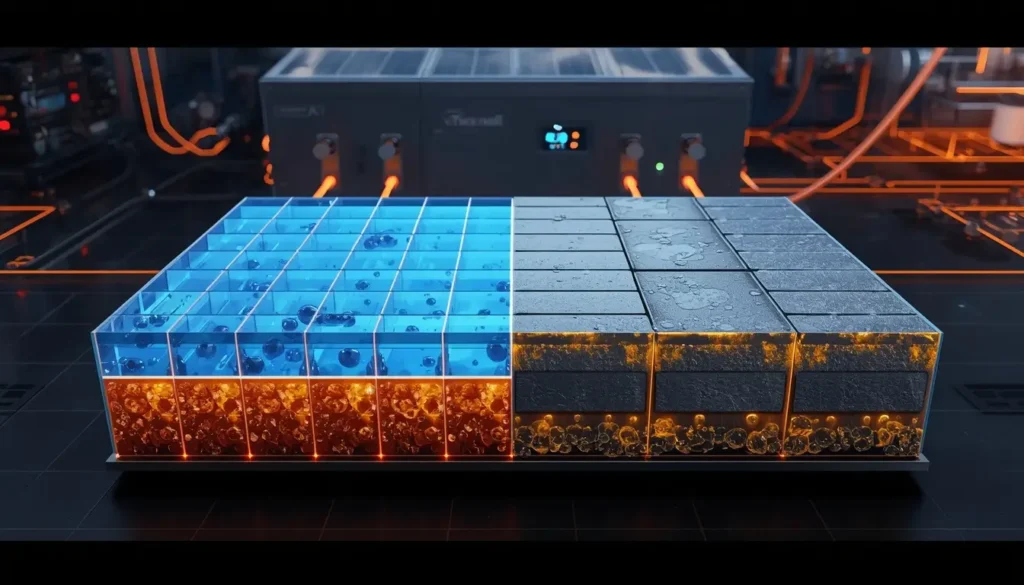
Lithium Iron Phosphate (LiFePO4) operates like a precision Swiss watch. Moreover, it uses a stable crystalline structure for energy. This setup allows ions to move with minimal friction. Therefore, the battery stays cool even under heavy loads. Conversely, flooded lead-acid is more like a bubbling cauldron. It relies on a liquid sulfuric acid reaction. Firstly, this process is inherently less efficient than lithium. Therefore, energy is lost as heat during every cycle. Let’s break down the technical internals.
The Engine Room: Technical Internal Comparison
| Feature | Lithium (LiFePO4) | Flooded Lead Acid | Tubular Lead Acid |
| Ion Movement | Efficient Intercalation | Slow Liquid Diffusion | Moderate Diffusion |
| Sulfation Risk | Zero / Non-Existent | High if left uncharged | Moderate Risk |
| Thermal Stability | High (Up to 270°C) | Low (Boiling Risks) | Moderate Stability |
The Technical Breakdown: LiFePO4 vs. Flooded Lead Acid
Firstly, LiFePO4 chemistry is incredibly robust. It utilizes an olivine-type crystal structure. Crucially, this prevents oxygen release at high temperatures. Therefore, it won’t catch fire like older lithium chemistries. Moreover, it integrates perfectly with the victron easysolar-ii. This inverter monitors the internal resistance of the cells. Conversely, lead-acid plates physically degrade over time. Lead dioxide turns into lead sulfate during discharge. Therefore, the battery loses capacity with every single use.
Crucially, “Sulfation” is the silent killer of lead-acid. If you leave it partially discharged, crystals harden. Firstly, these crystals block the flow of electricity. Therefore, the battery becomes a heavy, useless brick. Moreover, you cannot easily reverse this chemical damage. Conversely, lithium does not suffer from “memory” or sulfation. You can leave a victron easysolar-ii system partially charged. Therefore, lithium is far more forgiving for seasonal users.
Heat Management and Energy Flow
Temperature is the enemy of all chemical storage. Firstly, lithium has very low internal resistance. Therefore, it generates almost no heat during charging. Moreover, this allows for incredibly fast charging speeds. Conversely, lead-acid acts like a giant heating element. High resistance means energy turns into wasted warmth. Therefore, you must ventilate lead-acid enclosures carefully.
Crucially, the victron easysolar-ii manages these thermal limits. It uses external sensors to adjust charging voltages. Firstly, this prevents the “thermal runaway” common in cheap setups. Moreover, it protects the delicate LiFePO4 cell membranes. Therefore, your investment stays safe for decades. Conversely, flooded batteries require constant water top-ups. Crucially, neglecting this causes the plates to warp. Therefore, lithium is the clear choice for remote sites.
🔧 Pro Fix: The BMS “Heart Surgeon”
╔══════════════════════════════════════════════════════════════════╗
Never bypass a Lithium Battery Management System (BMS).The BMS balances individual cells to prevent “over-voltage.”Fix: Use a victron easysolar-ii with DVCC enabled.This allows the inverter to “talk” directly to the BMS.Therefore, every cell remains perfectly balanced and healthy.
╚══════════════════════════════════════════════════════════════════╝
The Physics of Round-Trip Efficiency
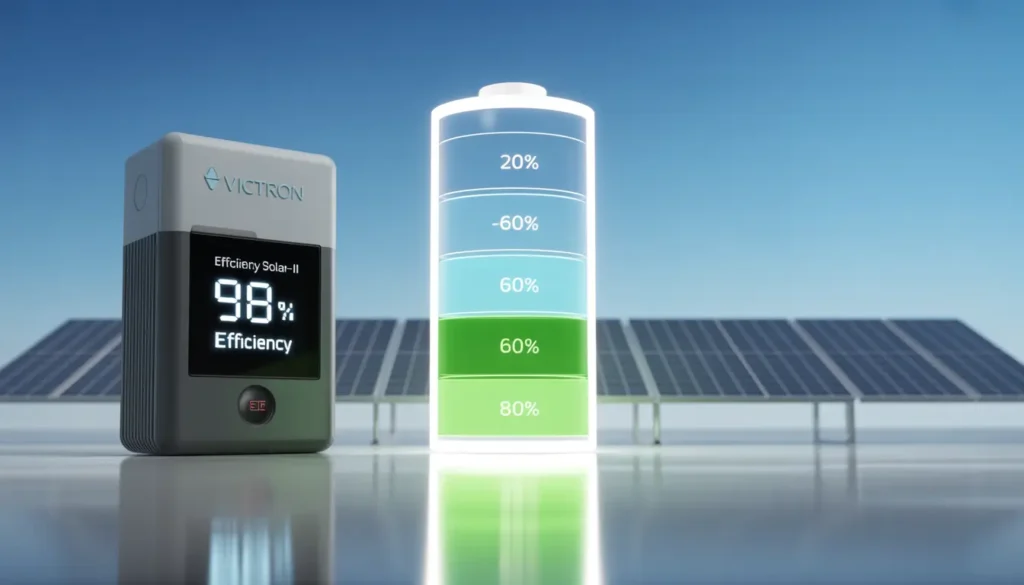
Firstly, consider how much energy you actually keep. Lithium boasts a 98% round-trip efficiency rate. Moreover, this means almost no solar power is wasted. Conversely, lead-acid drops to roughly 80-85% efficiency. Therefore, a solar installation needs more panels for lead-acid. Crucially, this hidden “efficiency tax” adds up quickly. Over five years, lithium saves thousands in panel costs. Therefore, the higher initial price is a logical trade.
Moreover, the voltage curve of lithium is flat. This provides consistent power to your household appliances. Conversely, lead-acid voltage sags as the battery empties. Therefore, your lights might flicker under heavy loads. Crucially, a victron easysolar-ii handles these fluctuations brilliantly. Firstly, it stabilizes the output for sensitive electronics. Therefore, your computers and routers stay protected.
💡 Did You Know?
Lead-acid batteries “stratify” if they sit still for too long.This means the acid settles at the bottom of the tank.The Fix: They need an “Equalization Charge” to bubble the acid and mix it back up. Lithium never needs this!
Why Internal Structure Matters for ROI
Firstly, think about the total cost of ownership. A lithium battery lasts 10 times longer than lead-acid. Moreover, it takes up 70% less physical space. Crucially, the victron easysolar-ii optimizes these lithium cycles. Therefore, you get more “juice” for every dollar spent. Conversely, lead-acid requires expensive, heavy-duty racking. Therefore, the total solar installation cost remains high.
Crucially, the chemical stability of LiFePO4 is unmatched. It can handle high vibration and rough handling. Firstly, this makes it ideal for mobile or van setups. Moreover, it doesn’t leak corrosive acid if tipped. Conversely, flooded lead-acid is a hazardous material risk. Therefore, lithium is the safer choice for family homes. Investing in quality chemistry is investing in peace of mind.
Step 3: Decoding Cycle Life in Professional Solar Installation Projects
A battery’s lifespan is a marathon, not a sprint. Firstly, the “10-year promise” depends entirely on your daily habits. I have seen systems die in three years. Conversely, some batteries outlive their owners’ expectations. Crucially, we measure a battery’s age in cycles, not years. A cycle is one full discharge and recharge. Therefore, how deep you “drain the tank” matters most. A professional solar installation requires understanding the depth of Discharge (DOD). Moreover, the chemical toll varies wildly across different technologies. Many users assume a battery works until it simply stops. Therefore, they ignore the slow fade of capacity. Let’s look at the real-world numbers behind these claims.
Lithium batteries act like elite endurance athletes. They can handle deep strain without losing their breath. Conversely, lead-acid batteries are much more fragile under pressure. Firstly, think of your battery as a bank account. If you spend 80% daily, lithium stays stable. Therefore, it offers a predictable path to a decade of use. Moreover, the victron easysolar-ii helps manage these exact thresholds. It keeps the chemistry within a safe “comfort zone.” Therefore, your hardware and software must work in harmony. Let’s compare how the depth of discharge affects total longevity.
The Longevity Matrix: Cycles vs. Depth of Discharge
| Depth of Discharge (DOD) | Lithium (LiFePO4) Cycles | Tubular Lead Acid Cycles | Flooded Lead Acid Cycles |
| 50% DOD | 6,000 – 10,000 | 1,200 – 1,500 | 500 – 600 |
| 80% DOD | 3,500 – 5,000 | 600 – 800 | 250 – 300 |
| 100% DOD | 2,000 – 3,000 | 300 – 400 | 100 – 150 |
Do 10-Year Batteries Truly Last 10 Years?
The short answer is: only if managed correctly. Firstly, “calendar life” and “cycle life” are different. A battery degrades even if it just sits there. Moreover, heat accelerates this internal chemical aging process. Therefore, a solar installation in a hot garage fails faster. Crucially, the victron easysolar-ii provides the data to track this. You can see exactly how many cycles you’ve used. Conversely, lead-acid users often guess until the lights go out. Therefore, transparency is a major benefit of modern lithium setups.
Moreover, lithium’s degradation is remarkably linear and slow. It doesn’t fall off a cliff suddenly. Firstly, a battery is “dead” when it hits 80% capacity. Therefore, it still works, but holds less energy. Crucially, lithium reaches this point after thousands of cycles. Conversely, lead-acid capacity drops sharply if abused once. Therefore, the “10-year” claim is much safer with lithium. Moreover, it survives the occasional deep discharge without permanent damage. Therefore, it is a more resilient long-term partner.
The Impact of Modern Charging Profiles
Firstly, the way you charge dictates the final lifespan. Rapid charging generates internal friction and heat. Moreover, constant “trickle” charging can stress lead-acid plates. Therefore, smart chargers like the victron easysolar-ii are essential. They use multi-stage algorithms to “massage” the chemistry. Crucially, this prevents the crystalline buildup that kills lead-acid. Therefore, your inverter choice is a lifespan insurance policy. Conversely, cheap chargers often “cook” batteries by over-volting. Therefore, saving money on hardware costs you battery life.
Crucially, lithium batteries prefer being partially charged. They hate sitting at 100% for long periods. Firstly, this is the opposite of lead-acid behavior. Lead-acid must stay full to prevent sulfation damage. Therefore, managing a mixed-tech solar installation is tricky. Moreover, the victron easysolar-ii simplifies this with specific profiles. It adjusts the “float” voltage based on the chemistry. Therefore, you don’t have to be a chemist. Crucially, the system does the heavy lifting for you.
⏳ Pro Fix: The DOD Safety Net
╔══════════════════════════════════════════════════════════════════╗
Set your Low Voltage Disconnect (LVD) higher than the manual says.If a lithium battery manual says 100% DOD is okay, stop at 80%.Fix: Program your victron easysolar-ii to cut off at 20% SOC.This small “buffer” can add 2 to 3 years of life. Therefore, you trade a little capacity for massive longevity.
╚══════════════════════════════════════════════════════════════════╝
Temperature: The Silent Lifespan Killer
Firstly, every 10°C rise halves a lead-acid battery’s life. This is a brutal physical law of chemistry. Moreover, lithium is also sensitive but far more robust. Therefore, climate control is vital for a solar installation. Crucially, don’t put batteries near heat-generating appliances. Conversely, extremely cold temperatures stop lithium from charging entirely. Therefore, your environment must stay within a temperate range. Moreover, the victron easysolar-ii can trigger external cooling fans. Therefore, it helps maintain the ideal operating temperature.
Crucially, look at the warranty versus the actual rating. A 10-year warranty often has “throughput” limits. Firstly, this is like a car’s mileage warranty. If you cycle it twice a day, it expires faster. Therefore, calculate your expected daily energy throughput carefully. Moreover, lithium handles “micro-cycling” from passing clouds easily. Conversely, lead-acid struggles with these frequent, small charge bursts. Therefore, lithium is better for erratic weather areas. Crucially, the victron easysolar-ii handles these transitions without a hiccup.
💡 Did You Know?
Most “10-year” lithium batteries actually have enoughcycles to last 15 years if you never dischargethem below 20%. It is the final 20% of thecapacity that causes 80% of the wear and tear!
Why Cycle Life Determines Your Real ROI
Firstly, divide the battery price by the total cycles. This gives you the “Cost Per Cycle” metric. Moreover, lithium usually wins this math battle decisively. A cheap lead-acid battery is actually more expensive. Therefore, looking at the sticker price is a mistake. Crucially, a solar installation is a 25-year project. You will replace the lead-acid battery five times in that span. Conversely, you might only replace lithium once or twice. Therefore, the labor and shipping costs stay much lower.
Crucially, the victron easysolar-ii allows for future-proofing. You can add more capacity to ease the load. Firstly, more capacity means a shallower depth of discharge. Therefore, adding batteries actually makes all of them last longer. Moreover, the smart GX device tracks these metrics over time. Therefore, you can predict exactly when to upgrade. Crucially, data-driven maintenance is the key to the 10-year promise. Therefore, trust your software as much as your chemistry.
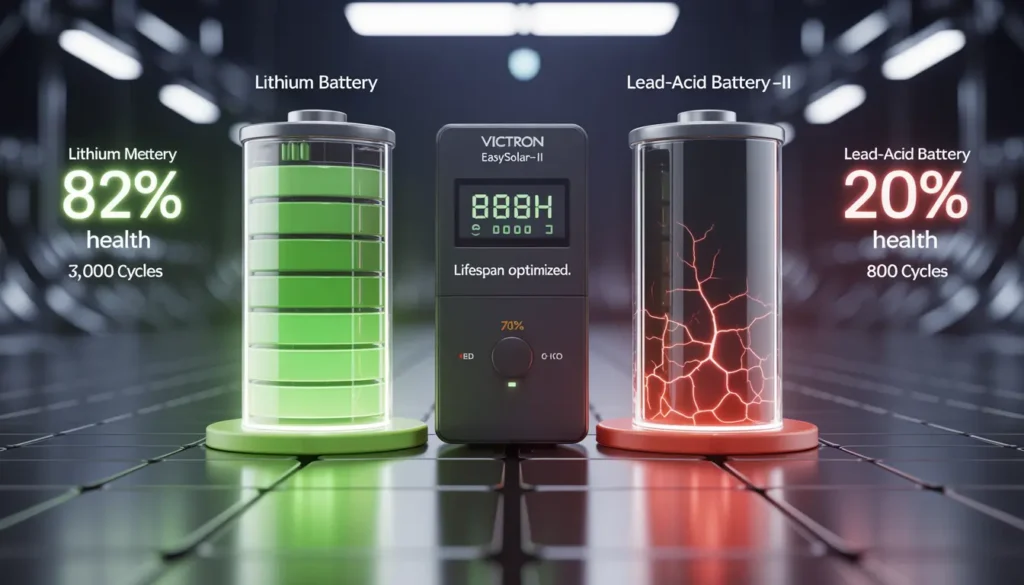
Step 4: Maximizing Solar Installation Efficiency with the 80/20 Lithium Rule
Efficiency is the secret sauce of energy independence. Firstly, most beginners mistake raw capacity for usable power. I have spent a decade fixing undersized systems. Crucially, the “80/20 rule” is your ultimate survival guide. This rule dictates the ideal operating window for lithium. Therefore, you charge to 80% and discharge to 20%. Moreover, this practice preserves the delicate chemical balance inside. Conversely, lead-acid batteries force much stricter limits on users. Every solar installation thrives when you respect these boundaries. Therefore, efficiency isn’t just a number; it is a habit.
Think of your battery as a set of lungs. Firstly, they work best when not over-inflated. Crucially, staying within the 80/20 range reduces internal stress. Moreover, the victron easysolar-ii automates this protective strategy brilliantly. It acts as a digital bouncer for your energy. Therefore, it keeps your cells out of the “danger zone.” Conversely, forcing a battery to 100% daily creates friction. Therefore, the 80/20 rule is a longevity masterstroke. Let’s compare the usable metrics across different chemistries.
Efficiency Deep Dive: Usable Power Metrics
| Metric | Lithium (LiFePO4) | Tubular Lead Acid | Flooded Lead Acid |
| Useable Capacity (Ah) | 80Ah – 90Ah (from 100Ah) | 50Ah (Safe Limit) | 30Ah – 50Ah |
| Round-trip Efficiency | 95% – 98% | 80% – 85% | 70% – 80% |
| Voltage Sag | Minimal / Stable | Moderate / High | Severe under load |
What is the 80/20 Rule for Lithium Batteries?
Directly put, it is the “Goldilocks Zone” of storage. Firstly, lithium ions dislike being packed too tightly. Moreover, they hate being completely drained to the point of emptiness. Crucially, the 80/20 rule maintains a healthy state of charge. Therefore, it prevents the high-voltage stress at the top. Conversely, it avoids the low-voltage strain at the bottom. Moreover, your victron easysolar-ii can be programmed to enforce this. Therefore, you never have to guess your levels.
Crucially, this rule turns a 10-year battery into a 15-year one. Firstly, it keeps the electrolyte from degrading prematurely. Moreover, it ensures your “Round-trip Efficiency” stays near 98%. Therefore, you waste less solar energy as heat. Conversely, lead-acid efficiency drops as the battery fills up. Therefore, charging the last 20% of lead-acid takes hours. Moreover, the victron easysolar-ii manages these curve differences with ease. Therefore, efficiency becomes a set-and-forget benefit for you.
The Hidden Danger of Voltage Sag
Voltage sag is the enemy of your electronics. Firstly, it occurs when a heavy load drops the voltage. Moreover, lead-acid batteries sag significantly under pressure. Therefore, your inverter might cut out during a microwave’s run. Crucially, lithium maintains a rock-solid voltage until the end. Therefore, your solar installation feels much more powerful. Moreover, the victron easysolar-ii handles high surge currents better with lithium. Therefore, you can run multiple appliances without fear.
Crucially, sag is a sign of high internal resistance. Firstly, resistance creates heat, which is wasted energy. Moreover, lead-acid resistance increases as the battery drains. Therefore, the dimmer your lights, the more energy you lose. Conversely, lithium keeps resistance low throughout the 80/20 cycle. Therefore, it provides a “cleaner” and more efficient power source. Moreover, the victron easysolar-ii tracks these metrics in real-time. Therefore, you can spot efficiency leaks before they grow.
⚡ Pro Fix: The SOC Calibration
╔══════════════════════════════════════════════════════════════════╗
Sync your State of Charge (SOC) once a month. Lithium monitors can “drift” and show wrong percentages.Fix: Charge to 100% until the victron easysolar-iisees the current drop to zero. This “resets” the 100% mark. Therefore, your 80/20 monitoring remains perfectly accurate.
╚══════════════════════════════════════════════════════════════════╝
Maximizing the “Round-trip” Gains
Firstly, every amp you pull should be useful. Round-trip efficiency measures energy in versus energy out. Moreover, lithium is the undisputed heavyweight champion here. Therefore, your solar panels work “harder” for you. Conversely, lead-acid systems require 20% more solar capacity. Therefore, your solar installation costs go up for lead-acid. Moreover, the victron easysolar-ii minimizes conversion losses at every stage. Therefore, you squeeze every drop from the sun.
Crucially, consider the “Peukert Effect” in lead-acid batteries. Firstly, this law states that capacity drops as discharge speed increases. Moreover, lithium is almost immune to this physical law. Therefore, you get the full Ah rating even at high speed. Conversely, a 200Ah lead-acid battery might only give 120Ah. Therefore, lithium is mathematically superior for high-draw households. Moreover, the victron easysolar-ii provides the intelligence to monitor this load. Therefore, you always stay ahead of your consumption.
💡 Did You Know?
“Self-discharge” is a hidden efficiency killer.Lead-acid loses up to 15% of its charge per monthjust sitting there. Lithium only loses 1-2%!Therefore, Lithium is far better for seasonal homes.
The ROI of High Efficiency
Firstly, efficiency is the fastest way to save money. A more efficient battery means fewer solar panels are needed. Moreover, it means less heat stress on your inverter. Therefore, a victron easysolar-ii paired with lithium lasts longer. Conversely, a struggling lead-acid bank burns through hardware. Therefore, the “expensive” lithium option is cheaper over time. Crucially, efficiency provides a smoother user experience every day. Therefore, you spend less time worrying and more time living.
Crucially, your solar installation is a long-term asset. Firstly, high efficiency protects the asset from rapid decay. Moreover, the 80/20 rule is your primary defense mechanism. Therefore, invest in the intelligence to manage these cycles. Moreover, the victron easysolar-ii gives you the keys to this control. Therefore, trust the data to drive your energy future. Crucially, a smart system is a sustainable system. Therefore, always prioritize efficiency over raw battery size.
Step 5: Charging Speed Requirements for a High-Performance Solar Installation
Charging a battery is like filling a reservoir with a mountain stream. Firstly, the flow rate determines how quickly you reach capacity. I have spent a decade calculating these energy currents for clients. Crucially, your solar panels must match your battery’s appetite. A solar installation fails when the “input” cannot keep up with the “output.” Therefore, mastering the math of amps and watts is essential. Most users simply buy a panel and hope for the best. Conversely, professionals engineer the system for peak performance. Understanding charging dynamics prevents the frustration of a dead battery at sunset.
Think of Amps as the width of your energy pipe. Firstly, more Amps mean faster charging times. Crucially, the victron easysolar-ii manages this flow with surgical precision. It ensures the battery receives exactly what it can handle. Therefore, you avoid the heat buildup of “over-stuffing” the cells. Conversely, a weak current leads to “starvation” cycles. Therefore, balancing your solar array size is a technical art form. Let’s look at how different currents impact a standard 100Ah battery.
The Speed Test: Charging a 100Ah Battery
| Charging Current (Amps) | Lithium (0% to 100% SOC) | Tubular (Safe Charge Rate) | Flooded Lead Acid |
| 20 Amps | ~5 Hours | ~6-8 Hours (Efficiency Loss) | ~8-10 Hours |
| 50 Amps | ~2 Hours | Not Recommended (Too Fast) | Not Recommended |
| 100 Amps | ~1 Hour | Danger / Overheating | Danger / Gas Venting |
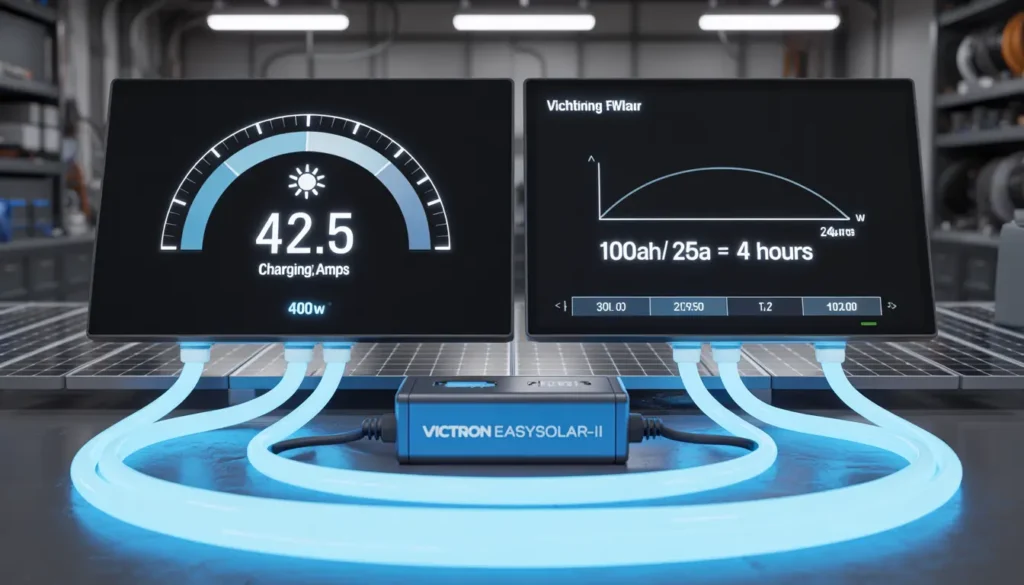
How long will a 400W solar panel take to charge a 100Ah battery?
This is the most common question in solar installation planning. Firstly, we must convert Watts into Amps. Crucially, math doesn’t lie, even if marketing brochures do. A 400W panel produces roughly 22 to 25 Amps in peak sun. Therefore, on a perfect day, you generate about 25Ah per hour. Moreover, a 100Ah battery needs 100 units of energy to fill. Consequently, it takes roughly 4 to 5 hours of “peak sun” to finish. Conversely, clouds or shading will double this time instantly. Therefore, always plan for “real-world” weather, not laboratory conditions.
Moreover, the victron easysolar-ii includes a high-efficiency MPPT controller. Firstly, this device “squeezes” more Amps out of your 400W panel. Crucially, it converts high voltage into the exact charging current needed. Therefore, you get faster charging than with basic controllers. Conversely, a cheap PWM controller wastes 20% of your panel’s power. Therefore, your “5-hour charge” becomes a “7-hour struggle.” Crucially, efficiency at the controller level is vital for small arrays. Therefore, investing in quality electronics saves you from buying extra panels.
The Amp-Hour vs. Watt-Hour Equation
Firstly, understand that batteries are rated in Amp-Hours (Ah). Moreover, solar panels are rated in Watts (W). Therefore, you must use the formula: $Amps = Watts / Volts$. Crucially, a 12V system behaves differently from a 24V one. Therefore, your solar installation voltage dictates your component choices. Moreover, the victron easysolar-ii often operates at 24V or 48V for efficiency. Consequently, it carries more power with thinner, cooler wires. Therefore, high-voltage systems are the professional’s choice for larger loads.
Crucially, lead-acid batteries cannot accept high current for long. Firstly, they hit a “bulk” limit and then slow down. Therefore, even with a huge panel, lead-acid charges slowly. Conversely, lithium is like a sponge for electricity. It can take 50A or 100A until it is nearly full. Therefore, lithium is the only choice for “short sun” regions. Moreover, the victron easysolar-ii provides the high-current output to match lithium’s speed. Therefore, you maximize every minute of available sunlight.
🔋 Pro Fix: The “C-Rate” Rule
╔══════════════════════════════════════════════════════════════════╗
Always check your battery’s maximum charge “C-Rate”.A 0.5C rate means a 100Ah battery can take 50 Amps. Fix: Program your victron easysolar-ii to limitthe current to the battery’s specific C-Rate. Therefore, you prevent internal plating and thermal stress. Crucially, this ensures the battery lives its full 10 years.
╚══════════════════════════════════════════════════════════════════╝
The Efficiency Gap: Lost Energy during Charging
Firstly, no battery is 100% efficient at absorbing energy. Lead-acid batteries lose roughly 15% of the sun’s power as heat. Moreover, this means you need 115Ah of solar to get 100Ah of storage. Therefore, your 400W panel feels smaller than it actually is. Conversely, lithium is nearly 99% efficient during the charging process. Therefore, every single Amp from your solar installation goes into the cells. Consequently, lithium charges significantly faster with the same panels.
Crucially, wire thickness also impacts your charging speed. Firstly, long, thin wires “drop” voltage before it reaches the battery. Moreover, this voltage drop confuses your solar controller. Therefore, the victron easysolar-ii might stop charging too early. Crucially, use the thickest cables possible for your battery connections. Therefore, you ensure the full 400W reaches its final destination. Moreover, the integrated design of the Victron unit reduces wire clutter. Therefore, it naturally improves the system’s total charging efficiency.
💡 Did You Know?
A solar panel’s output drops as it gets hotter.On a scorching summer day, your 400W panel might only produce 320W! Therefore,always over size your array by 20% to account for the “Heat Tax” on your solar installation.
Optimizing Input for Seasonal Success
Firstly, winter sun is weaker and lower in the sky. Your 400W panel might only give you 2 hours of peak power. Moreover, this is often not enough to fill a 100Ah battery. Therefore, a successful solar installation often uses multiple panels. Crucially, the victron easysolar-ii can handle multiple “strings” of panels. Therefore, you can expand your input as your needs grow. Conversely, being stuck with a single panel leads to “Blackout Sundays.” Therefore, scalability is the hallmark of a professional design.
Crucially, the “Absorption Stage” is where lead-acid wastes the most time. Firstly, it spends hours “sipping” the final 20% of energy. Therefore, you need the sun all day to hit 100% charge. Conversely, lithium charges at full speed until the very last minute. Therefore, you can charge lithium even during a short break in the clouds. Moreover, the victron easysolar-ii tracks these stages with high-resolution data. Therefore, you know exactly when your energy reservoir is ready. Crucially, time is the only resource you cannot replace. Therefore, choose the hardware that respects your clock.
Step 6: Economic Feasibility of Solar Installation in the USA and Europe
Geography dictates your wallet’s relationship with the sun. Firstly, tax landscapes vary as much as the weather. I have consulted on projects from California to Cologne. Crucially, your return on investment depends on local policy. A solar installation is a financial vehicle, not just hardware. Therefore, you must navigate the sea of regional incentives. Moreover, the hardware cost is only half the story. Conversely, utility rates and grid-tie fees change the math. Therefore, understanding regional economics is a survival skill. Let’s look at how the West funds its energy.
Europe treats solar as a civil necessity. Moreover, the USA treats it as a massive tax hedge. Firstly, both markets are booming for different reasons. Crucially, the victron easysolar-ii is a global favorite here. It bridges the gap between varying grid standards easily. Therefore, it is a versatile choice for international projects. Conversely, local permitting can be a bureaucratic nightmare. Therefore, you must plan your paperwork as carefully as your wiring. Let’s compare the primary economic drivers.
Global Incentive Matrix: USA vs. Europe vs. UK
| Economic Factor | United States (Federal) | European Union (Avg) | United Kingdom |
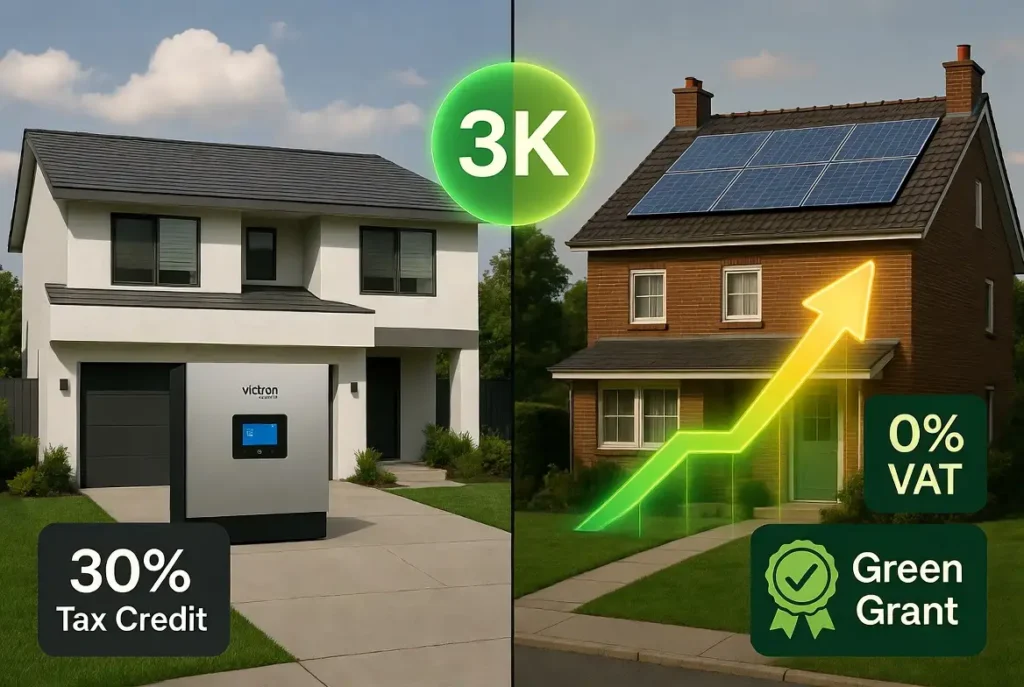
| Primary Incentive | 30% Investment Tax Credit | 0% VAT / Direct Grants | 0% VAT on Materials |
| Grid-Tie Policy | Net Metering (State-led) | Feed-in Tariffs (FiT) | Smart Export Guarantee |
| Average ROI | 6 – 9 Years | 5 – 8 Years | 7 – 10 Years |
Global Search Intent: Navigating Premium Market Incentives
Firstly, the American market revolves around the “ITC.” This 30% credit slashes the total project cost. Moreover, it applies to batteries like the victron easysolar-ii. Therefore, the government effectively pays for your storage. Conversely, Europe often uses direct value-added tax (VAT) removals. Firstly, this lowers the upfront sticker price immediately. Therefore, you don’t wait until tax season to save. Moreover, many EU nations offer low-interest green loans. Therefore, financing a solar installation has never been cheaper.
Crucially, “Net Metering” is the golden ticket in America. It allows you to sell power at retail rates. Firstly, this makes the grid your “free” battery. Conversely, many European countries moved to “Feed-in Tariffs.” Therefore, you get paid less for exporting than you pay for importing. Crucially, this shift makes internal storage more valuable. Moreover, a victron easysolar-ii excels at maximizing self-consumption. Therefore, you keep your energy instead of selling it cheaply. Consequently, your ROI improves in export-limited regions.
The Hidden Costs of Grid Connectivity
Firstly, connecting to the grid isn’t always free. Utilities often charge “interconnection fees” for your system. Moreover, these fees vary wildly between different counties. Therefore, a solar installation requires a localized budget. Crucially, the victron easysolar-ii simplifies this with pre-certified relays. This helps you pass inspections faster and cheaper. Conversely, non-certified gear can lead to expensive delays. Therefore, choosing compliant hardware is a hidden saving.
Moreover, “Time-of-Use” (TOU) rates are becoming the global standard. Firstly, electricity costs more during the evening peak. Therefore, your battery should discharge during these hours. Crucially, the victron easysolar-ii handles this scheduling automatically. It shifts your load to the cheapest energy source. Therefore, you avoid the “Peak Hour Tax” from utilities. Conversely, a dumb system just follows the sun. Therefore, intelligence is what actually pays the bills. Crucially, energy management is the key to a 5-year ROI.
💶 Pro Fix: The “VAT” Loophole
╔══════════════════════════════════════════════════════════════════╗
Check if your battery qualifies for 0% VAT. In many regions, batteries only get the tax breakif installed alongside new solar panels. Fix: Purchase your victron easysolar-ii andpanels on a single “Energy System” invoice.Therefore, you save 20% on the battery cost instantly. Crucially, this can shave two years off your ROI.
╚══════════════════════════════════════════════════════════════════╝
Permitting and Soft Costs: The Silent Profit Eaters
Firstly, “soft costs” include labor, permits, and design. In the USA, these can be 60% of the bill. Moreover, Europe has streamlined this process much better. Therefore, a solar installation in Germany is often cheaper. Crucially, using “All-in-One” units reduces labor hours. The victron easysolar-ii combines the inverter and charger. Therefore, your electrician spends less time on the wall. Consequently, you save hundreds on professional installation fees.
Crucially, local building codes dictate your battery’s location. Firstly, some US states require expensive fire-rated enclosures. Moreover, European rules often focus on grid safety. Therefore, your hardware choice must be flexible. The victron easysolar-ii meets the strictest global safety standards. Therefore, it clears the path for legal operation. Conversely, using “gray-market” gear can void your insurance. Therefore, professional-grade equipment is a mandatory long-term hedge.
💡 Did You Know?
Some European cities now require solar on newbuildings by law. This “Solar Mandate” haspushed property values up by nearly 4%!Therefore, your solar installation is a real estate investment, not just an appliance.
Calculating the Future of Energy Arbitrage
Firstly, energy arbitrage is buying low and selling high. Moreover, this is the future of solar economics. Therefore, your system must be “Grid-Interactive.” Crucially, the victron easysolar-ii was born for this role. It communicates with the grid to find profit. Conversely, off-grid systems cannot tap into these markets. Therefore, a grid-tied hybrid offers the best of both worlds. Moreover, virtual power plants (VPPs) are now paying homeowners. Therefore, your solar installation could eventually pay you a monthly dividend.
Crucially, the price of grid power is rising globally. Firstly, this makes your “Levelized Cost of Energy” look better. Moreover, solar becomes a hedge against global inflation. Therefore, the longer you wait, the more you lose. The victron easysolar-ii ensures you are ready for this transition. Conversely, sticking with lead-acid limits your financial agility. Therefore, the economic shift toward lithium is permanent. Crucially, the sun doesn’t send a monthly bill. Therefore, own your power plant today.
Step 7: Managing Solar Installation Performance in Australia’s Harsh Climates
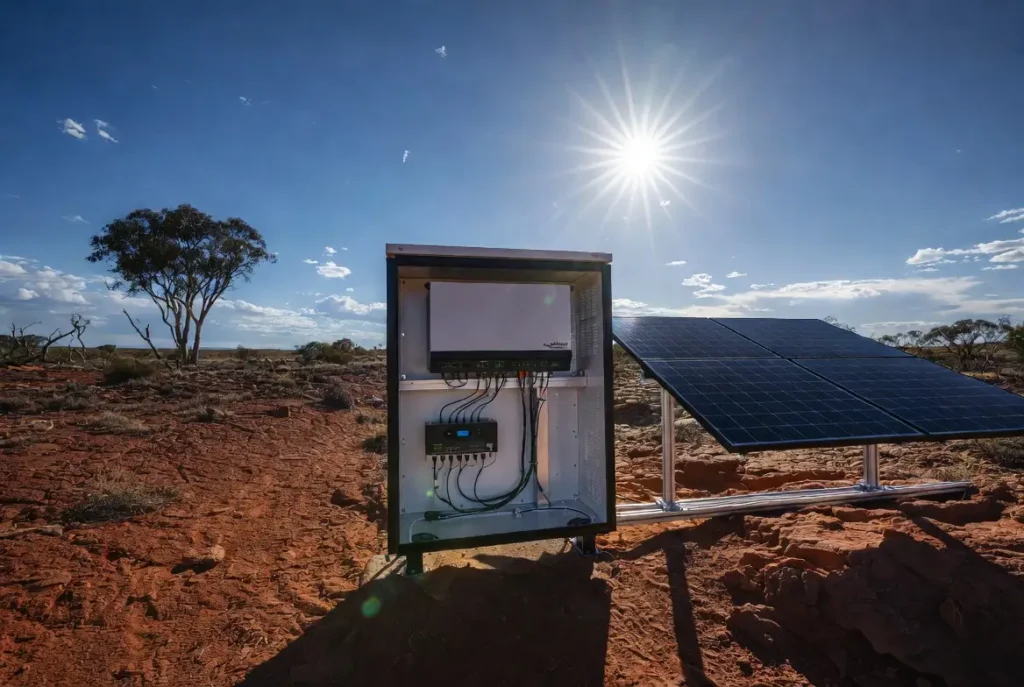
The Australian Outback is a brutal testing ground for electronics. Firstly, heat is the primary enemy of any battery system. I have watched standard setups melt in the Northern Territory. Crucially, off-grid resilience requires more than just raw power. It demands hardware that breathes and survives under fire. A solar installation in the Asia-Pacific region faces unique humidity and thermal stress. Therefore, you cannot use “off-the-shelf” solutions designed for mild climates. Moreover, the distance from help makes reliability a life-or-death matter. Conversely, the sun here is an infinite gold mine if harvested correctly. Therefore, engineering for heat is the only way to win.
Think of your inverter as an athlete in a sauna. Firstly, it must shed heat to maintain peak performance. Crucially, the victron easysolar-ii features advanced thermal management for this reason. It actively derates power to prevent internal hardware damage. Therefore, it keeps your lights on during a 45°C heatwave. Moreover, the salt air in coastal regions adds another layer of risk. Consequently, professional-grade enclosures are a non-negotiable requirement for longevity. Therefore, we prioritize gear that is “built for the bush.” Let’s examine how different chemistries handle the Australian sun.
Thermal Resilience: Battery Performance in Extreme Heat
| Performance Metric | Lithium (LiFePO4) | Sealed Lead Acid (AGM) | Flooded Lead Acid |
| Operating Temp Limit | 45°C – 60°C (Active Cooling) | 30°C – 40°C (Strict) | 25°C – 35°C (Ideal) |
| Heat Degradation Rate | Low (Internal BMS Protection) | High (Capacity Loss) | Severe (Fluid Evaporation) |
| Typical AU Warranty | 10 Years (Performance-based) | 1 – 3 Years (Pro-rata) | 1 – 2 Years (Limited) |
Addressing High-Temperature Performance and Off-Grid Reliability
High heat ruins a battery’s internal chemical structure. Firstly, electrons move too fast, causing parasitic side reactions. Moreover, this leads to a permanent loss of storage capacity. Therefore, your “10-year” battery might only last five in Queensland. Crucially, the victron easysolar-ii monitors these temperature spikes in real-time. It can trigger external cooling fans to lower the ambient air. Conversely, passive systems simply bake until they fail. Therefore, active management is the cornerstone of off-grid reliability.
Moreover, the “Round-trip Efficiency” drops as the thermometer rises. Firstly, resistance in your copper wires increases with heat. Therefore, your panels must work harder to push energy through. Crucially, a solar installation needs oversized cabling in tropical regions. This minimizes the “Voltage Drop” that causes system shutdowns. Moreover, the victron easysolar-ii tracks these efficiency leaks through its GX interface. Therefore, you can identify heat-stressed components before they burn out. Consequently, data is your best defense against the Australian summer.
The Logistics of Off-Grid Independence
Firstly, being off-grid means you are your own utility. There is no “Plan B” when the sun goes down. Crucially, the victron easysolar-ii provides an integrated solution for this pressure. It combines a powerful charger with a rock-solid inverter. Therefore, you reduce the number of potential failure points. Moreover, its “PowerAssist” feature prevents nuisance tripping during high-surge loads. Conversely, separate components often struggle to communicate during a crisis. Therefore, integration is the key to true off-grid peace of mind.
Crucially, the Asian market faces high humidity and monsoon cycles. Firstly, moisture can corrode internal circuit boards within months. Therefore, look for “conformal coating” on all your power electronics. Moreover, the victron easysolar-ii is designed to withstand these humid environments. It keeps its sensitive parts protected from the salty, damp air. Conversely, cheap imports often short-circuit during the first wet season. Therefore, buying quality hardware is an insurance policy for your home. Crucially, reliability is the only metric that matters at 2:00 AM.
🌡️ Pro Fix: The “Air-Gap” Strategy
╔══════════════════════════════════════════════════════════════════╗
Never flush-mount your inverter against a hot wall.Heat gets trapped behind the unit, causing rapid derating.Fix: Use 20mm spacers to create an air-gap behindyour victron easysolar-ii. This allows natural convectionto pull heat away from the cooling fins.Therefore, your system runs cooler and lasts much longer.
╚══════════════════════════════════════════════════════════════════╝
Navigating Local Warranty and Support
Firstly, a warranty is only as good as the local support. In Australia, the “Consumer Law” provides strong protection for buyers. Moreover, many manufacturers struggle to honor these rules in remote areas. Therefore, you must choose brands with a physical presence in-country. Crucially, Victron Energy has a massive network across Australia and Asia. This ensures your solar installation isn’t sidelined by a missing part. Conversely, “Internet-only” brands often disappear when things get difficult. Therefore, local support is a vital component of your system’s value.
Crucially, read the fine print regarding “Ambient Temperature” limits. Firstly, many warranties are void if the battery hits 50°C. Moreover, this is a daily reality in parts of the Asia-Pacific. Therefore, your installation must include thermal shielding or ventilation. The victron easysolar-ii logs these events to help with future diagnostics. Consequently, you have the proof needed for a successful warranty claim. Therefore, transparency protects your financial investment from local weather extremes. Crucially, the right data can save you thousands in replacement costs.
💡 Did You Know?
In the Australian Outback, some solar installersbury their battery banks 2 meters underground.The earth stays a constant 20°C year-round!Therefore, this Geothermal Cooling” can doubleyour battery’s lifespan in a desert environment.
The Economic Reality of Remote Power
Firstly, the cost of running a diesel generator is astronomical. In remote Asia, fuel delivery can cost more than the fuel itself. Moreover, generators require constant maintenance and oil changes. Therefore, a lithium-based solar installation pays for itself in months. Crucially, the victron easysolar-ii can manage your generator as a backup. It only starts the engine when the batteries are critically low. Conversely, a manual system leads to wasted fuel and “dry” batteries. Therefore, automation is the key to reducing your total cost of ownership.
Crucially, the Asia-Pacific region is leading the world in solar adoption. Firstly, the lack of grid infrastructure makes solar the primary choice. Moreover, the high cost of energy drives people toward self-sufficiency. Therefore, your victron easysolar-ii is a gateway to a modern lifestyle. It provides the clean, quiet power needed for lights, laptops, and fans. Consequently, you are no longer at the mercy of a failing grid. Therefore, the sun becomes your most reliable partner in business and life. Crucially, freedom is the ultimate return on your solar investment.
Step 8: Safety Protocols for Lithium and Tubular Solar Installation
Safety is the invisible foundation of a reliable power system. Firstly, ignoring maintenance turns a minor glitch into a major fire. I have inspected countless systems where a loose nut caused a meltdown. Crucially, your choice between lithium and tubular lead-acid changes your weekend routine. A solar installation with lithium is largely “set and forget” due to its brain. Conversely, lead-acid batteries require manual labor and a watchful eye. Therefore, understanding the maintenance burden is vital before you buy. Moreover, high-voltage DC electricity demands a healthy respect for physics. Therefore, we prioritize protocols that keep both the gear and the family safe.
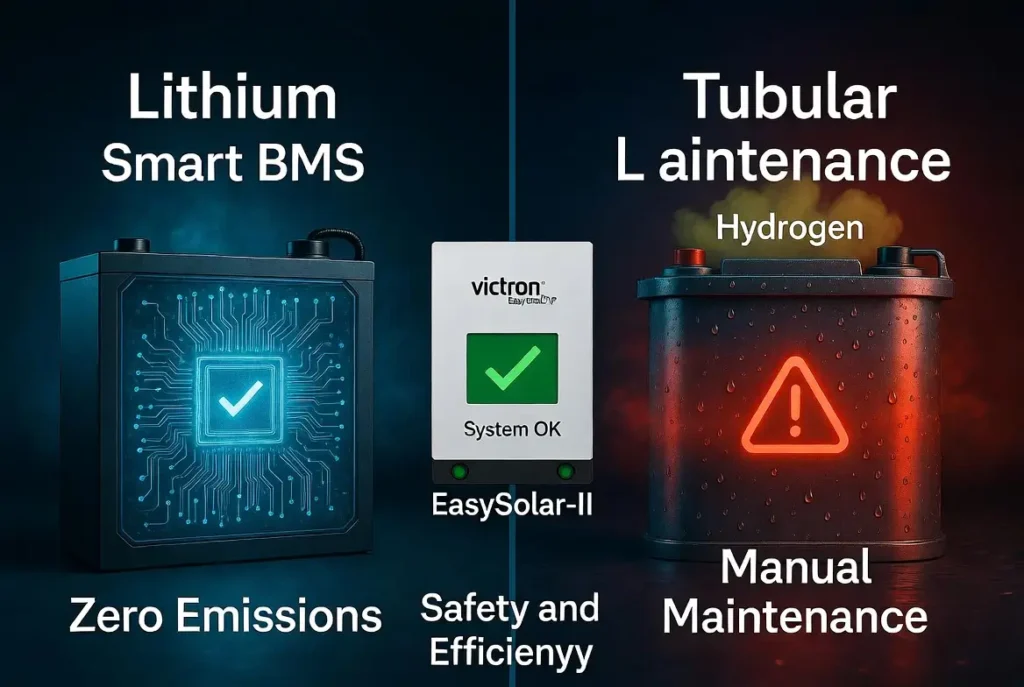
Think of a Battery Management System (BMS) as a digital bodyguard. Firstly, it watches every single cell inside a lithium battery. Crucially, the victron easysolar-ii communicates with this BMS to prevent overcharging. Therefore, the system can shut itself down before damage occurs. Conversely, tubular batteries are “dumb” and lack this internal oversight. Therefore, you must be the bodyguard, checking levels and cleaning terminals. Moreover, lead-acid batteries “breathe” explosive hydrogen gas during the charging process. Therefore, ventilation is not just a suggestion; it is a life-saving requirement.
Safety & Maintenance: Lithium vs. Tubular Comparison
| Feature / Task | Lithium (LiFePO4) | Tubular Lead-Acid | Flooded Lead-Acid |
| BMS Protection | Active (Voltage, Temp, Short) | None (External Fuse Only) | None (External Fuse Only) |
| Manual Maintenance | Firmware Updates Only | Monthly Water Top-ups | Weekly Water & Gravity Tests |
| Gas Venting | None (Sealed Design) | Moderate (Hydrogen Gas) | High (Acid Mist & Gas) |
Addressing the “Biggest Disadvantage” and Safety Concerns
Many ask about the “biggest disadvantage” of modern solar installation tech. Firstly, for lithium, it is the initial price tag. Moreover, many worry about the risk of thermal runaway. Crucially, LiFePO4 chemistry is incredibly stable compared to phone batteries. Therefore, the risk of fire is extremely low with quality gear. Conversely, the biggest disadvantage of lead-acid is its maintenance trap. Firstly, if you forget to water them, they die. Therefore, “low-cost” batteries often become the most expensive mistake.
Moreover, the AC vs. DC debate is a major safety concern. Firstly, DC is “stickier” and harder to break than AC. Therefore, an electrical arc can sustain itself and melt plastic easily. Crucially, the victron easysolar-ii uses high-quality DC breakers and fuses. Consequently, it isolates faults before they become structural fires. Moreover, you must use correctly rated cables for your solar installation. Therefore, never use standard AC wire for your battery connections. Crucially, proper torque on every terminal prevents the “resistance heat” that causes fires.
The Ritual of Lead-Acid Maintenance
Firstly, tubular batteries require a monthly distilled water ritual. Moreover, you must check the specific gravity with a hydrometer. Therefore, you stay in touch with the chemical health of your system. Crucially, neglecting this leads to “sulfation,” which kills capacity. Conversely, lithium removes this entire chore from your life. Therefore, lithium is better for people who hate wearing rubber gloves. Moreover, the victron easysolar-ii provides clear data on your charge state. Therefore, you aren’t guessing when your lead-acid bank is “full.”
Crucially, lead-acid terminals naturally develop white, crusty corrosion. Firstly, this acid buildup creates high resistance and heat. Therefore, you must clean them with a soda-water mix. Moreover, applying a thin layer of petroleum jelly prevents future growth. Conversely, lithium terminals stay clean for the life of the battery. Therefore, your solar installation remains efficient with zero elbow grease. Moreover, the integrated design of the victron easysolar-ii reduces the number of exposed connections. Therefore, there are fewer places for corrosion to hide.
🔧 Pro Fix: The 10% Torque Rule
╔══════════════════════════════════════════════════════════════════╗
Check your battery terminal tightness every 6 months.Thermal expansion and contraction naturally loosen bolts.Fix: Use a torque wrench to meet the manufacturer’s spec. A loose 500-Amp connection is a localized furnace.Therefore, keeping things tight is your best fire prevention. Crucially, this simple check can save your entire home.
╚══════════════════════════════════════════════════════════════════╝
The Critical Role of Ventilation and Gas Safety
Firstly, lead-acid batteries “outgas” hydrogen during the absorption stage. Moreover, hydrogen is colorless, odorless, and highly flammable. Therefore, your battery room must have a dedicated vent. Crucially, an enclosed, unvented space is a literal bomb. Conversely, lithium batteries are hermetically sealed and emit nothing. Therefore, you can install a victron easysolar-ii and a lithium bank in a closet. Consequently, lithium offers much more flexibility in home design. Therefore, it is the safer choice for indoor installations.
Moreover, “acid mist” from lead-acid can damage nearby electronics. Firstly, it eats through circuit boards and copper wiring. Therefore, you must keep your inverter and batteries slightly separated. Crucially, the victron easysolar-ii has a robust, powder-coated casing. Consequently, it resists environmental damage better than cheap plastic units. Moreover, you should always keep a box of baking soda nearby. Therefore, you can neutralize a spill instantly if a casing cracks. Crucially, safety is about being prepared for the “what if” scenarios.
💡 Did You Know?
A single loose battery connection can reach over500°C in seconds under a heavy load!Therefore, thermal imaging cameras are nowa standard tool for professional solar engineersto spot “hot spots” before they catch fire.
BMS Monitoring: Your Digital Insurance Policy
Firstly, a BMS does more than just balance cells. Moreover, it provides “Low-Voltage Disconnect” (LVD) to prevent over-discharge. Therefore, it saves the battery from your own mistakes. Crucially, the victron easysolar-ii integrates this data into a mobile app. Therefore, you get an alert on your phone if a cell is too hot. Conversely, a tubular battery will silently die without a peep. Therefore, the “brain” of a lithium system is its greatest safety asset. Moreover, you can update the BMS firmware to improve performance.
Crucially, the BMS acts as a final fuse for the battery. Firstly, it can disconnect the circuit in milliseconds during a short. Moreover, this is much faster than a standard mechanical breaker. Therefore, your solar installation is protected from massive current surges. Conversely, lead-acid batteries have no “off” switch if they short out. Therefore, they can dump thousands of amps into a fault instantly. Crucially, this makes lithium a safer choice for high-power residential systems. Therefore, trust the electronics to do what humans cannot.
Step 9: Future-Proofing Your Solar Installation: Adding More Capacity
Growth is the natural evolution of any energy system. Firstly, your power needs today will likely double by next year. I have spent a decade helping homeowners expand their reach. Crucially, scalability is the difference between a long-term asset and junk. A solar installation must be designed to breathe and grow. Therefore, choosing modular components is a non-negotiable strategy for success. Moreover, your inverter acts as the brain of this expansion. Conversely, a rigid system forces you to start from scratch. Therefore, we prioritize hardware that plays well with others. Let’s look at the architecture of a growing system.
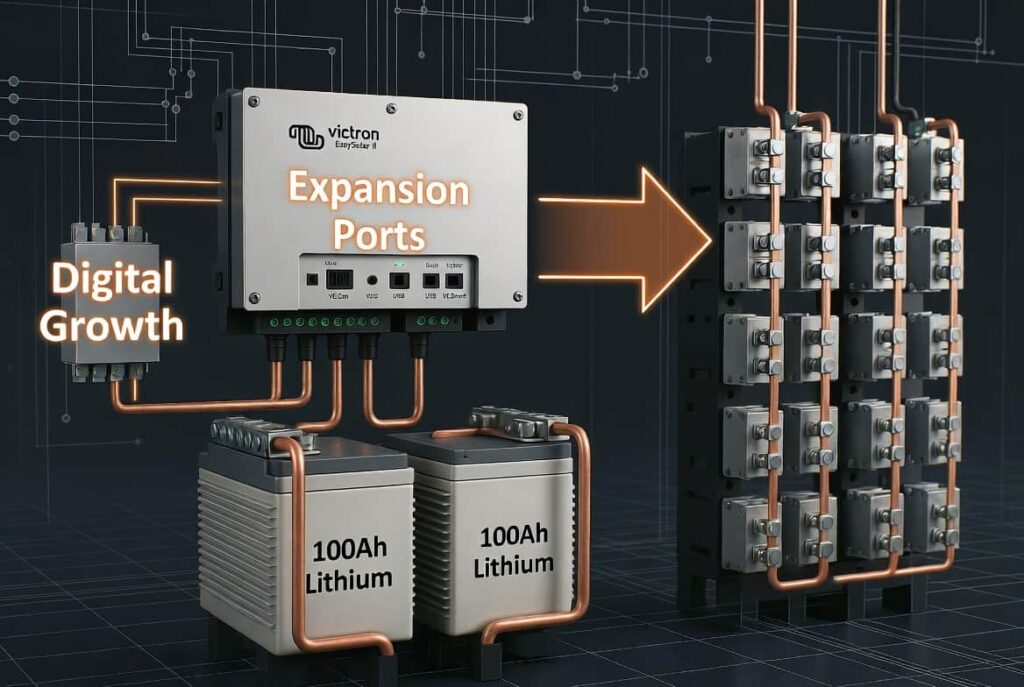
Think of your battery bank like a Lego set. Firstly, you want the ability to snap in more pieces. Crucially, the victron easysolar-ii is the ultimate foundation for this growth. It manages multiple inputs without breaking a sweat. Therefore, you can add more panels or batteries later. Conversely, cheap “all-in-one” units often have hard limits on expansion. Therefore, buying for the future saves you thousands in replacements. Moreover, the way you wire these additions dictates your efficiency. Therefore, we must master the art of parallel connections.
The Scalability Showdown: Battery Configurations
| Configuration Feature | 1x 200Ah Battery | 2x 100Ah (Parallel) | 2x 100Ah (Series) |
| System Complexity | Very Low (2 Cables) | Moderate (4+ Cables) | Moderate (Higher Voltage) |
| Redundancy | Zero (Single Failure Point) | High (One can stay online) | Zero (String breaks if one fails) |
| Inverter Compatibility | Standard 12V/24V | Requires Balanced Wiring | Requires High-Voltage Inverter |
Is it better to have 2 100Ah batteries or 1 200Ah battery?
This question is the “great debate” of modern storage design. Firstly, a single 200Ah battery is physically simpler to install. Moreover, it eliminates the risk of “unbalanced” current between cells. Therefore, for small mobile rigs, one big unit is often better. Conversely, two 100Ah batteries offer much higher redundancy and flexibility. Firstly, if one battery fails, the other keeps you running. Therefore, for a critical solar installation, the dual-bank setup wins. Moreover, two smaller units are easier to lift and position. Therefore, your back will thank you during the installation process.
Crucially, the victron easysolar-ii allows you to monitor these banks as one. Firstly, it uses “SmartShunt” technology to track every outgoing electron. Moreover, it ensures that your parallel batteries drain at the same rate. Therefore, you avoid the “leeching” effect where one battery dies early. Conversely, unmonitored parallel banks often age unevenly and fail prematurely. Therefore, intelligence at the inverter level is your best protection. Moreover, the victron easysolar-ii can scale up to handle massive parallel currents. Therefore, your ceiling for growth is virtually unlimited.
Parallel Limitations and Inverter Harmony
Firstly, you cannot just add infinite batteries in parallel forever. Moreover, internal resistance builds up with every extra set of cables. Therefore, the “rule of four” is a professional standard. Crucially, avoid paralleling more than four lithium batteries in one string. Conversely, if you need more power, switch to a higher voltage. Therefore, a 48V solar installation is the choice for high-capacity homes. Moreover, the victron easysolar-ii is available in 48V versions for this reason. Therefore, it stays cool even under heavy electrical loads.
Crucially, “Busbars” are the secret to a professional expansion. Firstly, they act as a central hub for all your connections. Moreover, they ensure every battery “sees” the exact same resistance. Therefore, your bank stays perfectly balanced throughout its 10-year life. Conversely, “daisy-chaining” batteries leads to the first battery working harder. Therefore, the first unit in the chain usually dies three years early. Moreover, the victron easysolar-ii integrates seamlessly with these heavy-duty distribution systems. Therefore, your wiring stays clean, safe, and highly efficient.
🔗 Pro Fix: The “Equal Path” Rule
╔══════════════════════════════════════════════════════════════════╗
Always use identical cable lengths for parallel batteries.Electricity is lazy and will always take the shortest path.Fix: Ensure the positive cable for Battery A is theexact same length as the positive for Battery B.Therefore, the load is distributed with 50/50 precision. Crucially, this prevents one battery from “cycling” deeper. Moreover, your victron easysolar-ii will report much more accurate state-of-charge data.
╚══════════════════════════════════════════════════════════════════╝
Future-Proofing with Integrated Controllers
Firstly, a separate solar controller allows for independent panel upgrades. Moreover, it prevents a single failure from taking down your whole house. Therefore, the modular approach is the professional’s gold standard. Crucially, the victron easysolar-ii houses an elite MPPT controller inside. Therefore, it saves space without sacrificing the modular benefits. Moreover, you can add “Slave” controllers to the system later. Consequently, you can grow your solar array from 400W to 4000W. Therefore, you are never “locked in” to your initial purchase.
Crucially, firmware updates are the final piece of the puzzle. Firstly, new battery chemistries hit the market every few years. Moreover, your hardware must be able to “speak” to these new cells. Therefore, the victron easysolar-ii features a fully updatable operating system. Conversely, “dumb” inverters become obsolete the day a new battery arrives. Therefore, you are buying a computer that happens to have power. Moreover, you can manage these updates remotely via the VRM portal. Therefore, your solar installation stays modern while you sleep.
💡 Did You Know?
Mixing old and new batteries is a huge risk.The old battery will “drag down” the new oneto its lower performance level. Therefore, try to add your expansion batteries within the first 12 months of your initial installation.
The Scalable Path to Energy Sovereignty
Firstly, energy independence is a journey, not a single purchase. Moreover, your solar installation should be a living, breathing project. Therefore, start with a solid foundation like the victron easysolar-ii. Crucially, this unit acts as the “Master” for all your future “Slaves.” Consequently, you can add more power as your budget allows. Conversely, a cheap system forces you to buy twice and cry twice. Therefore, invest in the ability to change your mind later. Moreover, the planet benefits every time you add another panel.
Crucially, the global shift toward electrification is accelerating. Firstly, you might want to charge an EV or run heat pumps. Moreover, these high-load appliances require a massive “Surge” capacity. Therefore, parallel inverters are the next step in your evolution. The victron easysolar-ii can be stacked to provide double or triple the power. Consequently, you can grow from a small cabin to a full estate. Therefore, the sun is the only limit to your potential. Crucially, a scalable system is a sustainable system. Therefore, always build for the “you” of five years from now.
Step 10: Choosing Your Winner: The Final Solar Installation Recommendation
Deciding on a battery is the final bridge to energy freedom. Firstly, your choice defines your daily relationship with your power. I have spent a decade auditing these energy investments globally. Crucially, no single battery fits every single human life. A solar installation must mirror your specific goals and budget. Therefore, we use a selection matrix to find your match. Moreover, hardware is only as good as the strategy behind it. Conversely, a mismatched system leads to deep financial regret. Therefore, let us weigh the heavyweights of the energy world.
Think of this choice as picking a long-haul vehicle. Firstly, do you need a reliable workhorse or a racehorse? Crucially, the victron easysolar-ii supports both lithium and lead-acid chemistries. It acts as the universal translator for your energy needs. Therefore, your inverter choice is settled, but the storage remains. Conversely, lead-acid offers a lower entry price for tight budgets. Therefore, we must analyze the “Total Cost of Ownership” carefully. Moreover, lithium provides a “hands-off” luxury that many homeowners crave. Let’s look at the ultimate selection matrix.
The Eco Power Guide Selection Matrix
| System Goal | Best for Budget (Lead-Acid) | Best for Longevity (Lithium) | Best for Off-Grid (Hybrid) |
| Primary Benefit | Low Upfront Cost | 10+ Year Lifespan | Maximum Resilience |
| Maintenance Level | High (Monthly Tasks) | Zero (Automated) | Low (Monitored) |
| Typical Use Case | Seasonal Cabins | Daily Residential | Remote Estates |
Lithium vs Lead Acid: Which is better?
The “better” battery depends entirely on your specific lifestyle scenario. Firstly, lead-acid is the “budget king” for backup-only systems. If you rarely lose power, lead-acid is statistically fine. Moreover, it handles cold temperatures better in unheated sheds. Therefore, for a “just in case” solar installation, lead-acid works. Conversely, lithium is the undisputed champion for daily cycling. Firstly, it survives thousands of deep discharges without flinching. Therefore, lithium is “better” for people living off-grid daily. Moreover, the weight difference makes lithium the mobile choice.
Crucially, the victron easysolar-ii manages the lithium charging curve perfectly. Firstly, it prevents the overvoltage issues that plague cheap chargers. Therefore, your lithium investment is protected by high-end software. Conversely, lead-acid batteries fail early due to poor charging. Therefore, the “cheaper” battery often becomes a recurring expense. Moreover, lithium is roughly 95% efficient during the round-trip. Therefore, you need fewer solar panels to fill it up. Consequently, lithium is better for small roof spaces. Therefore, math usually favors lithium for the modern home.
The Off-Grid Resilience Verdict
Firstly, off-grid living requires a battery that never quits. Moreover, you need a system that handles high surge loads. Therefore, the victron easysolar-ii paired with lithium is ideal. Crucially, lithium maintains high voltage even when nearly empty. Therefore, your heavy appliances won’t trip the inverter early. Conversely, lead-acid “sags” as soon as the microwave starts. Therefore, you feel the power drop in your lights. Consequently, for a premium off-grid experience, lithium is mandatory. Moreover, it allows for a much more compact battery room.
Crucially, consider the “Depth of Discharge” (DOD) during your planning. Firstly, lithium gives you 80% to 90% useable power. Moreover, lead-acid only safely gives you 50% of its rating. Therefore, a 100Ah lithium battery equals a 200Ah lead-acid bank. Conversely, the lead-acid bank weighs four times as much. Therefore, your floor joists might need reinforcing for lead-acid. Moreover, the victron easysolar-ii provides the intelligence to monitor this DOD. Therefore, you always know exactly how much “gas” is left. Consequently, lithium provides a much more intuitive user experience.
🏆 Pro Fix: The 5-Year Financial Pivot
╔══════════════════════════════════════════════════════════════════╗
Calculate the “Cost Per Cycle” instead of the sticker price.Lead-acid might cost $200 but only lasts 500 cycles.Fix: Lithium costs $800 but lasts 4,000+ cycles easily.Therefore, lithium costs roughly $0.20 per cycle.Conversely, lead-acid costs roughly $0.40 per cycle!Crucially, your victron easysolar-ii ensures you hit those high cycle counts with ease.Therefore, the victron easysolar-ii features a fully updatable operating system.
╚══════════════════════════════════════════════════════════════════╝
Matching the Battery to Your Regional Economy
Firstly, regional incentives might sway your final energy decision. Moreover, some countries offer grants specifically for lithium storage. Therefore, check your local laws before swiping your card. Crucially, the victron easysolar-ii is pre-certified for most global grids. Consequently, it qualifies for the highest tiers of tax credits. Conversely, uncertified hardware might disqualify your entire system. Therefore, professional-grade gear pays for itself via government rebates. Moreover, lithium holds its resale value much better than lead.
Crucially, extreme heat in Australia or Asia favors lithium. Firstly, lead-acid fluids evaporate in the blistering desert heat. Moreover, this kills the battery’s internal plates very quickly. Therefore, lithium with an active BMS is a thermal necessity. Conversely, in the frozen North, lead-acid is remarkably tough. Therefore, a winter-only cabin might thrive with a lead bank. Moreover, the victron easysolar-ii features a temperature sensor for both. Therefore, your solar installation adapts to your specific weather. Consequently, location is the silent partner in your decision.
💡 Did You Know?
Most lithium batteries used in solar (LiFePO4)contain zero cobalt. This makes themmuch more ethically sourced and environmentallyfriendly than your laptop or phone batteries!Therefore, your solar installation is truly green.
The Final Engineering Recommendation
Firstly, my professional advice is to choose lithium. Moreover, the era of lead-acid is effectively over. Therefore, invest in the technology that is moving forward. Crucially, the victron easysolar-ii is the heart of this transition. It provides the stability and data you need for success. Conversely, if you are truly on a survival budget, buy lead-acid. Therefore, use it as a “starter” bank while you save. Moreover, ensure your wiring is ready for the future lithium upgrade. Consequently, you are building a bridge to total independence.
Crucially, energy is the most valuable commodity of the future. Firstly, owning your storage is like having a personal oil well. Moreover, it protects you from the rising costs of the grid. Therefore, a high-quality solar installation is a legacy asset. The victron easysolar-ii ensures that legacy lasts for decades. Conversely, cutting corners now leads to blackouts later on. Therefore, prioritize quality over the lowest possible price point. Moreover, the peace of mind of a reliable system is priceless. Crucially, the sun is rising—make sure you are ready.
Conclusion: Making the Right Choice for Your Energy Future
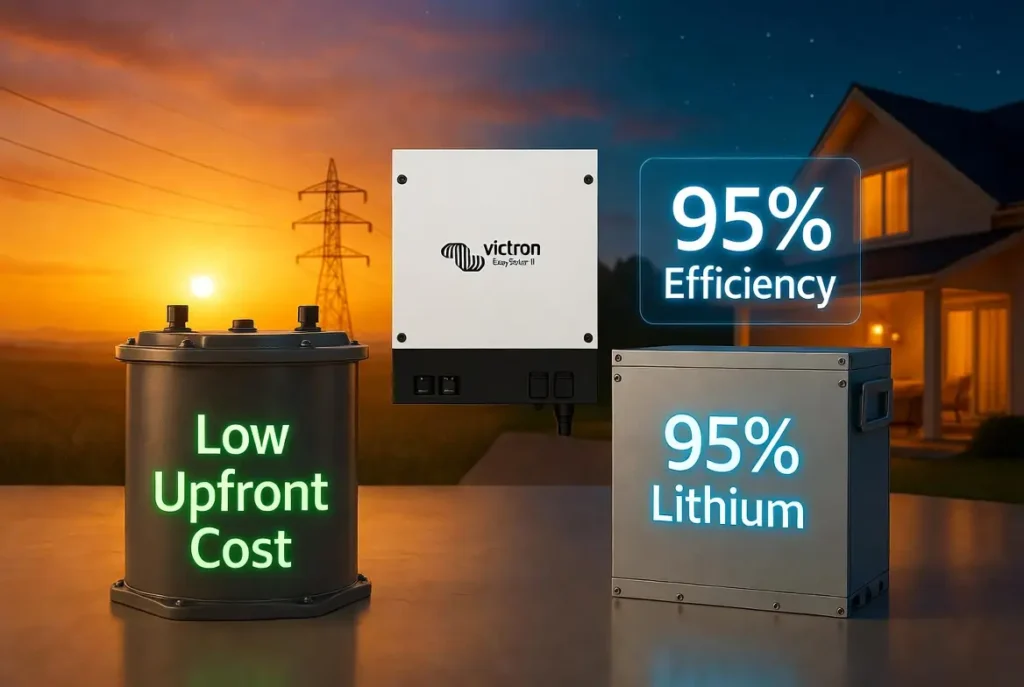
Choosing between Lithium and Lead-Acid batteries isn’t just about the price tag; it’s about matching your energy needs with the right technology. If you prioritize long-term savings, high efficiency (95%), and a “set-and-forget” lifestyle, Lithium (LiFePO4) is the undisputed winner, especially when paired with a smart system like the Victron EasySolar-II.
On the other hand, if you are on a strict budget and don’t mind regular maintenance, Tubular Lead-Acid batteries remain a reliable, time-tested option for basic solar setups. Regardless of your choice, understanding how these batteries interact with your solar array ensures that your home stays powered efficiently for years to come.
Frequently Asked Questions (FAQs)
Generally, a high-quality tubular battery lasts between 3 to 5 years (800 to 1,200 cycles). In contrast, a Lithium (LiFePO4) battery can last over 10 years, offering anywhere from 3,000 to 6,000+ charging cycles.
Yes, in most cases, a 100Ah lithium battery is superior. Lithium batteries can be safely discharged up to 90-100%, whereas lead-acid batteries should only be discharged to 50% to maintain their lifespan. Thus, a 100Ah lithium battery provides equal or more usable energy than a 200Ah lead-acid unit.
The most significant disadvantage is the high upfront cost. While lithium batteries are more cost-effective over the long term, the initial investment required is much higher compared to tubular or lead-acid batteries.
In standard daily use, it is almost impossible for a lead-acid or tubular battery to last 20 years. These typically peak at 5 to 7 years with extreme care. Only specific lithium iron phosphate batteries are expected to reach a 20-year lifespan.
A single 5kWh lithium battery is roughly equivalent to 4 or 5 units of 180Ah tubular batteries, mainly because lithium provides a much higher depth of discharge and efficiency.