Step 1: Going Off-Grid: How To Calculate Your Total Power Loa
Thinking about going off-grid? You cannot build a house without a solid foundation. Similarly, you cannot go off-grid without knowing your power numbers. Most people fail because they guess their energy needs. A successful off-grid system requires a precise energy audit. You must list every appliance you plan to use.
Key Benefits of a Precise Energy Audit
Start by looking at the labels on your devices. Every appliance has a wattage rating. However, older appliances are energy hogs. They pull much more power than modern versions. To run your home on solar power, you must think like an engineer. You need to separate “needs” from “wants.”
Going Off-Grid: Categorizing Your Appliances
Small habits make a huge difference in an off-grid setup. If you do not track your load, your batteries will die early. Calculating your load is the first step toward true energy freedom.
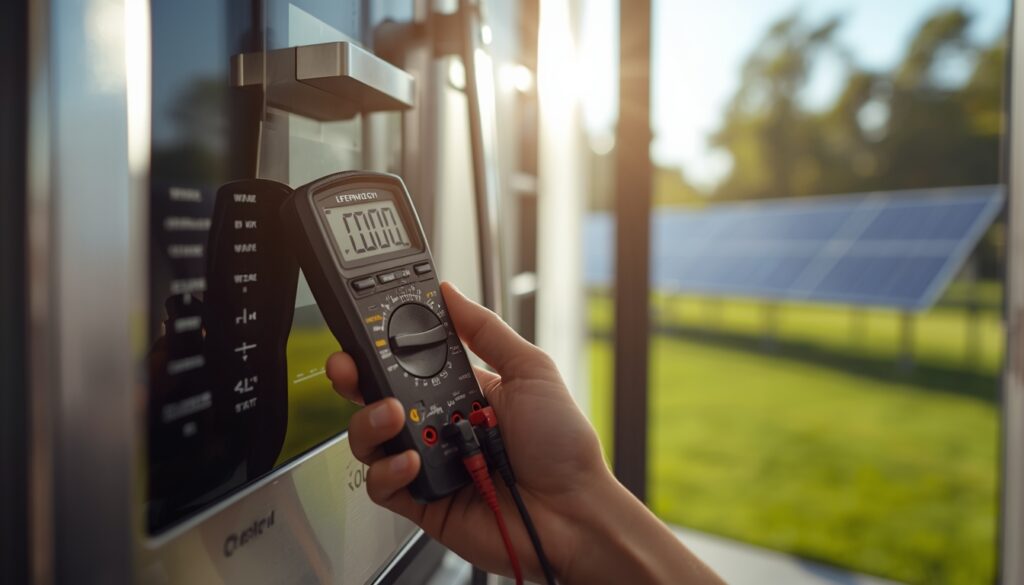
Appliance Power Comparison
| Appliance Type | Old Model Wattage | Energy-Star Wattage | Daily Savings (Est.) |
| Refrigerator | 800 Watts | 150 Watts | 80% |
| LED Light Bulb | 60 Watts (Incand.) | 9 Watts | 85% |
| Washing Machine | 1200 Watts | 500 Watts | 58% |
🛠️ Pro Fix: Master Your Energy Audit
Pro Fix: Using a Kill-A-Watt Meter
To get a 100% accurate off-grid calculation, buy a Kill-A-Watt meter. Plug your appliance into the meter, then plug the meter into the wall. Leave it for 24 hours. It records the exact kilowatt-hours (kWh) used. Use this real data instead of the sticker labels for your solar battery sizing.
Did You Know?
Phantom loads are silent energy killers. Devices like TVs and chargers use power even when “off.” This standby power can account for 10% of your total bill. Use power strips to kill these loads completely.
Step 2: Solar Panel Efficiency For Going Off-Grid Success
Location is the most critical factor for off-grid success. Many people buy too many panels. They forget to check their local peak sun hours. A panel in a desert produces more than one in a forest. You must understand your geography before buying hardware.
How Peak Sun Hours Affect Your Energy Harvest
Peak sun hours are not the same as daylight hours. It measures the intensity of the sun. Most locations get only 3 to 5 strong hours daily. High-quality solar power systems rely on this specific window. If you live in a cloudy area, you need better efficiency.
Your panels must capture every possible ray of light. Efficiency drops if the angle is wrong. Even the best solar power panels fail in deep shade. Proper placement ensures your batteries stay charged all winter. Researching your local climate is a vital off-grid step.
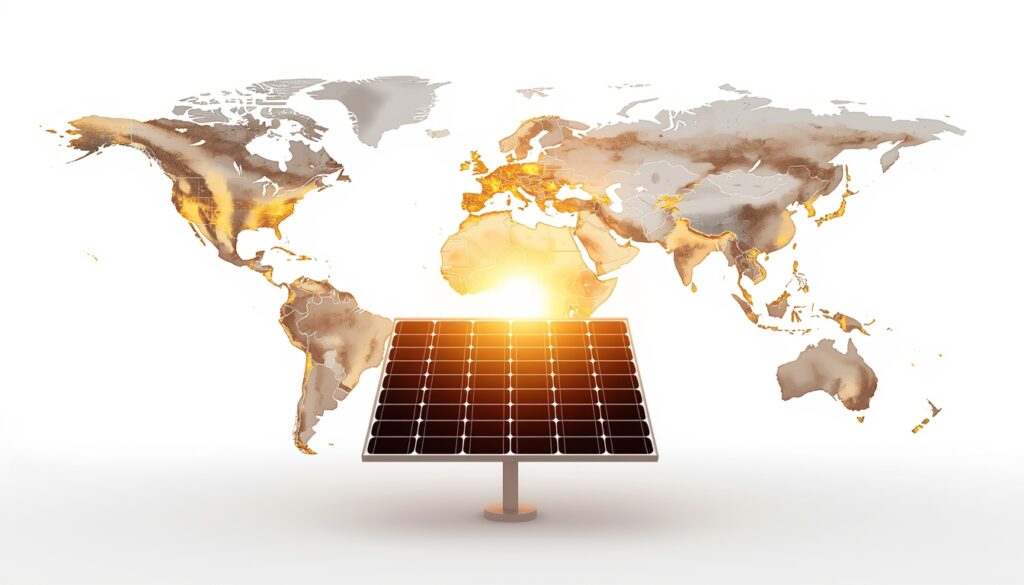
Global Peak Sun Hours Comparison
| Region | Avg. Peak Sun Hours | Winter Minimum | Solar Potential |
| Southwestern USA | 6.5 Hours | 4.2 Hours | Excellent |
| Central Europe | 3.2 Hours | 1.0 Hours | Moderate |
| South Asia | 5.5 Hours | 3.8 Hours | High |
🛠️ Pro Fix: The Seasonal Angle Rule
Pro Fix: Seasonal Tilt Adjustment
To maximize off-grid energy, adjust your panel tilt twice a year. In the Summer, set the angle to your Latitude minus 15 degrees. In the Winter, set it to your Latitude plus 15 degrees. This simple tweak can boost your solar power harvest by 25%.
Did You Know?
Solar panels actually love the cold! They work more efficiently in cold, sunny weather than in extreme heat. High temperatures can actually reduce the voltage output of your solar power cells.
Step 3: Choosing The Best Batteries For Going Off-Grid Living
Your battery is the heart of your off-grid system. Without storage, your panels are useless at night. Choosing the right chemistry is a critical decision. Most modern systems use Lithium-ion technology. However, two main types dominate the market today.
Comparing LFP and NMC for Long-Term Storage
First, we have LiFePO4 (LFP) batteries. These are famous for their incredible safety. They do not catch fire easily. They also last much longer than other types. For a permanent off-grid home, LFP is the top choice. It handles daily cycling without losing much capacity.
Second, we have NMC batteries. These are lighter and more compact. You often find them in portable power stations. They pack a lot of energy into small spaces. However, they have a shorter overall lifespan. Understanding these differences helps you spend your budget wisely. Your solar power setup depends on this choice.
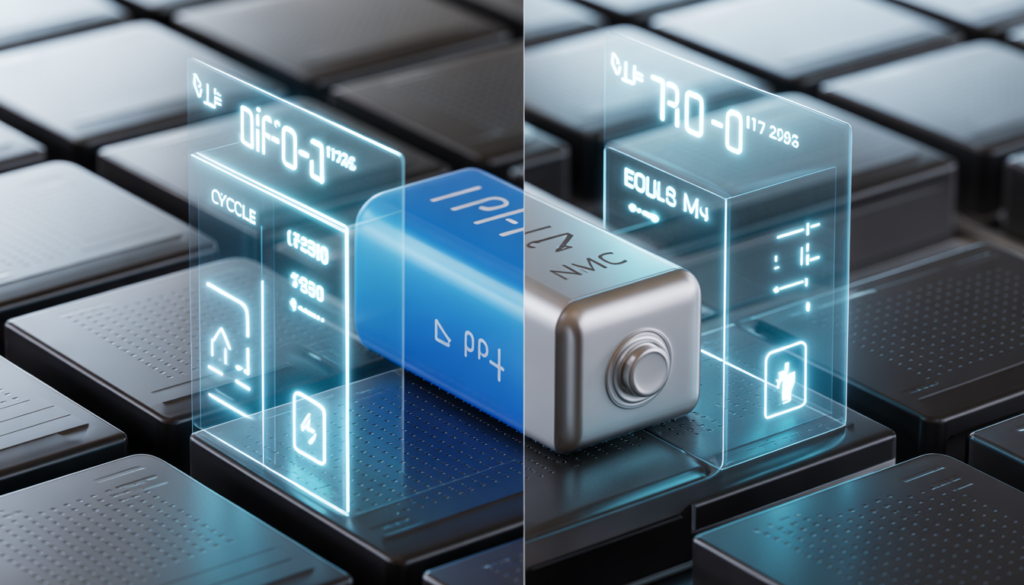
Battery Chemistry Comparison
| Feature | LiFePO4 (LFP) | Lithium-Ion (NMC) | Best Use Case |
| Cycle Life | 4,000 – 6,000+ | 500 – 2,000 | Home Storage |
| Safety | Very High | Moderate | Portable Tech |
| Energy Density | Lower (Heavy) | Higher (Light) | Mobile Needs |
🛠️ Pro Fix: The 20% Safety Buffer
Pro Fix: Avoid Deep Discharge
To protect your off-grid investment, never empty your batteries. Set your inverter to shut off at 20% Depth of Discharge (DoD). Running a battery to 0% causes chemical stress. Staying above 20% can double your solar power storage lifespan.
Did You Know?
LFP batteries are incredibly durable. They can last over 10 years with heavy daily use. Most other battery types begin to fail after just 3 or 4 years of off-grid service.
Step 4: Choosing An Inverter For Going Off-Grid Needs
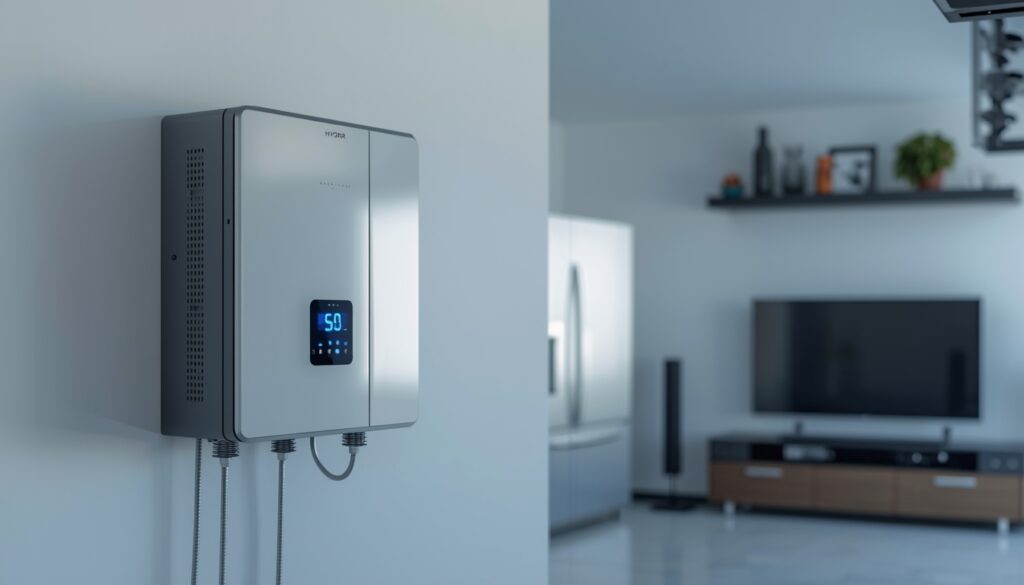
An inverter is the brain of your off-grid system. It turns battery power into usable home electricity. Choosing the wrong size can ruin your electronics. Large appliances like fridges need extra power to start. This initial burst is called surge power.
You must check the “Peak” rating of your inverter. Most solar power users underestimate their heavy loads. An air conditioner needs a massive startup kick. If your inverter is too small, it will trip. Always buy an inverter with a high continuous rating.
Pure Sine Wave vs. Modified Inverters
The wave signal also matters for delicate gear. Cheap inverters produce “choppy” power. This can damage your electronic appliances over time. Investing in quality gear ensures a stable home. Total off-grid reliability starts with a strong, clean inverter.
Inverter Technology Comparison
| Feature | Modified Sine Wave | Pure Sine Wave | Compatibility |
| Power Quality | Low (Choppy) | High (Clean) | Pure is Better |
| Efficiency | 75% – 85% | 90% – 95% | Solar Efficiency |
| Appliance Safety | Risky for Motors | 100% Safe | All Appliances |
🛠️ Pro Fix: Calculating Surge Watts
Pro Fix: The 3X Startup Rule
Motor-based electronic appliances need a huge surge power boost. To find the right off-grid inverter size, multiply running watts by three. A 500W fridge may need 1500W just to start up. Always ensure your solar power inverter can handle this peak.
Did You Know?
Phantom Loads are silent energy killers because devices like TVs and chargers use power even when “off.” In fact, this standby power can account for 10% of your total bill. Therefore, you should use power strips to kill these loads completely to protect your solar battery.
Step 5: Going Off-Grid: Managing Kitchen Appliances
The kitchen is the ultimate test for off-grid living. Cooking usually requires intense heat and massive energy. Most standard electronic appliances here pull huge currents. You must choose your kitchen gear very carefully. High-wattage devices can quickly drain a solar power battery.
Efficiency is the secret to a functional off-grid kitchen. Old-fashioned electric coils waste too much heat. Modern alternatives allow you to cook with precision. You should always monitor your battery levels while cooking. Large loads can cause sudden voltage drops.
Smart timing is also a vital off-grid strategy. Use your most powerful tools during peak sun hours. This allows you to use solar power directly. You avoid putting heavy stress on your storage system. Learning to manage heat will save your system.
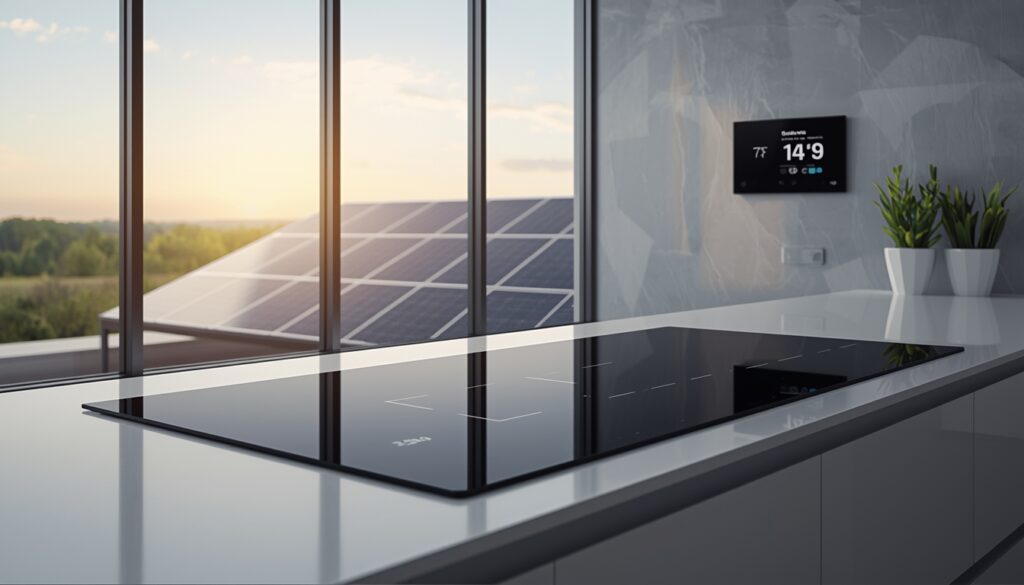
Kitchen Appliance Energy Comparison
| Appliance Type | Typical Wattage | Heating Efficiency | Off-Grid Rank |
| Induction Cooktop | 1,200 – 1,800W | 90% (Very High) | Best Choice |
| Electric Coil | 1,500 – 2,500W | 70% (Lower) | Avoid |
| Microwave Oven | 800 – 1,200W | 80% (Fast) | Good (Short Use) |
🛠️ Pro Fix: The Slow Cooker Strategy
Pro Fix: Use “Sun-Time” for Cooking
Stop using high-wattage ovens for long meals. Switch to a slow cooker (Crockpot) during the day. These electronic appliances use very low power (150-200W). Your solar power panels can easily cover this load. This keeps your off-grid batteries full for the night.
Did You Know?
An electric kettle is a hidden power giant. It often uses 1,500 to 2,000 Watts instantly. That is much more power than a large off-grid refrigerator uses to run!
Step 6: Beat the Heat: Smart Off-Grid Cooling and Heating
Traditional HVAC systems are the biggest enemies of off-grid living. They demand massive amounts of constant energy. Most standard air conditioners will kill solar power batteries quickly. You need a smarter approach to climate control. Modern technology offers several high-efficiency workarounds for your home.
The best solution is to use electronic appliances built for DC power. DC solar mini-splits connect directly to your panels. This avoids the energy loss of an inverter. They are much more efficient than central air systems. Proper insulation also plays a huge role in success.
Heating is equally challenging for an off-grid setup. Electric space heaters are very inefficient for batteries. You should prioritize heat pumps or localized heating. Managing your home temperature requires a mix of tech and strategy. Always plan for the most extreme seasonal weather. Your solar power system must handle these peaks.
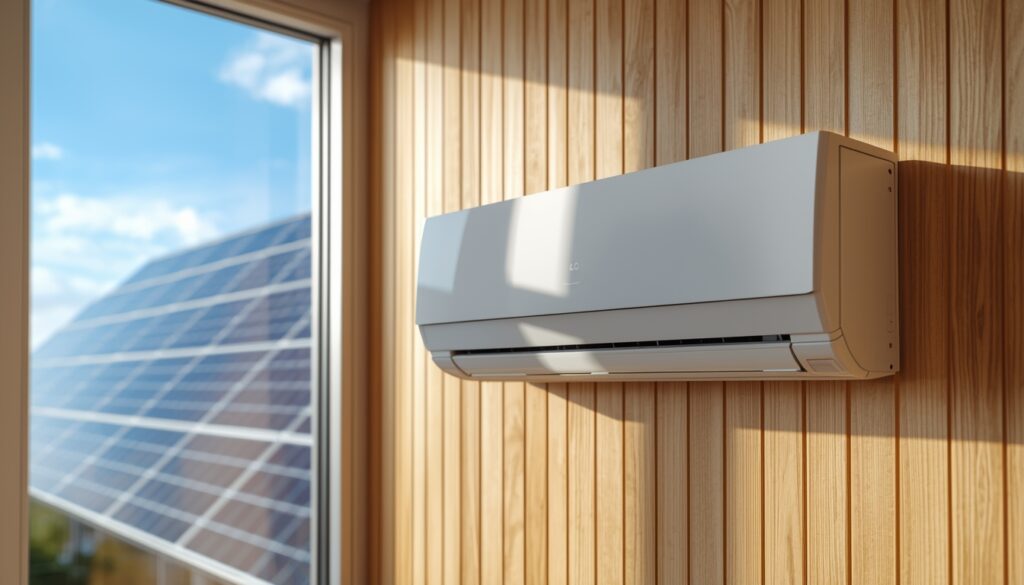
Cooling System Comparison
| System Type | Power Source | Efficiency Rating | Off-Grid Suitability |
| Central AC | AC (Requires Inverter) | Low (SEER 14) | Not Recommended |
| DC Mini-Split | Direct DC (Solar) | Extreme (SEER 35+) | Best for Off-Grid |
| Window Unit | AC (Standard Plug) | Moderate | Emergency Only |
🛠️ Pro Fix: The Thermal Mass Trick
Pro Fix: Pre-Cool Your Home
Use the thermal mass of your home to save energy. Run your electronic appliances for cooling during peak solar power hours. Drop the temperature 2-3 degrees lower while the sun is out. Turn the AC off or low at sunset. Your walls and floors will keep the off-grid home cool all night.
Did You Know?
Inverter-technology ACs are a game changer. They use 30-50% less power than traditional units. They slow down the motor instead of turning it off. This prevents massive off-grid power surges.
Step 7: Master the Clock: The “Solar First” Daily Routine
Living off-grid requires a shift in your daily habits. You must align your lifestyle with the sun’s path. Most people use power whenever they want. In a solar-powered home, timing is everything. Using energy during the day is more efficient. It goes directly from panels to your electronic appliances.
When you use power at night, you strain batteries. Every watt used after dark shortens your storage life. The goal is to maximize “direct consumption.” This means running heavy loads during peak sunlight. You should avoid running the dishwasher or dryer at night.
A “Solar First” routine creates a sustainable energy cycle. It reduces the need for massive battery banks. You become a manager of your own utility. This strategy ensures your off-grid system remains healthy. Proper timing is the secret to long-term success. Your solar power setup will thank you for it.
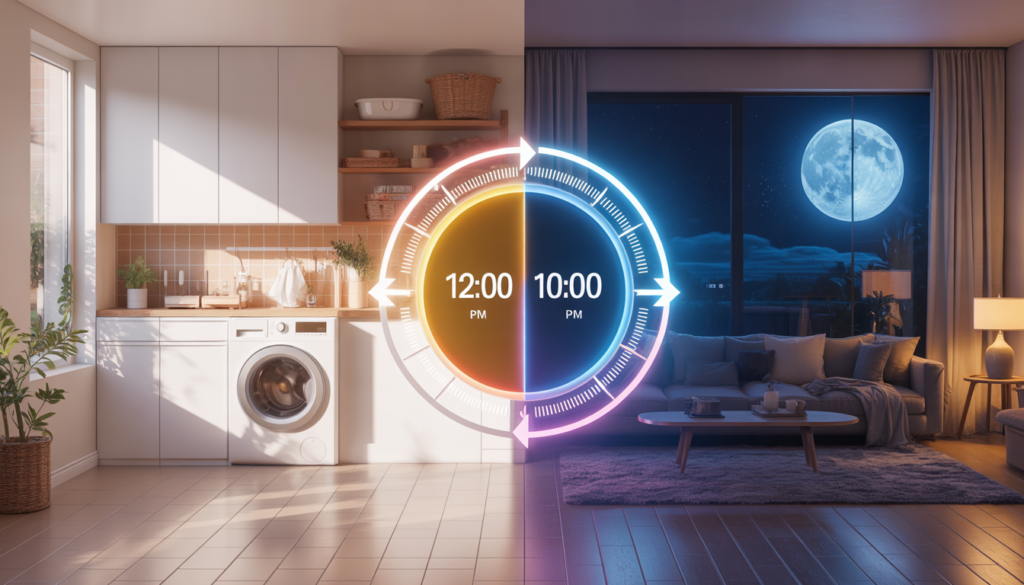
Power Usage Timing Strategy
| Time of Day | Sun Availability | Recommended Tasks | Battery Impact |
| Morning | Increasing | Light Charging, Coffee | Low Recovery |
| Afternoon | Peak | Laundry, Cooking, AC | Zero (Direct) |
| Night | None | LED Lights, Laptop | High Drain |
🛠️ Pro Fix: Automate Your Solar Window
Pro Fix: Use Smart Appliance Timers
Don’t rely on your memory to save solar power. Use smart plugs or built-in timers for your electronic appliances. Set your dishwasher and laundry to start at 11:00 AM. This ensures you use off-grid energy while it is strongest. Automation makes the Solar First routine effortless and reliable.
Did You Know?
Washing clothes at noon is essentially “free” energy. Your panels produce more than you usually need then. However, washing at 9 PM costs you precious off-grid battery life and cycles!
Step 8: Stay Powered: Maintenance for 100% Off-Grid Reliability
Going off-grid means you are now the utility company. You are responsible for every wire and panel. Regular maintenance is the only way to ensure power. Neglect leads to sudden failures and nights. You must treat your solar power system with care.
Dirty panels are a major cause of energy loss. Rain does not always clean them perfectly. Dust, pollen, and bird droppings block precious sunlight. This reduces the efficiency of your electronic appliances, too. A clean system produces much more electricity.
Wiring is another critical area for your off-grid setup. Heat and wind can loosen important connections. Corrosion can eat away at your copper wires. Regular inspections prevent dangerous electrical fires. Your solar power investment deserves a monthly check-up. Consistency ensures your home stays bright and safe.
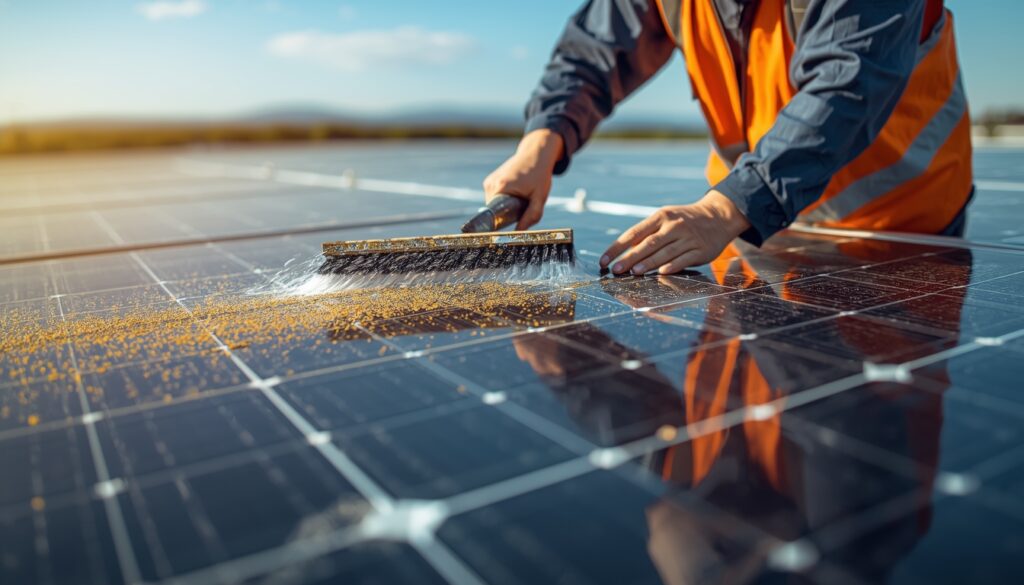
Cleaning Frequency by Climate
| Climate Type | Main Challenge | Cleaning Frequency | Impact on Output |
| Desert | Sand and Dust | Every 2 Weeks | Very High (30%) |
| Coastal | Salt Spray/Mist | Every Month | Moderate (15%) |
| Tropical | Algae and Pollen | Every 3 Months | Low (10%) |
🛠️ Pro Fix: The Connection Check
Pro Fix: Inspect Your MC4 Connectors
Loose wires create heat and waste solar power energy. Every six months, physically check your MC4 connectors. Look for signs of melting or green wire corrosion. Ensure every connection is “clicked” and tight. This simple off-grid habit prevents 90% of system shutdowns.
Did You Know?
A thin layer of dust is a silent thief. It can reduce your total solar power output by up to 25% in just one month. Keep those panels clean to keep your electronic appliances running!
Final Thoughts on Going Off-Grid
In conclusion, mastering the art of going off-grid is not just about buying solar panels; it is about changing how you understand and use energy. First of all, a precise power audit is essential for a reliable system. Moreover, by choosing the right battery chemistry and high-efficiency appliances, you can enjoy a seamless lifestyle without the grid.
Ultimately, the transition requires patience and smart planning. However, the reward of true energy independence is worth every effort. As a result, you will not only save money but also contribute to a greener planet. Start your going off-grid journey today and take full control of your power needs!
Going Off-Grid: Frequently Asked Questions
How many solar panels do I need for going off-grid?
The number of panels depends on your daily energy consumption. For instance, an average energy-efficient home usually requires between 15 to 25 panels. Therefore, performing a precise power audit is the first step to success.
Which battery is best for a going off-grid system?
Currently, Lithium Iron Phosphate (LFP) batteries are considered the best choice. This is because they offer a longer lifespan and higher safety standards compared to NMC batteries. As a result, they provide better long-term value.
Can I run heavy appliances like AC while going off-grid?
Yes, absolutely. However, you must ensure your inverter is sized correctly for “Surge Power.” Moreover, using 5-star rated inverter ACs will significantly reduce the load on your battery bank.
Is going off-grid cheaper than staying on the grid?
In the long run, yes. While the initial setup cost is high, you will have zero monthly electricity bills. Consequently, most solar systems pay for themselves within 3 to 5 years.