
Welcome to the great kitchen showdown. We are looking at Air Fryer efficiency versus the speed of a microwave. Many homes have both appliances. But which one is the real power saver? This guide breaks it down.
You might think the smaller appliance always wins. That is not always true. The way they cook is very different. So is the time they take. We will look at the facts. You will learn which machine fits your needs best. Let’s settle this battle for kitchen efficiency.
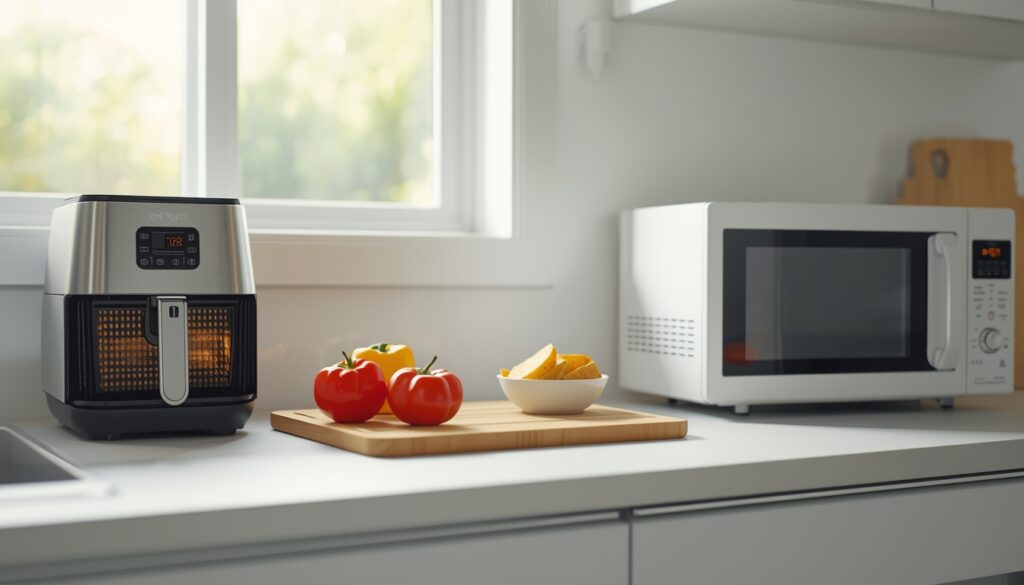
In This Article: Key Takeaways
| Section | Main Points |
|---|---|
| The Power Struggle | How each appliance heats food. Direct heat vs. radiation. |
| Energy in Action | Wattage explained. Small loads vs. big meals. |
| Speed vs. Texture | Cooking time comparison. Crispy vs. quick. |
| The Verdict | When to use each for maximum savings. |
| Pro Maintenance Tip | Keep your appliances running at peak efficiency. |
H2: How Air Fryer Efficiency Compares to Microwave Radiation
First, we must understand the science. It explains the power use. An air fryer is like a small convection oven. It uses a heating element and a fan. The fan blows hot air onto the food. This cooks it fast. It also makes food crispy.
Air Fryer efficiency comes from its size. It is smaller than an oven. So, it heats up quickly. The hot air surrounds the food. This transfers heat energy directly. There is almost no warm-up time wasted.
Then, we have the microwave. It uses a different method. It creates radiation waves. These waves target water molecules. They make the water vibrate. This vibration creates heat. The heat cooks the food from the inside out.
So, one uses hot air. The other uses radiation. This is the core difference. It affects everything else. It changes the taste of food. It also changes the electricity bill.
H2: Breaking Down the Watts: Air Fryer Efficiency in Action
Now, let’s talk numbers. We look at wattage. This is the power an appliance uses. Most microwaves run between 800 and 1200 watts. Air fryers are similar. They usually run between 1400 and 1700 watts.
Looking at these numbers, the air fryer seems worse. It uses more watts. But wattage is not the whole story. Time is the other key factor. A microwave might cook a potato in 5 minutes. An air fryer might take 25 minutes for the same potato.
However, the air fryer gives a different result. It gives a crispy skin. The microwave makes it soft. So, the choice depends on the food.
Here is a simple comparison:
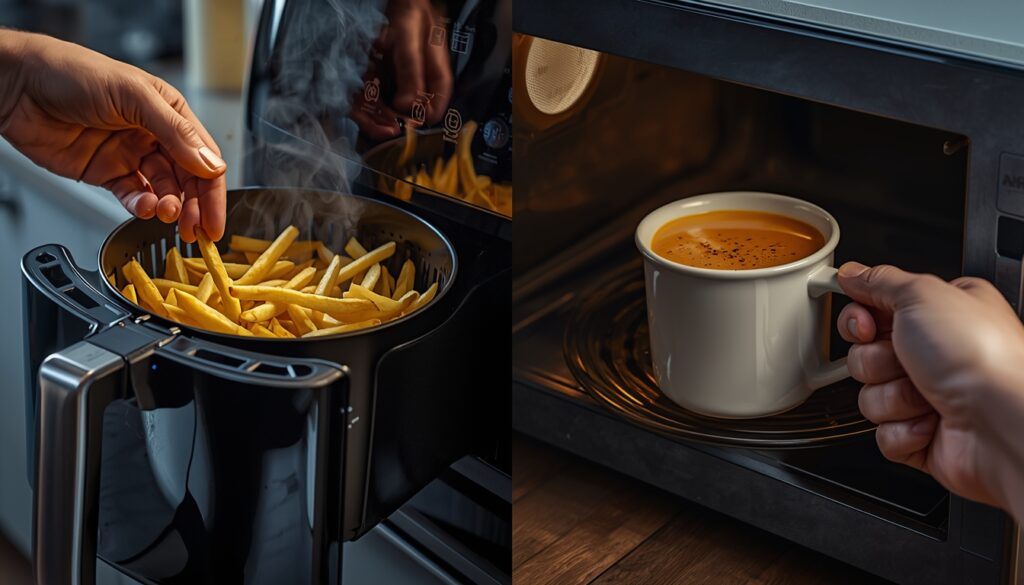
Air Fryer vs. Microwave: 3×3 Comparison Table
| Feature | Air Fryer | Microwave |
|---|---|---|
| Best For | Crispy foods, reheating pizza, “frying” | Leftovers, soups, drinks, defrosting |
| Power Use | Higher wattage, longer runs | Lower wattage, very fast runs |
| Food Texture | Crunchy, browned, roasted | Soft, steamed, often soggy |
| Speed | Slow (15-25 mins) | Very Fast (1-5 mins) |
| Efficiency Winner | Best for bulk, whole meals | Best for small, quick items |
U.S. Department of Energy data on appliance energy use
H2: Step 3: Cooking Speed and Air Fryer Efficiency
Speed is a big part of kitchen efficiency. You want food fast. The microwave is the king of speed. It heats a cup of coffee in 60 seconds. It warms leftovers in 2 minutes. This is hard to beat.
But let’s think about Air Fryer efficiency in another way. What if you are cooking a full meal? Say, chicken breast and vegetables. The microwave can cook it fast. But the texture is often rubbery.
The air fryer takes longer. Yet, it cooks everything at once. You get a complete meal. The chicken is juicy inside and crispy outside. The vegetables are roasted. You do not need a pan or an oven. So, it saves the energy of using a big oven.
Also, the air fryer often needs less oil. This is healthier. It also means less cleaning. Less cleaning means less hot water. That is another form of energy saving.
H2: Step 4: Food Quality vs. Raw Power Numbers
This is the biggest trade-off. We must consider the final result. You save energy if you eat the food. You waste energy if you throw the food away.
The microwave is great for specific tasks. It melts butter. It softens ice cream. It steams vegetables well. It is perfect for these jobs. The power used is low, and the time is short.
Air Fryer efficiency shines with processed foods. Think frozen fries, nuggets, or fish sticks. In an oven, they take 30 minutes. In an air fryer, they take 15. You save 15 minutes of cooking time. You also save the energy of heating a large oven.
For fresh items, the air fryer is a mini oven. It roasts potatoes perfectly. It bakes small batches of cookies. It even cooks steak. The microwave cannot do these things well. It lacks the dry heat needed for browning.
H2: Step 5: The True Verdict on Kitchen Efficiency
So, which one saves more power? The answer is: it depends. Both can be efficient. It depends on what you are cooking.
Choose the microwave when:
- You are reheating a single bowl of soup.
- You need to defrost meat quickly.
- You are melting butter or chocolate.
- You want a quick cup of hot water.
Choose the air fryer when:
- You want crispy, fried food without a deep fryer.
- You are cooking a small batch of meat or fish.
- You are reheating pizza or fried leftovers.
- You want roasted vegetables.
Air Fryer efficiency is highest for bigger, whole meals. It replaces your oven. The microwave is best for small, wet, or quick items. In an ideal world, you have both. You use each for its best purpose. That is the ultimate efficiency.
Pro Fix Box: Keep the Air Fryer Efficient
The Fan Vent is Key: Your air fryer needs airflow to work. Always check the fan vent on the back. If it gets clogged with dust, the machine works harder. It uses more power. It also cooks unevenly. Clean the vent monthly with a soft brush or vacuum. This keeps your Air Fryer efficiency high for years.

Frequently Asked Questions About Air Fryer Efficiency
| Question | Answer |
|---|---|
| Does an air fryer use a lot of electricity? | It uses a similar wattage to a microwave but runs longer. However, Air Fryer efficiency beats a full-size oven for small meals. |
| Is it cheaper to use an air fryer than a microwave? | For simple reheating, the microwave is cheaper. For cooking frozen foods or meats, the air fryer often provides better value and taste for similar energy cost. |
| Can an air fryer replace my microwave completely? | Probably not. The air fryer is slower for tasks like boiling water or defrosting. Most homes keep both for different jobs. |
| How does Air Fryer efficiency help my electricity bill? | It cooks food faster than a regular oven. It also uses less kitchen space, meaning less heat is lost to the room. This saves money over time. |
| What should I not cook in an air fryer? | Avoid very wet batters and foods with loose seasonings. Wet foods can get messy. Loose spices will blow around and burn on the heating element. |
Conclusion
The battle between the air fryer and microwave is close. The microwave wins on pure speed. It handles small jobs in seconds.
The air fryer wins on texture. It provides Air Fryer efficiency by replacing the big oven. It creates meals with crunch and flavor.
Think about your habits. Do you eat a lot of leftovers? Keep the microwave handy. Do you love crispy snacks and roasted veggies? Use the air fryer. The best approach is to use both wisely. Match the tool to the task. You will save power and enjoy your food more.
Which appliance do you use the most? Let us know in the comments below!