
Is Solar Worth It? The 2026 Reality Check
“The Global Energy Landscape changed fast in 2026. Utility rates are rising, and fossil fuels are becoming more expensive. Homeowners want energy independence and a clear Solar ROI Calculation 2026 to see if solar is truly worth it right now.”
The answer depends on one metric. That metric is your Return on Investment. We call this Solar ROI calculation. It is not just about saving pennies. It is about future-proofing your home.
Defining Solar ROI Calculation 2026″
What is Solar ROI calculation exactly? It is the profit from your panels. You compare the system cost against your savings. In 2026, we look at a 25-year window. Modern panels last much longer than old models.
Solar is no longer a luxury. It is a smart financial asset. You pay for power upfront. Then, you get “free” electricity for decades. Most systems now pay for themselves quickly.

The 2026 Cost Battle: Solar vs. The Grid
Traditional electricity costs are volatile. Grid prices jump during peak hours. Solar provides a fixed, predictable cost. You become your own utility provider. This protects your bank account from inflation.
Let’s look at the numbers. This table shows a 20-year outlook. We assume a standard 8kW system size.
| Metric (20-Year View) | Traditional Utility Grid | Residential Solar System | Net Financial Impact |
| Initial Setup Cost | $0 (Monthly Bills) | $16,000 – $22,000 | -$18,000 (Average) |
| Annual Price Hike | 5% to 8% Expected | 0% (Sun is Free) | Huge Long-term Win |
| Total 20-Year Cost | $65,000 – $85,000 | $18,000 (Fixed) | $47,000+ Savings |
| Property Value | No Change | +4.1% Increase | +$15,000 Equity |
Why You Need a Solar ROI Calculation
You must do a Solar ROI calculation before buying. Do not trust generic estimates. Your roof’s angle matters. Your local sun hours matter too. A 10% shift in efficiency changes everything.
In 2026, smart meters make tracking easy. You can see your ROI in real-time. You watch your debt turn into profit. This is the “Breakeven Point.” Most global homeowners hit this in year seven.
Did You Know?
The current global average for solar payback periods is 6.2 to 9 years. In high-sun regions like Australia or Arizona, it drops to 4.5 years. This makes Solar ROI calculation the best investment in the energy sector today.
Avoiding the Marketing Traps
Many companies promise “Free Solar.” This is often a marketing lie. Always read the fine print. True Solar ROI calculation includes maintenance and insurance. If a deal sounds too good, verify it.
The industry is full of “Greenwashing” tactics. They use eco-friendly words to hide high fees. You must stay vigilant. Look for transparent pricing. Demand a written performance guarantee.
💡 Pro Fix: Spotting Greenwashing
The Red Flag: Avoid “Government Funded Free Panels” ads. Governments offer tax credits, not 100% free hardware. The Fix: Always ask for the LCOE (Levelized Cost of Energy). If the salesperson cannot provide this specific number, their Solar ROI calculation is likely inflated. Real pros use data, not emotions.
Final Thoughts on Step 1
Going solar is a long-term play. It is a hedge against global energy shifts. By 2026, technology will be more efficient than ever. Your Solar ROI calculation will likely look very positive.
You are not just buying glass panels. You are buying a 25-year insurance policy. This policy protects you from rising bills. It adds value to your home. It helps the planet too.
Solar Investment: Breaking Down the Upfront Costs
You must spend money to make money with solar. This is the “Investment” part of the Solar ROI calculation. Many people only look at the panel price. However, the total cost involves much more. You pay for hardware, expert labor, and legal fees. Understanding these costs helps you plan better.
In 2026, global supply chains will be more efficient. Yet, regional prices still vary significantly. A system in Europe costs differently from one in Asia. You must track every dollar spent today. This ensures your Solar ROI calculation stays accurate over time.
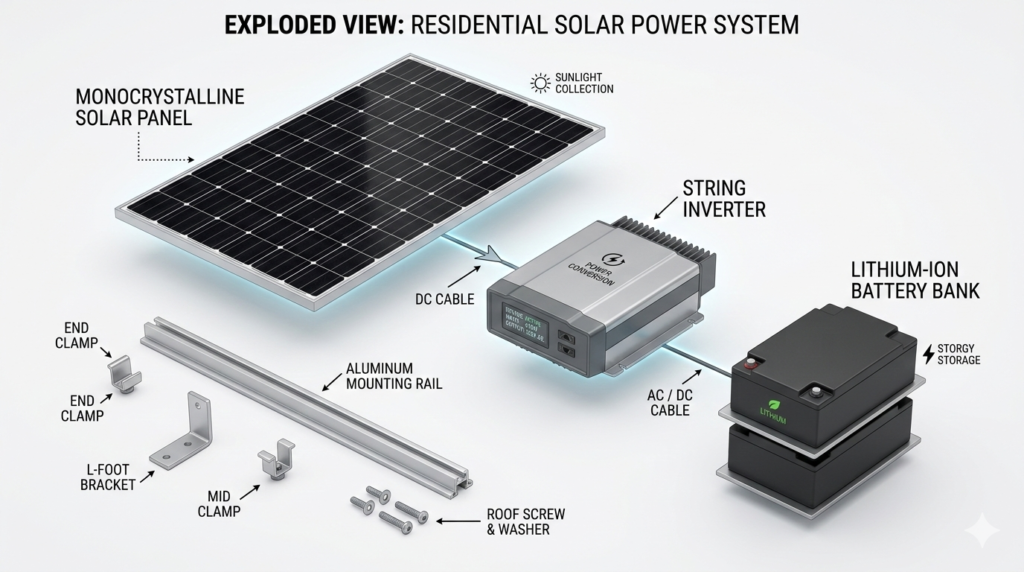
The Hardware: Choosing Your Technology
Hardware is the biggest part of your bill. Not all solar panels are equal. High efficiency costs more but saves more. Your Solar ROI calculation improves with better technology. Cheap panels might fail after ten years. Premium panels last thirty years or more.
Most homeowners now choose monocrystalline panels. They offer the best balance of power and price. Thin-film is rare for homes but good for sheds. Polycrystalline is the budget-friendly global standard.
| Panel Technology | Efficiency Range | Average Cost (per Watt) | Best Use Case |
| Monocrystalline | 19% – 23% | $0.70 – $1.10 | Limited Roof Space |
| Polycrystalline | 15% – 17% | $0.40 – $0.60 | Large Open Areas |
| Thin-Film | 11% – 13% | $0.30 – $0.50 | Curved Surfaces |
Labor and “Soft Costs”
You cannot install solar panels alone. Professional labor ensures safety and warranty. Labor costs vary by your global location. In 2026, certified installers are in high demand. This can drive up the initial price.
Permitting is another “hidden” cost to watch. Some cities charge high fees for inspections. These are part of your Solar ROI calculation. Do not ignore these administrative expenses. They can add weeks to your timeline.
Did You Know?
“Soft costs” like permits, inspections, and installer marketing actually make up 60% to 70% of your total bill. The physical panels often cost less than the paperwork required to install them.
Why Quality Installation Matters
A bad installation ruins your Solar ROI calculation. Leaky roofs or poor wiring cause expensive repairs. You should always hire licensed experts. They understand local weather and wind loads.
Quality installers provide a long-term production guarantee. This protects your investment for twenty years. They also handle the complex grid connection. This allows you to start saving money faster.
💡 Pro Fix: The Vital Site Audit
The Risk: Skipping a site audit leads to “Shade Surprises.” Even a small chimney shadow can drop your total output by 30%. The Fix: Demand a Lidar-based shade analysis. This digital scan proves your roof’s actual potential. Without it, your Solar ROI calculation is just a guess. Never sign a contract without a physical or high-res digital roof check.
Global Price Trends in 2026
The global market is shifting toward total energy solutions. Most quotes now include smart home integration. This adds to the upfront “I” in ROI. However, it also increases the daily savings.
Your Solar ROI calculation should account for local incentives. Many countries offer 20% to 30% back in credits. This immediately lowers your upfront investment. Check your local “Eco Power Guide” for updates.
Investing in solar is a multi-step process. You buy the equipment first. You pay for the expertise next. Finally, you secure the legal rights to generate power. All these steps determine your final profit.
Predict Your Harvest: Calculating Energy Production
You must know your energy “harvest” before buying panels. This is crucial for Solar ROI calculation. Sunlight is your raw material. Panels are your factory. You need to predict how much power you will create. This helps you avoid overpaying for a system.
Production depends on two main factors. These are peak sun hours and panel efficiency. Every location on Earth gets different amounts of light. Your Solar ROI calculation must use local weather data. This ensures your financial plan is realistic and safe.
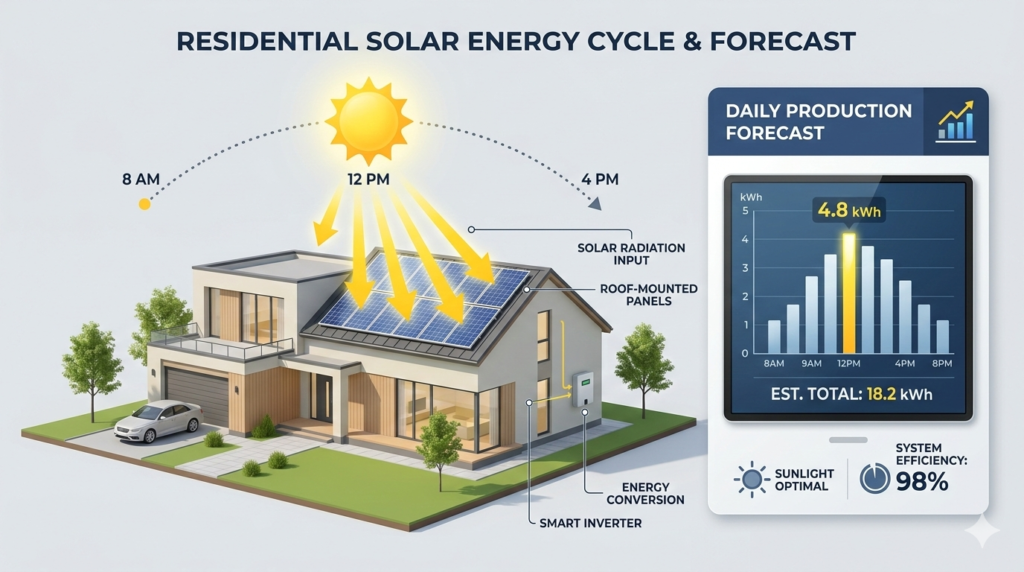
Peak Sun Hours vs. Daylight
Daylight is not the same as “Peak Sun Hours.” A peak hour provides 1,000 watts of light per square meter. Most regions get 3 to 6 peak hours daily. Your Solar ROI calculation relies on this specific number. Use a global solar map for your city.
Cloudy days still produce some energy. However, they yield much less than clear days. Modern panels in 2026 handle low light better. Even so, your “harvest” peaks in the summer months. Winter production is usually lower but still valuable.
Comparing Yield: High-Efficiency vs. Standard
Panel efficiency measures how much sunlight becomes electricity. Standard panels convert about 17% of light. High-efficiency models hit 22% or higher. This affects your Solar ROI calculation significantly. Better panels generate more power in smaller spaces.
Choosing the right panel changes your long-term results. More power means faster payback. This table compares three common setups for a medium-sized home.
| Panel Category | Avg. Efficiency | Monthly Yield (kWh) | Annual Harvest (kWh) |
| Standard Grade | 16% – 18% | 600 kWh | 7,200 kWh |
| Mid-Range Pro | 19% – 21% | 750 kWh | 9,000 kWh |
| Premium Ultra | 22% – 24% | 900 kWh | 10,800 kWh |
Predicting Your Financial Return
Every kilowatt-hour (kWh) you produce is money saved. You must track your total “Annual Harvest.” This is a key part of the Solar ROI calculation. Multiply your annual kWh by your local utility rate. This tells you your yearly savings amount.
In 2026, smart inverters track this automatically. They show your production on your smartphone. You can see when you are making a profit. This data helps you optimize your energy use. Run big appliances when the sun is brightest.
Did You Know?
The “Albedo Effect” can boost your energy harvest by 10% to 20%. This happens when sunlight reflects off snow or white sand. Bifacial panels catch this extra light from the back side. It is a “free” boost for your Solar ROI calculation.
Long-Term Production Realities
Panels do not stay perfect forever. They lose a tiny bit of power every year. This is called degradation. You must include this in your Solar ROI calculation. Most panels lose 0.5% of their power annually. Top brands lose only 0.25% each year.
Maintenance also keeps production high. Clean panels work much better than dirty ones. A simple wash can increase yield by 15%. This keeps your Solar ROI calculation on the right track. Always plan for a small drop in power over time.
💡 Pro Fix: Accounting for Degradation
The Error: Many calculators assume 100% power for 25 years. This leads to a false Solar ROI calculation. The Fix: Use a “0.5% Annual Degradation Factor” in your math. If a panel produces 10,000 kWh in Year 1, it will produce about 8,800 kWh in Year 25. Choosing “N-Type” panels reduces this loss to almost zero.
Finalizing Your Estimate
Accurate estimates lead to happy homeowners. Do not guess your production numbers. Use professional tools or local historical data. A precise Solar ROI calculation builds real wealth. You will know exactly when the system pays for itself.
Free Money: Mastering Solar Incentives Globally
Governments want you to switch to clean energy. They offer massive financial rewards for solar. These rewards drastically change your Solar ROI calculation. You can save thousands of dollars upfront. Some programs even pay you monthly. Understanding these credits is like finding free money.
In 2026, global solar policies are very generous. Every continent has unique tax breaks. You must research your specific region carefully. These incentives reduce your total system cost. This makes your Solar ROI calculation look much better. Do not leave this money on the table.

Tax Credits vs. Cash Rebates
A tax credit reduces the taxes you owe. In the US, the ITC is famous. It covers 30% of your total cost. A rebate is a direct cash payment. Both are vital for your Solar ROI calculation. These programs fluctuate based on local politics. Always check for the latest 2026 updates.
Some countries offer “Performance-Based Incentives” (PBIs). You get paid for every kilowatt-hour you produce. This is great for long-term profit. It turns your roof into a mini-utility. This adds a steady stream to your Solar ROI calculation.
Understanding Net Metering and Tariffs
How do you sell extra power back? This depends on your local grid policy. Net Metering gives you full retail credit. Net Billing pays you at wholesale rates. Feed-in Tariffs are fixed-rate long-term contracts. Each one impacts your Solar ROI calculation differently.
Choosing a region with good policies is key. High export rates mean faster payback. Low rates mean you should add a battery. Use this table to compare the three main systems.
| Policy Type | How it Works | Financial Impact | Global Popularity |
| Net Metering | 1:1 credit for energy | Maximum Yearly Savings | High (USA, Brazil) |
| Net Billing | Credited at lower rate | Moderate ROI Boost | Rising (EU, Australia) |
| Feed-in Tariff | Fixed price per kWh | Guaranteed Long-term Cash | High (Asia, Germany) |
Global Loan Programs for Solar
Not everyone has cash for solar. Many governments now provide low-interest loans. Some countries even offer 0% interest rates. These loans are designed for homeowners. They make your Solar ROI calculation accessible to everyone. You pay the loan with your savings.
In 2026, “Green Mortgages” are becoming common. You can add solar costs to your home loan. This keeps your monthly payments very low. It is a smart way to fund energy. This strategy protects your liquid cash reserves.
Did You Know?
Many countries now offer Interest-Free loans for solar. In parts of Europe and Canada, you can borrow $40,000 at 0% interest. This makes your Solar ROI calculation incredibly attractive. You save money from day one without using your own capital.
Navigating the Paperwork
Claiming these incentives requires careful documentation. You need paid invoices and system specs. Most installers help with this paperwork. However, you should double-check every form. One mistake can delay your Solar ROI calculation results. Stay organized and keep digital copies.
Incentives often have strict deadlines. Some funds run out every year. You should apply as soon as possible. This secures your spot in the program. Fast action leads to faster financial returns.
💡 Pro Fix: Finding Hidden Rebates
The Missed Opportunity: Many people only look at national credits. They miss local city or utility rebates. The Fix: Search the DSIRE database or local utility websites. Look for “Performance Upgrades” or “Smart Inverter Rebates.” Sometimes, local credits can add an extra 10% to your Solar ROI calculation. Even “expired” programs sometimes get renewed—always ask!
Finalizing Your Financial Strategy
Incentives are the “secret sauce” of solar. They turn a good investment into a great one. Always include these in your Solar ROI calculation. You will see the payback period drop by years. This is the best way to maximize your profit.
The Battery Factor: Is Solar Storage Worth It?
Adding a battery is a big decision in 2026. It adds a high cost to your initial setup. You might pay an extra $10,000 or more. Does this help your Solar ROI calculation? For many, the answer is a loud yes. Storage provides backup power during grid blackouts. It also allows you to use solar energy at night.
In 2026, battery technology has improved greatly. Lithium Iron Phosphate (LFP) is the new standard. These batteries are safer and last much longer. They change the math of your Solar ROI calculation. You no longer rely on low utility buy-back rates. You keep your own power and use it later.
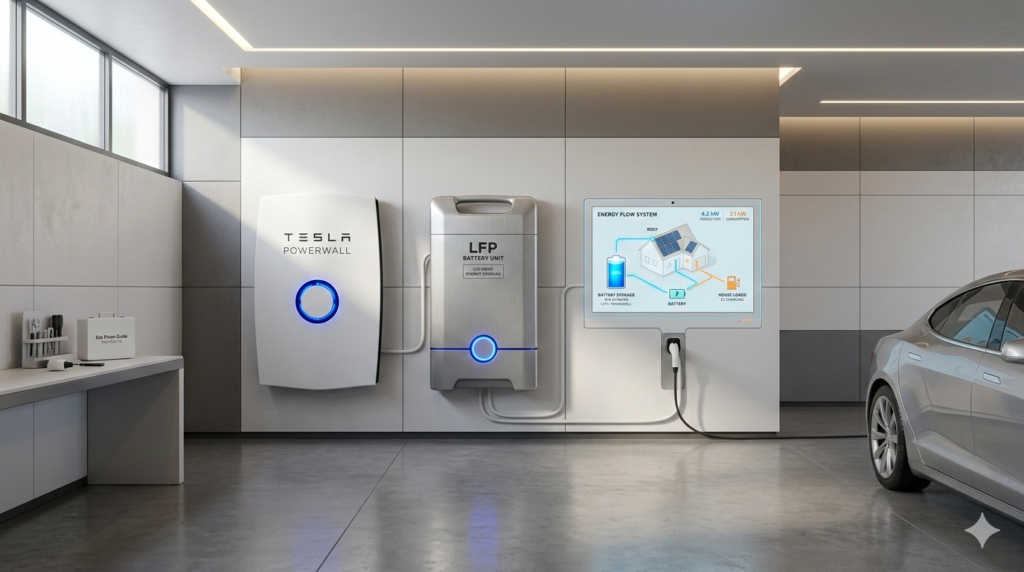
Independence vs. Interdependence
A grid-tied system without a battery is simple. It is the cheapest way to start solar. However, you lose power when the grid fails. This hurts the “utility” part of your Solar ROI calculation. You still pay for power when the sun goes down. Batteries solve this problem by storing the daily surplus.
With a battery, you achieve true energy independence. You avoid high peak-hour charges from your utility. This is a massive boost to your Solar ROI calculation. You become less vulnerable to rising electricity prices. Your home runs on stored sunshine every single night.
ROI Comparison: Battery vs. No Battery
Batteries have a higher upfront cost. However, they can increase your daily savings. In regions with “Time-of-Use” rates, batteries pay off faster. This table compares the financial impact over 15 years. It helps you visualize your Solar ROI calculation results.
| Feature (15-Year View) | Grid-Tied (No Battery) | Grid-Tied + LFP Battery | Net ROI Difference |
| Initial System Cost | $18,000 | $28,000 | +$10,000 Upfront |
| Annual Grid Savings | $2,200 | $3,400 | +$1,200 Yearly |
| Blackout Protection | None (System Shuts Off) | Full Home Backup | Priceless Security |
| Total 15-Year Profit | $15,000 | $23,000 | +$8,000 Extra Profit |
LFP Technology: Impact on Solar ROI Calculation 2026
Why are LFP batteries the 2026 favorite? They handle thousands of charge cycles easily. Older lithium batteries degraded after seven years. LFP units stay strong for over a decade. This longevity is vital for your Solar ROI calculation. You want a battery that lasts as long as the panels.
LFP batteries are also less likely to overheat. This makes them safer for indoor installation. Safety adds value to your home and peace of mind. It ensures your Solar ROI calculation remains a stable investment. Most top brands now offer 10-year to 15-year warranties.
Did You Know?
Modern LFP (Lithium Iron Phosphate) batteries are incredible. They can last 15+ years of daily use. Most still hold 80% capacity after 6,000 cycles. This long life-cycle significantly improves your long-term Solar ROI calculation. You rarely need to replace them.
Maximizing Your Storage Investment
To win, you must manage your battery wisely. Do not just let it sit idle. Use smart software to automate your energy flow. This optimization is the key to a high Solar ROI calculation. Charge during the day when solar is abundant. Discharge during the evening when rates are highest.
Many utilities now offer “Virtual Power Plant” (VPP) programs. They pay you to use your battery during grid stress. This provides an extra check in your pocket. It is a modern way to boost your Solar ROI calculation. Your battery actually works for you 24/7.
💡 Pro Fix: Cracking the TOU Code
The Strategy: Use Time-of-Use (TOU) rates to your advantage. Utilities charge triple prices during “Peak Hours” (usually 4 PM to 9 PM). The Fix: Program your battery to power the house during these hours. Avoid using the grid when it is most expensive. This single habit can shave 2 to 3 years off your Solar ROI calculation payback period.
Is the $10k Worth It?
The extra cost is a hurdle for some. However, the benefits in 2026 are clear. You get security, independence, and higher savings. Your Solar ROI calculation will show a slower start. But it will show a much higher finish. If you live in a high-rate area, get the battery.
Protecting Your Asset: Maintenance and Hidden Costs
You bought your panels. You feel like an energy tycoon. But wait. Your Solar ROI calculation is not finished. You must consider the Total Cost of Ownership (TCO). Panels are durable. However, they are not magical or invincible. They need care to perform.
Neglect is the enemy of profit. A dirty panel is a lazy panel. Hidden costs can creep into your budget. Insurance and cleaning are the big ones. Plan for these expenses from day one. This keeps your Solar ROI calculation accurate and reliable.
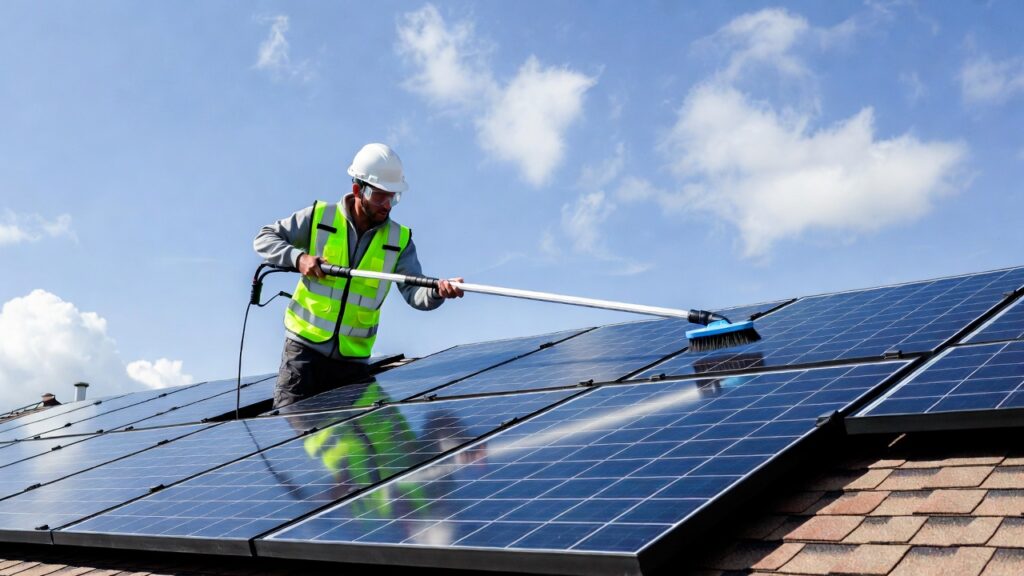
The TCO Reality Check
The initial price is just the beginning. TCO includes every cent you spend. It covers insurance, cleaning, and eventual repairs. In 2026, most systems require very little work. Yet, “zero maintenance” is a total myth. You must inspect your system annually.
Think of your panels like a high-end car. You change the oil to keep it running. Solar needs a similar mindset. Small costs today prevent large losses tomorrow. Keep your Solar ROI calculation updated with these figures.
Cleaning: DIY vs. Pro Services
Dirt, dust, and grime are your enemies. They block the light. They kill your production numbers. You have two ways to fix this. You can do it yourself or hire a pro.
DIY is cheap but risky. You must be safe on your roof. Pros have the right gear. They also check for loose wires. This table compares the two approaches for homeowners.
| Service Option | Average Cost (Annual) | Time Required | Expert Safety Check |
| DIY Manual Wash | $20 – $50 (Supplies) | 3 – 5 Hours | None |
| Local Handyman | $150 – $250 | 1 – 2 Hours | Limited |
| Certified Solar Pro | $300 – $500 | 2 – 3 Hours | Full Electrical Audit |
Insurance: Don’t Get Overcharged
You must ensure your solar investment. It is a part of your home. Some insurers try to hike your premiums. This hurts your Solar ROI calculation. Do not accept the first offer. Shop around for solar-friendly policies.
Ask for “replacement cost” coverage. This protects you from extreme weather. It ensures you get new panels if disaster strikes. You want peace of mind, not a headache. Proper coverage is a smart financial safety net.
Did You Know?
Thick dust and bird droppings are devastating. They can drop efficiency by 25% in just one month. This single factor ruins your monthly Solar ROI calculation instantly. A quick spray of water makes a huge difference.
Avoiding Hidden Financial Traps
Watch out for expensive monitoring plans. Many apps are free or very cheap. You do not need a $500/year service contract. Keep your software expenses as low as possible. This is a simple Solar ROI calculation hack.
Keep a “Solar Reserve” fund. Put aside $100 every year. If a wire breaks, you have cash ready. This prevents you from touching your savings. It keeps your finances balanced and stress-free.
💡 Pro Fix: Insurance Premium Strategy
The Risk: Telling your insurer “I added expensive electronics” often triggers an automatic rate hike. The Fix: Present your solar as a “Home Energy Efficiency Upgrade.” Ask them to categorize it like new windows or insulation. It adds value without being a “luxury upgrade.” This keeps your premium low and saves your Solar ROI calculation from unexpected costs.
Keep Your ROI Healthy
Solar is a long-term profit maker. Don’t let neglect spoil the results. Clean your panels once or twice a year. Keep your insurance policy fair. Set aside a small emergency budget. Your patience pays off in huge dividends.
The Hidden Profit: Boosting Your Home’s Resale Value
Solar panels do more than just lower your monthly bills. They actually increase the market value of your property. This is the “Hidden” part of the Solar ROI calculation. Buyers in 2026 prioritize energy-efficient homes. They see solar as a premium, pre-paid utility. This added equity is a major financial win for you.
In 2026, a solar-powered home is a modern home. It stands out in a crowded real estate market. You are selling a lifestyle of sustainability and savings. This significantly strengthens your overall Solar ROI calculation. Your home becomes a high-performing asset, not just a shelter.

Solar as a Home Improvement Asset
Not all home renovations are created equal. Most upgrades, like new paint, depreciate over time. Solar panels are different because they generate income. This income-generating potential fuels your Solar ROI calculation. Buyers are willing to pay more for future savings.
In many global markets, solar adds thousands to the price. Studies show a consistent 4% to 5% value bump. This often covers a large part of the system cost. It makes your Solar ROI calculation look incredible upon resale. You recover your investment while enjoying years of free power.
Comparing Value: Solar vs. Traditional Upgrades
How does solar compare to a kitchen remodel? Kitchens go out of style quickly. Solar technology provides a universal benefit: cheaper electricity. This makes it a very safe bet for your Solar ROI calculation. It appeals to every buyer’s bank account.
This table compares common home upgrades in the 2026 market. See how solar stacks up against traditional renovations.
| Upgrade Type | Average Cost | Estimated Value Add | ROI Percentage |
| Solar Power System | $20,000 | $18,000 – $22,000 | 90% – 110% |
| Major Kitchen Remodel | $45,000 | $28,000 – $32,000 | 60% – 70% |
| New Luxury Roof | $15,000 | $9,000 – $11,000 | 60% – 75% |
| Bathroom Upgrade | $25,000 | $14,000 – $16,000 | 55% – 65% |
Selling Faster in a Competitive Market
Energy costs are a top concern for modern buyers. A home with low bills is very attractive. This demand speeds up the selling process significantly. A faster sale improves your effective Solar ROI calculation. You save on mortgage interest and carrying costs.
Real estate agents now highlight solar in their listings. They use terms like “Net-Zero” and “Energy Independent.” These buzzwords drive high traffic to your property. It ensures your Solar ROI calculation pays off when you move. Buyers want to move into a future-proof house.
Did You Know?
Research consistently shows that solar-powered homes sell 20% faster than non-solar homes. In 2026, buyers view energy costs as a “second mortgage.” By eliminating that cost, you make your home the most desirable on the block, boosting your Solar ROI calculation.
Navigating the Appraisal Process
Appraisers sometimes struggle to value solar equipment correctly. You must be proactive during the appraisal. Provide clear data on your system’s performance. This ensures the value is added to your Solar ROI calculation. Do not leave it to chance.
Keep a folder of all your solar documents. Include your installation contract and utility bills. Show the appraiser exactly how much you save yearly. This evidence makes it easy to justify a higher price. It secures the “Hidden” ROI in your Solar ROI calculation.
💡 Pro Fix: Winning the Appraisal
The Problem: Appraisers may use “comparables” that lack solar. This undervalues your system. The Fix: Use the “Solar Green Addendum.” This is a standard form for appraisers. It forces them to calculate the Income Value of your panels. Providing this form can add $15,000 to your Solar ROI calculation valuation instantly.
The Verdict on Property Value
Solar is a rare “win-win” home improvement. It saves you money every single month. It also increases your wealth when you sell. This double benefit is the core of Solar ROI calculation. Your home is no longer just a place to live. It is a smart, green, money-making machine.
Crunch the Numbers: The Master Solar ROI Formula
It is time to do the actual math. This is the heart of your Solar ROI calculation. You must move beyond simple guesses. Precise numbers lead to confident decisions. Most people fear math. However, the formulas are actually quite simple. We will break them down for you now.
In 2026, we focus on two main metrics. These are Simple Payback and Internal Rate of Return (IRR). Both help you understand your profit. They form the foundation of a solid Solar ROI calculation. Let’s dive into the step-by-step process.

Step 1: The Simple Payback Period
First, determine your net system cost. Subtract all rebates from the initial price. Next, calculate your total annual savings. This is your yearly “harvest” times the utility rate. Divide the net cost by these savings. This gives you the payback years.
This is the most common method for calculating Solar ROI. It tells you when the system is “free.” After this point, every cent is pure profit. Most global systems hit this milestone quickly. It is a vital number for any homeowner.
Step 2: Going Deep with IRR
Simple payback is good for quick checks. However, the Internal Rate of Return (IRR) is better. It treats solar panels like a stock investment. It accounts for the rising cost of grid power. This makes your Solar ROI calculation much more accurate.
A high IRR means your money is working hard. In 2026, solar IRR often beats the stock market. Most systems deliver an IRR of 12% to 18%. This makes Solar ROI calculation a powerful financial tool. It proves solar is a superior investment choice.
Manual Math vs. AI Calculators
Should you use a pencil or a computer? Manual math helps you understand the “why.” AI calculators offer speed and complex data. Both are useful for a complete Solar ROI calculation. It depends on your level of comfort with data.
AI tools in 2026 use satellite weather patterns. They provide a very high level of precision. Manual checks ensure the AI is not making errors. Use this table to compare your calculation options.
| Method | Accuracy Level | Time Required | Best Feature |
| Manual Formula | High (User Error Risk) | 30 – 60 Minutes | Deep Logic Understanding |
| Online AI Tool | Very High (Data Driven) | 2 – 5 Minutes | Real-time Utility Updates |
| Professional Audit | Maximum (Field Verified) | 1 – 2 Hours | Guaranteed Savings Projections |
Factoring in the Future
Money changes value over time. Utility rates also go up every year. You must include these variables. This is the advanced level of Solar ROI calculation. It prevents you from underestimating your long-term wealth.
Assume a 4% annual increase in electricity prices. This is a conservative global average for 2026. This increase makes your solar energy more valuable annually. It accelerates your Solar ROI calculation timeline significantly. You save more money in year ten than in year one.
Did You Know?
Most global homeowners break even between years 6 and 9. After this “Breakeven Point,” you enjoy 15+ years of profit. This is why a precise Solar ROI calculation is so exciting. It is one of the few home upgrades that pays for itself entirely.
Calculating Your Total Net Profit
Finally, look at the 25-year total. Subtract the total ownership costs from total savings. This is the “Net Present Value” of your solar. It is the ultimate goal of Solar ROI calculation. This number is often $40,000 or more.
It shows the true power of sunshine. You are creating a personal hedge against inflation. Your Solar ROI calculation proves your financial wisdom. You are now an energy producer, not just a consumer.
💡 Pro Fix: The Inflation Adjustment
The Common Mistake: Most people use “Current Utility Rates” for all 25 years. This makes your Solar ROI calculation look worse than it is. The Fix: Add a 3% to 5% annual “escalator” to your utility cost. Grid power gets more expensive every year. This adjustment often reveals that your solar system pays for itself 2 years faster than you originally thought!
Pay for Power: Cash, Loans, or Solar Leases?
How you pay for solar changes everything. It is the biggest variable in your Solar ROI calculation. Some choose to pay upfront with cash. Others prefer monthly installments through a loan. Some even choose to lease the panels. Each path leads to a different financial result. You must choose the one that fits your budget.
In 2026, financing options are more flexible than ever. Interest rates for green energy remain competitive globally. Your goal is to maximize your long-term wealth. This requires a deep look at your Solar ROI calculation. Let’s compare the three most popular ways to fund solar.

The Power of Cash Purchases
Paying cash is the fastest route to profit. You avoid interest charges entirely. This maximizes your Solar ROI calculation from day one. You own the system and all its benefits. You claim 100% of the tax credits and rebates. This is the “Gold Standard” for solar investment.
Cash buyers see the shortest payback periods. There are no monthly bills to offset your savings. Your Solar ROI calculation stays simple and clean. You spend money today to secure twenty years of freedom. It is the most effective way to build equity.
Solar Loans: The Middle Ground
Many homeowners prefer to keep their cash. Solar loans allow you to start with $0 down. You pay the loan using your monthly energy savings. This makes the Solar ROI calculation very attractive for families. You swap a utility bill for a loan payment.
Eventually, the loan is paid off. Then, your savings skyrocket. In 2026, many green loans offer low fixed rates. This protects your Solar ROI calculation from rising inflation. It is a smart way to use other people’s money. You still own the system and the tax credits.
Comparing the Financing Paths
Each method has a unique impact on your wallet. You must weigh the “Upfront Cost” against “Lifetime Profit.” This is the essence of a good Solar ROI calculation. Use this table to see the 25-year outlook for each.
| Feature | Cash Purchase | Low-Interest Loan | Solar Lease (PPA) |
| Upfront Cost | $18,000 – $25,000 | $0 Down | $0 Down |
| Tax Credit Owner | You (Homeowner) | You (Homeowner) | The Solar Company |
| Maintenance | Your Responsibility | Your Responsibility | Company Responsibility |
| 25-Year Profit | Maximum Profit | High Profit | Low to Moderate |
The Trap of Solar Leases
Leasing is often called a Power Purchase Agreement (PPA). It sounds great because it is “free.” But in a lease, you do not own anything. This drastically lowers your Solar ROI calculation. The leasing company takes the massive tax credits. You only get a slightly lower monthly bill.
Leases also make selling your home harder. Many buyers do not want to take over a contract. This can hurt the “Hidden ROI” we discussed earlier. Always prioritize ownership to protect your Solar ROI calculation. If you can buy or loan, do it.
Did You Know?
Owning your solar system outright is superior. It typically gives you 3x more lifetime profit than a lease. Over 25 years, the difference can be $30,000. For a strong Solar ROI calculation, ownership is always the winner.
Adjusting for Interest and Fees
If you take a loan, watch the fees. “Dealer fees” can be as high as 20%. These fees are hidden in the total loan amount. They can ruin a perfect Solar ROI calculation. Always ask for the “Cash Price” first for comparison.
Compare multiple lenders before you sign anything. Look for “No Pre-payment Penalty” clauses. This allows you to pay off the loan faster. Shorter loans lead to a better Solar ROI calculation. You want to reach the “Free Energy” stage quickly.
💡 Pro Fix: Why Leases Hurt ROI
The Catch: Solar leases often have an “Annual Escalator” of 2.9%. This means your “cheap” rate goes up every year. The Fix: Avoid leases if you want a high Solar ROI calculation. If you must use a lease, negotiate a 0% Escalator. This keeps your rate flat for the entire 20-year term. Never let the company take your local government rebates!
Final Financing Verdict
Your payment method defines your financial success. Cash is king for the highest returns. Loans are great for preserving your liquid savings. Leases should be a last resort for most. Choose the path that maximizes your Solar ROI calculation. Your future self will thank you for the extra profit.
The 2026 Verdict: Is Solar Right for You?
We have reached the final decision point. You now understand the Solar ROI calculation process. You know about hardware, incentives, and financing. But the big question remains: is it worth it? For most homeowners in 2026, the answer is yes. However, your personal results depend on specific factors. You must look at your roof and your budget.
Solar is no longer an experiment. it is a proven financial strategy. The world is moving toward decentralized power. By owning your energy, you gain control. This control is the true value of solar. Your Solar ROI calculation will prove this over time. Let’s look at the final framework for your choice.

Geography: Your Biggest ROI Factor
Your location is the engine of your system. More sun means a faster Solar ROI calculation. High-sun regions like the Middle East or Australia are perfect. Even cloudy regions like Northern Europe now see profits. This is due to better low-light panel technology.
Local utility rates also play a huge role. If your grid power is expensive, solar saves more. This accelerates your payback period significantly. In 2026, electricity prices are rising everywhere. This makes your Solar ROI calculation stronger every single day.
| Region Type | Avg. Peak Sun Hours | Payback Timeline | 25-Year Net Profit |
| High-Sun (Desert/Tropics) | 6.0+ Hours | 4 – 5 Years | $55,000+ |
| Moderate-Sun (Subtropics) | 4.0 – 5.5 Hours | 6 – 8 Years | $35,000+ |
| Low-Sun (Northern/Cloudy) | 2.5 – 3.5 Hours | 10 – 12 Years | $18,000+ |
Assessing Your Roof and Budget
Is your roof ready for a 25-year commitment? You should check for shading and structural health. A bad roof ruins a good Solar ROI calculation. Fix any leaks before you install the panels. This prevents expensive removal costs later on.
Your budget determines your financing path. Cash offers the highest long-term wealth. Loans offer immediate monthly savings of $0. Choose the path that matches your cash flow. A healthy Solar ROI calculation requires a solid plan. Do not rush into a contract without checking the numbers.
The 2026 Technology Advantage
Why is now the best time to buy? Solar technology is at its peak efficiency. Prices have stabilized after years of rapid drops. Your Solar ROI calculation is safer now than ever before. We have better batteries and smarter inverters.
These tools make it easy to manage energy. You can sell power back to the grid. You can store it for emergencies. This flexibility adds layers to your Solar ROI calculation. You are building a resilient home for the future.
Did You Know?
Solar technology prices have dropped nearly 90% since 2010. What used to cost $100,000 now costs around $15,000. This massive price drop is why your Solar ROI calculation is so positive today. Solar is officially the cheapest source of electricity in history.
The Final Decision Framework
“Ask Yourself Three Simple Questions. First, Is My Monthly Bill Over $100? Second, Do I Have A Sunny Roof? Third, Will I Stay Here For 5+ Years? If You Said Yes, Start Your Solar ROI Calculation 2026. You Are Losing Money By Waiting Any Longer.”
Every month without solar is a missed profit. You are giving money to the utility company. Instead, you could be paying off your own asset. Your Solar ROI calculation will only get better as you start. Take the first step toward energy freedom today.
💡 Pro Fix: The “3-Quote Rule”
The Trap: Taking the first offer usually costs you 20% more. Installers often overcharge if they know you aren’t shopping around. The Fix: Always get at least three independent quotes. Compare the price-per-watt and the equipment brands. This competition forces installers to give you their best Solar ROI calculation. You could save $3,000 just by making two extra phone calls!
Your Solar Journey Begins Now
“You Have The Knowledge To Succeed. Use This Guide As Your Roadmap. Calculate Your ROI, Find A Pro, And Go Solar. You Are Joining A Global Movement Of Clean Energy. Your Solar ROI Calculation 2026 Is The Key To Your Financial Future. Welcome To The Era Of Eco Power.“